
Sustainability Report – SDG 05
The University of Al-Maarif (UOA) upholds gender equality as one of its central institutional values, recognizing that true academic and societal progress can only be achieved through the empowerment, participation, and leadership of both women and men across all sectors of education, research, and governance. Aligned with the United Nations Sustainable Development Goal 5 (Gender Equality) and Iraq’s National Strategy for Women’s Advancement, UOA has developed and implemented a comprehensive framework to promote women’s access to education, ensure equitable employment, strengthen institutional representation, and prevent discrimination or harassment in all forms.
This report documents the university’s policies, initiatives, research, and achievements related to gender equality during the reporting period 2024–2025. It provides detailed insight into how UOA integrates gender considerations into academic curricula, administrative decision-making, student affairs, research priorities, and community outreach programs, while also highlighting progress in leadership representation, professional development, and awareness campaigns.
The University of Al-Maarif approaches gender equality as both a moral imperative and a developmental necessity, guided by three overarching principles:
- Empowerment through education – ensuring equal opportunities for women to learn, teach, and lead.
- Equity in participation – establishing a balanced and fair environment where all members can contribute to academic and professional life.
- Safety and dignity for all – maintaining a campus environment free from discrimination, harassment, or barriers to advancement.
By institutionalizing these principles, UOA continues to set a national example of inclusive higher education in Iraq, fostering a generation of graduates—both men and women—equipped to build a more just, equitable, and sustainable society.
Institutional Policies and Governance for Gender Equality
1. University Gender Equality Policy
UOA has adopted a formal Gender Equality and Women’s Empowerment Policy, developed under the guidance of the Quality Assurance and Sustainability Directorate and approved by the University Council.
The policy outlines the following key commitments:
- Equal access to employment, promotion, and training opportunities.
- Fair representation of women in leadership, committees, and academic departments.
- Prevention and response mechanisms for gender-based harassment or discrimination.
- Gender balance in university scholarships, academic programs, and student representation.
The policy is implemented in coordination with the Office of Human Resources, the Deanship of Student Affairs, and the Sustainability and Global Ranking Unit, ensuring gender considerations are embedded in every operational decision.
2. Leadership and Representation
UOA is proud of its growing number of women in leadership and decision-making roles. Women currently serve as:
- Heads of academic departments (Engineering, Pharmacy, Medical Devices, and Business Administration).
- Directors of administrative units, including Quality Assurance, Research, and E-Learning.
- Members of the University Council and Ethics Committees.
This representation demonstrates UOA’s dedication to ensuring that women are not only participants but key decision-makers in shaping the institution’s strategic direction.
3. Anti-Harassment and Equal Opportunity Framework
The Anti-Discrimination and Harassment Prevention Policy ensures that all university members—students, staff, and visitors—are treated with respect and protected from gender-based misconduct.
The policy includes:
- Confidential reporting and counseling channels.
- Disciplinary measures for policy violations.
- Awareness sessions on ethical behavior and inclusivity.
- Regular staff training on gender-sensitive communication and conflict resolution.
Educational Access and Student Inclusion
1. Equal Enrollment and Academic Achievement
UOA’s admissions policy guarantees non-discriminatory access to all academic programs. The proportion of female students across the university has been steadily increasing, particularly in STEM fields such as Biomedical Engineering, Pharmacy, and Computer Science.
Between 2022 and 2025, female enrollment increased by 17%, reflecting the university’s successful outreach to young women in both urban and rural areas.
UOA supports female academic excellence through:
- Scholarships for top-performing female students.
- Research grants targeting gender and sustainability topics.
- Mentorship programs pairing female students with senior academic mentors.
2. Women in STEM and Innovation
To address gender gaps in science and engineering, the Faculty of Engineering and the Sustainability Unit have launched the initiative “Women in Innovation & Technology”, which includes:
- Coding and robotics workshops for female students.
- Joint research with female-led startups in the energy and health sectors.
- Internship placements for female engineering students in private industry.
This initiative aims to increase the number of women in applied research and technical professions, supporting SDG 5 and SDG 9 simultaneously.
3. Female Student Leadership and Representation
UOA ensures that women are represented in all student governance structures, including:
- Student Union
- Academic Council Committees
- Departmental Leadership Teams
Female students also lead numerous community service clubs and volunteer organizations, focusing on social welfare, environmental awareness, and educational outreach to local schools.
Academic and Research Contributions to Gender Equality
1. Research on Gender and Society
UOA scholars conduct research exploring gender roles, equality in education, and women’s social participation. Key research areas include:
- Gender disparities in healthcare access and outcomes.
- Women’s entrepreneurship and economic empowerment in Iraq.
- Gender representation in media and communication.
- Sociological perspectives on women’s rights and family dynamics.
These studies are published in peer-reviewed journals and shared in national conferences, advancing the dialogue on gender and development in Iraq.
2. Curriculum Integration of Gender and SDG Awareness
Gender equality and women’s empowerment are integrated into UOA’s curricula through:
- Human rights and ethics modules in law and social sciences.
- Gender-sensitive design principles in engineering and architecture programs.
- Public health courses addressing maternal health, family planning, and gender-based violence prevention.
This cross-disciplinary approach ensures that all graduates understand the social, economic, and ethical importance of gender balance in their professional practice.
3. Interdisciplinary Research Collaborations
UOA promotes joint research among departments to address gendered aspects of sustainability, such as:
- Women’s participation in environmental protection and water management (SDG 6).
- Female entrepreneurship in renewable energy and circular economy sectors (SDG 7 & SDG 12).
- Gender perspectives in community resilience and climate adaptation projects (SDG 13).
These collaborations help bridge academic research with community impact.
Campus Facilities and Support Services for Women
1. Safe and Inclusive Campus Design
UOA’s campus includes:
- Accessible facilities for women with disabilities.
- Gender-segregated spaces for privacy and cultural respect.
- Secure dormitories and female-only study areas.
- Lighting, surveillance, and transport services ensuring safety.
2. Childcare and Family Support
The university provides:
- On-campus daycare facilities for staff and students with young children.
- Flexible work schedules for mothers.
- Parental leave and maternity support in accordance with labor law.
These measures allow women to balance family life and career development effectively.
3. Psychological and Academic Counseling
The Student Guidance and Psychological Support Center offers:
- Confidential counseling for students facing personal or academic challenges.
- Specialized sessions for women addressing stress, discrimination, and self-esteem.
- Awareness programs on mental health and gender respect.
Gender Equality in Employment and Professional Development
1. Recruitment and Promotion
UOA’s recruitment policy guarantees:
- Gender-neutral hiring criteria.
- Equal pay for equal work.
- Transparent promotion procedures.
- Periodic gender balance audits in staffing.
As a result, the proportion of female faculty and administrative staff has risen significantly since 2020, reflecting progress toward parity.
2. Professional Training for Women Staff
Women at UOA receive full access to professional training in:
- Educational leadership.
- Research methodology and grant writing.
- Digital transformation and e-learning management.
- University governance and quality assurance systems.
These opportunities prepare women for senior academic and administrative roles, ensuring equal representation in institutional decision-making.
3. Recognition and Awards
The university annually celebrates International Women’s Day and Iraqi Women’s Week with recognition ceremonies for outstanding female academics, researchers, and students. Awards highlight achievements in:
- Scientific research excellence.
- Community service and volunteering.
- Innovation and entrepreneurship.
This recognition strengthens motivation and visibility for women’s contributions in academia.
Monitoring, Evaluation, and Data Transparency
UOA employs a gender-sensitive data management system that tracks:
- Gender ratios in admissions, employment, and leadership.
- Participation rates in training and development programs.
- Gender-based incidents reported and resolved.
These metrics are analyzed annually by the Sustainability and Global Ranking Unit and submitted to the University Council and national regulators. Findings are incorporated into the university’s Sustainability and SDG Reports, ensuring accountability and continuous improvement.
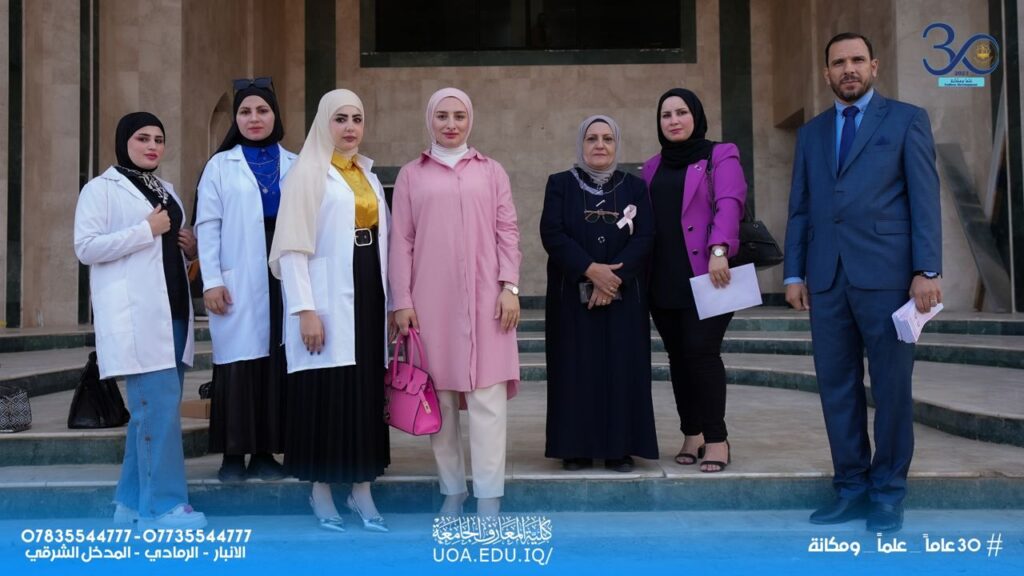
Breast Cancer Awareness Workshop
The workshop included an explanation of how to conduct early screening for breast cancer and the most important ways to prevent the risk of infection, as well as concluded some activities and questions for the attenance. It was attended by Dr. Abla Musa Abdullah, Head of the Maternal and Newborn Nursing branch at the College of Nursing, with the participation of many students from the department Read more : Link
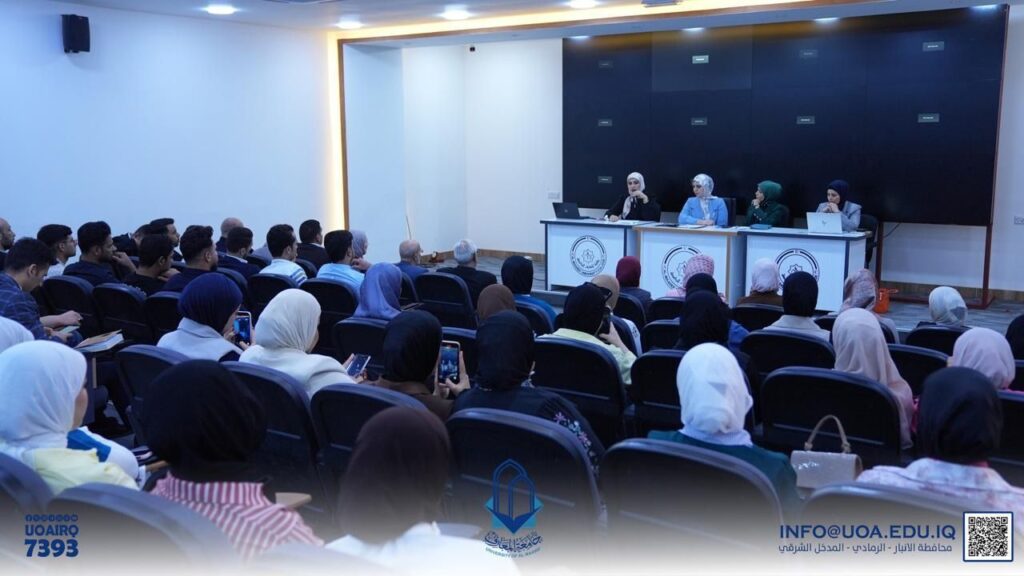
An Awareness Seminar on Women’s Electronic Blackmail at AUC
On Sunday, 29th October 2025, the Unit of Women’s Empowerment at Al-Maarif University College held an awareness seminar which was presented by Colonel Mohamed Ibrahim, representative of the National Security Service in Anbar governorate, and lecturers in the Department of Computer Science Asst. Lec. Ali Saadoon Ahmed, and Asst. Lec. Mohammed Hatim Aliwi. The seminar was opened by Dr. Abd Al-Monim Salih, Head of the Department of Computer Science, welcomed the guest Colonel Mohamed Ibrahim, who addressed the importance of electronic blackmail to which women are subjected, and how they are hacked and blackmailed.Colonel Mohammed explained the reasons for the extortion process, which may be financial, reprisal, security or sexual motives. Read more : Link
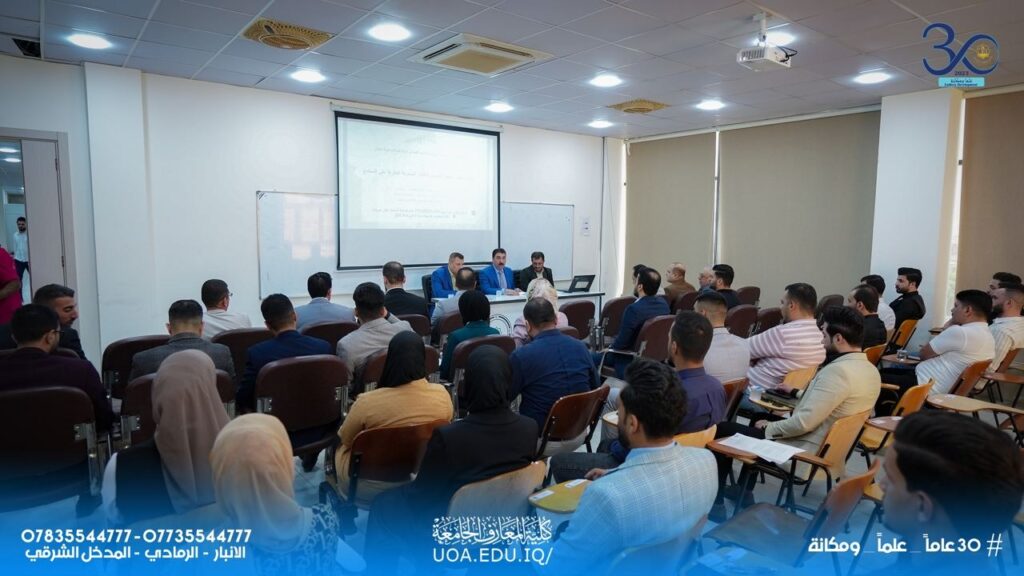
An Awareness Seminar on Skewed Ideas of Society at AUC
On Tuesday, 7th November 2025, the Department of Law at Al-Maarif University College held an awareness seminar entitled (Efforts Must Be Intensified to Address Skewed Ideas of Society). The seminar was opened by Asst. Prof. Dr. Khalid Awad Al-Alwani welcomed the generous guest Prof. Dr. Abd Al-Rahman Hamdi Shafi – College of Islamic Sciences – University of Anbar who discussed several important issues targeting society in general and Islam in particular, highlighted the perverse terminology that began spreading in society and trying to tamper with ideas and change from the Islamic orientation and its dispersal, and also hesitated to the LGBT issue and the perverse calls for recognition of their rights, indicating the Islamic and societal rejection of these phenomena from the Holy Quran and the Prophetic Talk. Read more : Link