Commitment to SDG Education (17.4.1)
Institutional Commitment to Meaningful Education on the SDGs Across All Programs and Disciplines
University of Al-Maarif
Introduction
The University of Al-Maarif (UOA), located in the heart of Anbar, Iraq, is deeply committed to advancing the United Nations Sustainable Development Goals (SDGs) through a comprehensive, cross-disciplinary educational framework. Recognizing that quality education is the foundation for achieving sustainable development, UOA has integrated the principles of sustainability, global citizenship, and social responsibility into every aspect of its teaching, research, and community engagement.
UOA’s institutional strategy emphasizes that education for sustainable development (ESD) is not limited to specific disciplines but is a shared responsibility across all academic units — from engineering and medicine to business, law, and the humanities. The university’s commitment to SDG 17 (Partnerships for the Goals) and SDG 4 (Quality Education) ensures that its students graduate as informed, responsible, and proactive contributors to Iraq’s sustainable future.
1. Institutional Vision and Policy Framework for SDG Education
At the core of UOA’s mission lies a strategic vision to create an academically excellent and socially responsible university that contributes to Iraq’s reconstruction and sustainable development. The University’s Strategic Development Plan (2024–2030) explicitly aligns with the 2030 Agenda for Sustainable Development, embedding SDG education as a central pillar in its academic and administrative operations.
The university leadership — represented by the President, Deans, and SDG Coordination Office — has adopted a “Whole-Institution Approach” to sustainability, which ensures that:
- All colleges and departments include sustainability and SDG awareness in their curricula.
- Faculty members receive training to integrate sustainability topics into teaching and research.
- Students engage in community-based learning projects addressing real-world SDG challenges.
- Administrative operations reflect sustainability practices, serving as a living laboratory for students.
This commitment is reinforced by policy directives issued by the Ministry of Higher Education and Scientific Research (MOHESR) in Iraq, which encourage universities to adopt sustainability-focused educational frameworks and contribute to the country’s post-conflict resilience and green transition.
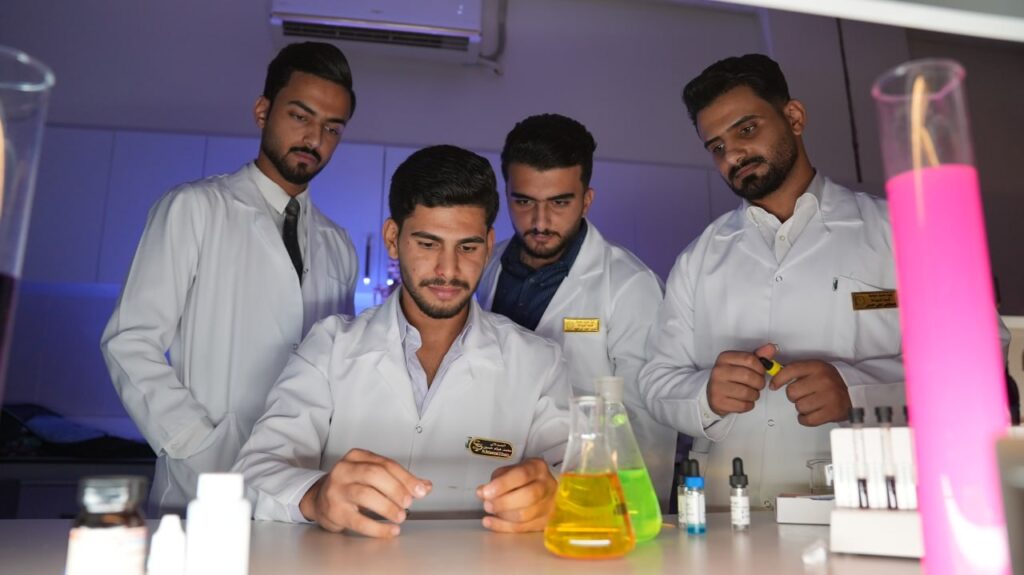
2. Integration of SDGs into Academic Programs
UOA ensures that education on the SDGs is not confined to environmental or development studies but is woven across all disciplines. The university follows a transdisciplinary approach that encourages faculty and students to explore how global sustainability challenges intersect with their fields of expertise.
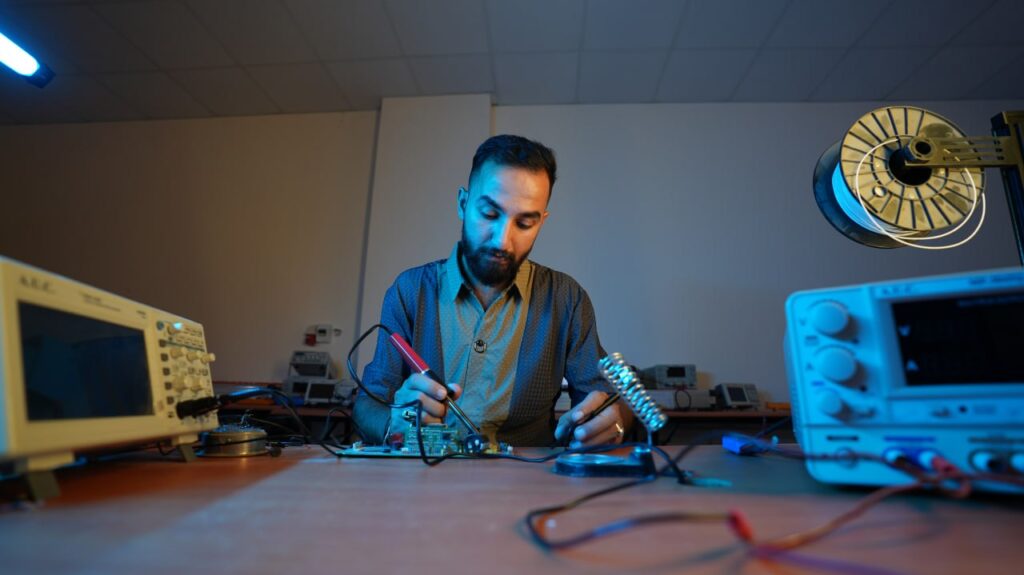
a. Engineering and Technology Programs
The College of Engineering integrates sustainability concepts such as renewable energy, sustainable infrastructure, and climate resilience into its coursework. Students learn to design systems that minimize environmental impact and optimize resource use — directly contributing to SDGs 7, 9, 11, and 13.
Capstone projects often focus on local needs, such as designing solar-powered irrigation systems for Anbar’s agricultural regions or developing low-cost water purification technologies for rural communities.
b. Medical and Health Sciences
The College of Medicine and the College of Pharmacy incorporate SDG 3 (Good Health and Well-being) into their programs, emphasizing health equity, environmental health, and sustainable healthcare delivery. Courses include modules on the relationship between environmental degradation and public health, disaster preparedness, and sustainable medical practices.
Medical students also engage in community health outreach programs that promote health literacy and preventive care in underserved areas of Anbar, linking academic learning with social responsibility.
c. Business and Economics
The College of Business Administration integrates responsible management education (RME) aligned with the Principles for Responsible Management Education (PRME) and SDG 8 (Decent Work and Economic Growth). Students study sustainable business models, corporate social responsibility, and ethical entrepreneurship, preparing them to lead Iraq’s growing private sector toward sustainability and inclusivity.
Practical initiatives include student-led business incubators that support green startups and social enterprises addressing unemployment and gender equality — key priorities in Iraq’s national development agenda.
d. Law and Political Science
The College of Law introduces students to SDG 16 (Peace, Justice, and Strong Institutions), focusing on governance, human rights, and environmental law. Legal clinics allow students to work with NGOs and local government bodies, gaining practical experience in advocacy, conflict resolution, and sustainable governance.
These programs strengthen civic responsibility and promote the rule of law as a cornerstone of peace and sustainable development in post-conflict Iraq.
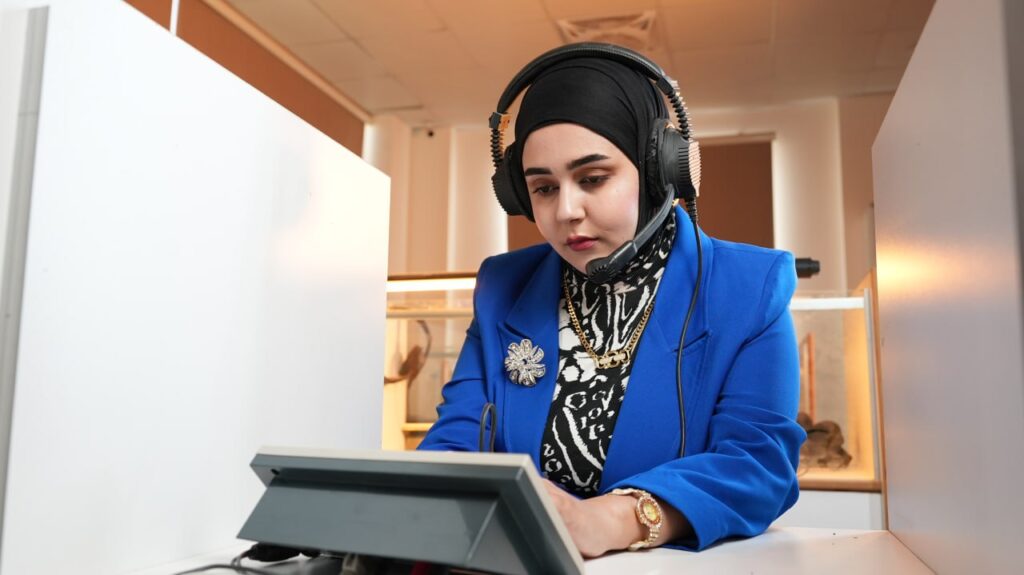
e. Humanities and Education
Within the humanities and education disciplines, UOA emphasizes values-based learning, intercultural understanding, and civic engagement. Courses in education, sociology, and communication teach students to approach sustainability through a human-centered lens, fostering ethical leadership and critical thinking.
Students are encouraged to explore how cultural heritage preservation, social justice, and education reform align with SDGs 4, 5, and 10.
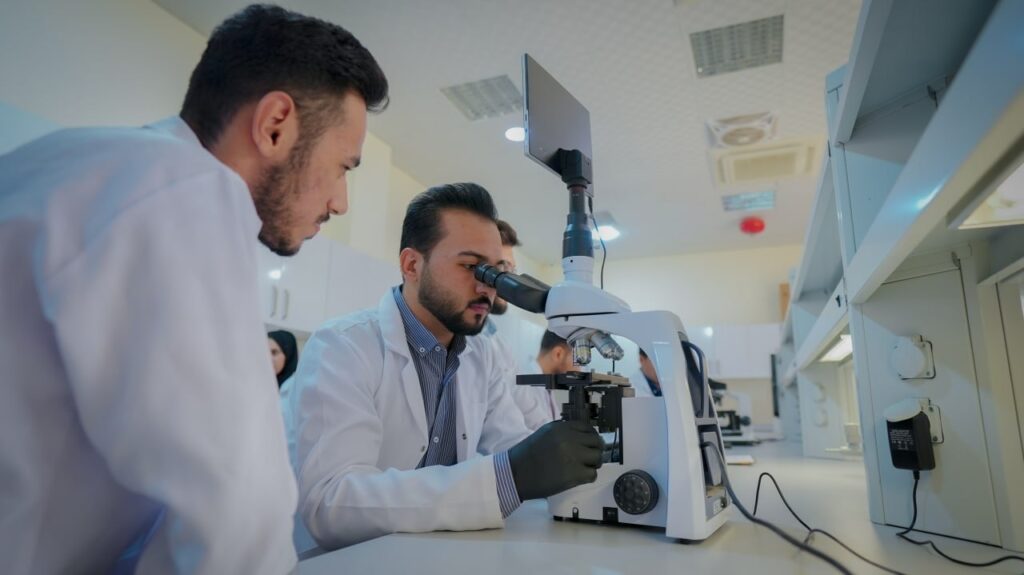
3. Faculty Development and SDG Pedagogy
To ensure effective delivery of SDG-related education, UOA provides continuous professional development programs for its faculty. Workshops, seminars, and training sessions are organized in collaboration with UNESCO Iraq, UNDP, and other international partners to build academic capacity in sustainability education.
The Center for Teaching Excellence (CTE) at UOA offers training on:
- Integrating SDGs into course design and assessment.
- Using project-based learning (PBL) and experiential methods for sustainability education.
- Collaborating across departments to develop interdisciplinary courses on the SDGs.
Faculty members are also encouraged to participate in international research collaborations and SDG-focused conferences, enabling them to bring global best practices into local classrooms.
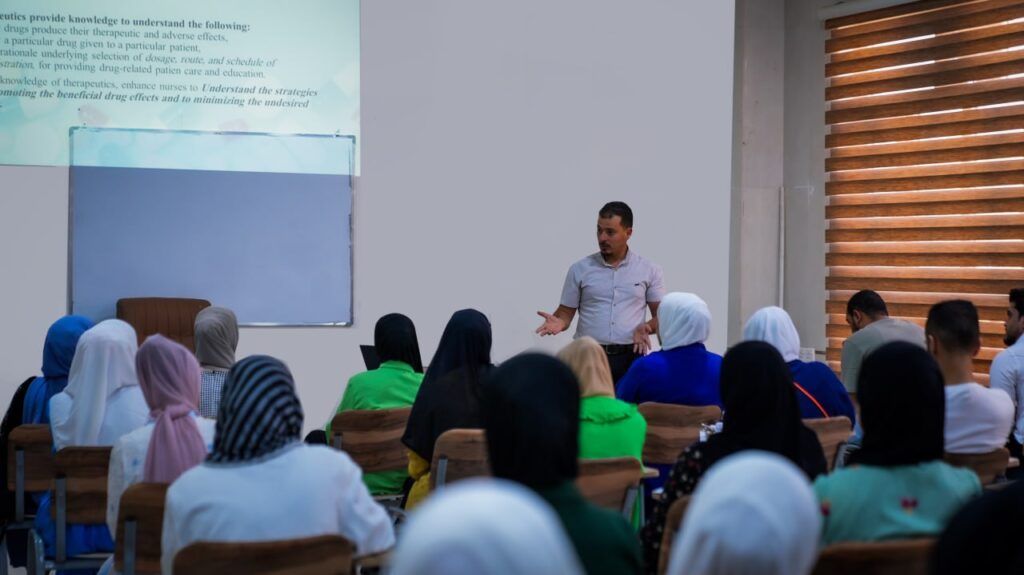
4. Student Engagement and Experiential Learning
UOA believes that sustainability education must extend beyond theoretical instruction to hands-on, community-based learning experiences.
a. SDG Student Ambassadors Program
The university has launched an SDG Ambassadors initiative where students act as change agents within their colleges. These ambassadors organize sustainability campaigns, tree-planting events, clean energy workshops, and awareness drives on issues such as gender equality and climate change.
b. Service-Learning and Volunteering
Students participate in community engagement projects in partnership with local NGOs, focusing on literacy programs, environmental restoration, and poverty alleviation. These projects provide students with real-world problem-solving experience while strengthening community relations.
c. Research and Innovation for the SDGs
UOA’s Innovation and Entrepreneurship Center encourages student-led research that addresses local challenges aligned with the SDGs. Through competitions, hackathons, and innovation labs, students develop creative solutions that promote social inclusion, clean energy, and digital transformation.
5. Partnerships and Collaboration for SDG Education
UOA’s SDG education efforts are supported through partnerships with national and international institutions, including:
- The Ministry of Higher Education and Scientific Research (MOHESR) for policy alignment and academic quality assurance.
- UNDP Iraq and UNESCO Regional Bureau for Education in the Arab States for SDG integration frameworks.
- Arab Universities Network for Sustainable Development (AUNSD) for research collaboration and academic exchange.
- Local NGOs and municipalities in Anbar for implementing community education projects.
Through these partnerships, the university contributes to knowledge-sharing networks, curriculum reform initiatives, and joint sustainability reports that position UOA as a regional leader in SDG-aligned higher education.
6. Monitoring, Evaluation, and Continuous Improvement
To ensure accountability and impact, UOA has established an SDG Implementation and Monitoring Committee responsible for tracking progress in sustainability education. The committee evaluates:
- The number of courses with SDG content.
- Faculty training outcomes and participation rates.
- Student involvement in SDG projects.
- Community impact metrics from service-learning initiatives.
Annual reports are shared with the university’s leadership and relevant stakeholders to guide continuous improvement and policy refinement.
1. Institutional Vision and Policy Framework for SDG Education
At the core of UOA’s mission lies a strategic vision to create an academically excellent and socially responsible university that contributes to Iraq’s reconstruction and sustainable development. The University’s Strategic Development Plan (2024–2030) explicitly aligns with the 2030 Agenda for Sustainable Development, embedding SDG education as a central pillar in its academic and administrative operations.
The university leadership — represented by the President, Deans, and SDG Coordination Office — has adopted a “Whole-Institution Approach” to sustainability, which ensures that:
- All colleges and departments include sustainability and SDG awareness in their curricula.
- Faculty members receive training to integrate sustainability topics into teaching and research.
- Students engage in community-based learning projects addressing real-world SDG challenges.
- Administrative operations reflect sustainability practices, serving as a living laboratory for students.
This commitment is reinforced by policy directives issued by the Ministry of Higher Education and Scientific Research (MOHESR) in Iraq, which encourage universities to adopt sustainability-focused educational frameworks and contribute to the country’s post-conflict resilience and green transition.
2. Integration of SDGs into Academic Programs
UOA ensures that education on the SDGs is not confined to environmental or development studies but is woven across all disciplines. The university follows a transdisciplinary approach that encourages faculty and students to explore how global sustainability challenges intersect with their fields of expertise.
a. Engineering and Technology Programs
The College of Engineering integrates sustainability concepts such as renewable energy, sustainable infrastructure, and climate resilience into its coursework. Students learn to design systems that minimize environmental impact and optimize resource use — directly contributing to SDGs 7, 9, 11, and 13.
Capstone projects often focus on local needs, such as designing solar-powered irrigation systems for Anbar’s agricultural regions or developing low-cost water purification technologies for rural communities.
b. Medical and Health Sciences
The College of Medicine and the College of Pharmacy incorporate SDG 3 (Good Health and Well-being) into their programs, emphasizing health equity, environmental health, and sustainable healthcare delivery. Courses include modules on the relationship between environmental degradation and public health, disaster preparedness, and sustainable medical practices.
Medical students also engage in community health outreach programs that promote health literacy and preventive care in underserved areas of Anbar, linking academic learning with social responsibility.
c. Business and Economics
The College of Business Administration integrates responsible management education (RME) aligned with the Principles for Responsible Management Education (PRME) and SDG 8 (Decent Work and Economic Growth). Students study sustainable business models, corporate social responsibility, and ethical entrepreneurship, preparing them to lead Iraq’s growing private sector toward sustainability and inclusivity.
Practical initiatives include student-led business incubators that support green startups and social enterprises addressing unemployment and gender equality — key priorities in Iraq’s national development agenda.
d. Law and Political Science
The College of Law introduces students to SDG 16 (Peace, Justice, and Strong Institutions), focusing on governance, human rights, and environmental law. Legal clinics allow students to work with NGOs and local government bodies, gaining practical experience in advocacy, conflict resolution, and sustainable governance.
These programs strengthen civic responsibility and promote the rule of law as a cornerstone of peace and sustainable development in post-conflict Iraq.
e. Humanities and Education
Within the humanities and education disciplines, UOA emphasizes values-based learning, intercultural understanding, and civic engagement. Courses in education, sociology, and communication teach students to approach sustainability through a human-centered lens, fostering ethical leadership and critical thinking.
Students are encouraged to explore how cultural heritage preservation, social justice, and education reform align with SDGs 4, 5, and 10.
3. Faculty Development and SDG Pedagogy
To ensure effective delivery of SDG-related education, UOA provides continuous professional development programs for its faculty. Workshops, seminars, and training sessions are organized in collaboration with UNESCO Iraq, UNDP, and other international partners to build academic capacity in sustainability education.
The Center for Teaching Excellence (CTE) at UOA offers training on:
- Integrating SDGs into course design and assessment.
- Using project-based learning (PBL) and experiential methods for sustainability education.
- Collaborating across departments to develop interdisciplinary courses on the SDGs.
Faculty members are also encouraged to participate in international research collaborations and SDG-focused conferences, enabling them to bring global best practices into local classrooms.
4. Student Engagement and Experiential Learning
UOA believes that sustainability education must extend beyond theoretical instruction to hands-on, community-based learning experiences.
a. SDG Student Ambassadors Program
The university has launched an SDG Ambassadors initiative where students act as change agents within their colleges. These ambassadors organize sustainability campaigns, tree-planting events, clean energy workshops, and awareness drives on issues such as gender equality and climate change.
b. Service-Learning and Volunteering
Students participate in community engagement projects in partnership with local NGOs, focusing on literacy programs, environmental restoration, and poverty alleviation. These projects provide students with real-world problem-solving experience while strengthening community relations.
c. Research and Innovation for the SDGs
UOA’s Innovation and Entrepreneurship Center encourages student-led research that addresses local challenges aligned with the SDGs. Through competitions, hackathons, and innovation labs, students develop creative solutions that promote social inclusion, clean energy, and digital transformation.
5. Partnerships and Collaboration for SDG Education
UOA’s SDG education efforts are supported through partnerships with national and international institutions, including:
- The Ministry of Higher Education and Scientific Research (MOHESR) for policy alignment and academic quality assurance.
- UNDP Iraq and UNESCO Regional Bureau for Education in the Arab States for SDG integration frameworks.
- Arab Universities Network for Sustainable Development (AUNSD) for research collaboration and academic exchange.
- Local NGOs and municipalities in Anbar for implementing community education projects.
Through these partnerships, the university contributes to knowledge-sharing networks, curriculum reform initiatives, and joint sustainability reports that position UOA as a regional leader in SDG-aligned higher education.
6. Monitoring, Evaluation, and Continuous Improvement
To ensure accountability and impact, UOA has established an SDG Implementation and Monitoring Committee responsible for tracking progress in sustainability education. The committee evaluates:
- The number of courses with SDG content.
- Faculty training outcomes and participation rates.
- Student involvement in SDG projects.
- Community impact metrics from service-learning initiatives.
Annual reports are shared with the university’s leadership and relevant stakeholders to guide continuous improvement and policy refinemen
1. Executive Summary
The University of Al Maarif (UOA), located in the city of Anbar, Iraq, stands as a dynamic academic institution deeply committed to advancing the United Nations’ Sustainable Development Goals (SDGs) through education, research, and community engagement. Among these global goals, SDG 17.4.1 — “Institutional commitment to meaningful education on the SDGs across all programs and disciplines” — holds a special place in the university’s strategic vision. UOA has positioned the SDGs as a core framework for educational transformation and national rebuilding, recognizing that higher education plays a central role in fostering a sustainable, peaceful, and prosperous Iraq.
Emerging from a region that has experienced significant socio-economic and environmental challenges over recent decades, the University of Al Maarif understands the necessity of holistic development rooted in education. The university views the SDGs not only as global objectives but also as locally relevant priorities that address Iraq’s urgent needs: rebuilding infrastructure, promoting peace and justice, restoring ecosystems, advancing gender equality, and creating opportunities for youth employment.
In alignment with the Iraq Vision 2030 and the National Strategy for Sustainable Development, UOA has incorporated the SDGs into its institutional strategy (2023–2030), its academic programs, and its operational culture. Through this commitment, the university aims to:
- Integrate SDG awareness and competencies into every academic program and discipline, ensuring all students graduate with a deep understanding of sustainability principles.
- Empower faculty and researchers to align teaching and research with the 17 SDGs, promoting interdisciplinary collaboration and knowledge transfer.
- Foster partnerships with government bodies, civil society organizations, and international agencies to strengthen Iraq’s capacity for sustainable development.
- Promote civic responsibility among students and staff, positioning the university as a hub for social innovation and community transformation.
By embedding sustainability principles in education and institutional culture, the University of Al Maarif contributes directly to Iraq’s recovery and transformation toward peace, prosperity, and environmental balance. The university’s leadership believes that achieving sustainable development requires education that goes beyond theoretical knowledge — education that inspires critical thinking, ethical leadership, and practical solutions to real-world challenges.
2. Context and Rationale
2.1 The Role of Higher Education in Iraq’s Sustainable Future
The Republic of Iraq is undergoing a period of reconstruction and renewal, striving to build a knowledge-based economy capable of ensuring peace, justice, and sustainable growth. Universities play a pivotal role in this process by nurturing the next generation of professionals, innovators, and policymakers who can advance the national vision for 2030.
The University of Al Maarif, established in Anbar, one of Iraq’s largest and most diverse governorates, has become a symbol of academic resilience and civic responsibility. The province’s history — marked by conflict, displacement, and environmental degradation — underscores the urgent need for education systems that foster resilience, social cohesion, and sustainable development. In this context, UOA’s adoption of the SDGs as a guiding framework represents a transformative step toward rebuilding human capital and institutional integrity.
The rationale for integrating SDG education across all programs stems from three main imperatives:
- Relevance to National Priorities: Iraq’s Vision 2030 outlines priorities such as economic diversification, sustainable energy, gender equality, and institutional transparency. Aligning university education with these goals ensures that graduates are equipped with the competencies to lead national reform efforts.
- Global Responsibility: As a member of the international academic community, the University of Al Maarif recognizes its role in contributing to global sustainability challenges, from climate change and poverty reduction to peacebuilding and innovation.
- Local Transformation: Education for sustainable development (ESD) empowers students to become agents of change in their own communities — particularly vital in post-conflict regions such as Anbar, where rebuilding social and environmental systems requires grassroots leadership.
2.2 SDG Education as a Pathway to Peace and Reconstruction
The university’s leadership views SDG education not only as a pedagogical innovation but also as a peacebuilding mechanism. Integrating sustainability, ethics, and human rights education across disciplines nurtures a generation that values dialogue, equity, and justice — essential foundations for long-term peace in Iraq.
In collaboration with local authorities and NGOs, UOA has initiated community programs focusing on literacy, environmental restoration, women’s empowerment, and youth employment. These initiatives reflect the SDG principles of inclusivity and partnership. Students and faculty engage in applied research that directly supports regional recovery efforts, including:
- Restoring water systems and agricultural sustainability in rural Anbar.
- Providing legal literacy and civic education to displaced populations.
- Supporting local entrepreneurs through business incubation and financial literacy programs.
- Conducting environmental awareness campaigns focused on desertification, waste management, and renewable energy adoption.
Such programs illustrate how SDG education at UOA goes beyond classroom instruction — it becomes a practical tool for local resilience and a model of transformative education.
2.3 Challenges and Opportunities
Integrating the SDGs institution-wide in a post-conflict context comes with significant challenges: limited resources, the need for curriculum reform, faculty capacity building, and the absence of standardized sustainability indicators in national education policy. Nonetheless, these challenges have catalyzed innovation at UOA.
The university has leveraged partnerships with national and international bodies such as the Ministry of Higher Education and Scientific Research (MOHESR), UNESCO Iraq, and UNDP Baghdad Office to build capacity, design new learning modules, and align university programs with sustainable development competencies.
The transformation of the University of Al Maarif into an SDG-focused institution positions it as a model for higher education reform in Iraq, bridging global frameworks and local realities to create meaningful impact.
3. Institutional Vision, Policy, and Governance Framework
3.1 Vision and Mission Aligned with the SDGs
The University of Al Maarif’s institutional vision articulates a clear commitment to sustainability and global citizenship:
“To be a leading university in Iraq and the Arab region that empowers individuals with knowledge, values, and innovation to achieve sustainable human development and contribute to global peace and prosperity.”
This vision is operationalized through the university’s mission, which emphasizes:
- Delivering quality education grounded in ethical and sustainable values.
- Fostering research and innovation that address national and global challenges.
- Promoting community engagement and partnerships to advance societal well-being.
- Ensuring institutional transparency, accountability, and inclusivity in governance.
These statements align directly with SDG 4 (Quality Education) and SDG 17 (Partnerships for the Goals), embedding sustainability into every aspect of institutional strategy.
3.2 Strategic Plan 2023–2030: “Education for Sustainable Futures”
The University’s Strategic Plan 2023–2030 identifies sustainability and SDG education as a central pillar of academic and operational development. The plan outlines five strategic priorities:
- Curricular Transformation for Sustainable Development:
Every college is tasked with embedding SDG-related learning outcomes, ensuring all graduates possess sustainability literacy regardless of discipline. - Research for Impact:
Encouraging faculty-led and student-led research projects addressing local challenges such as water scarcity, healthcare access, and economic inclusion. - Community Empowerment:
Strengthening outreach programs that link academic knowledge with real-world social and environmental needs. - Institutional Sustainability:
Implementing green campus initiatives, digital transformation, and ethical governance practices. - Global Partnerships:
Building alliances with international universities, UN agencies, and development organizations to enhance capacity and visibility.
Each priority is accompanied by measurable indicators aligned with SDG targets and monitored annually through the university’s Office of Institutional Development and Quality Assurance (OIDQA).
3.3 Governance and Implementation Mechanisms
To operationalize its SDG agenda, the University of Al Maarif has established a Sustainability and SDG Education Council, chaired by the University President and including deans, faculty representatives, and student leaders. The Council’s mandate includes:
- Overseeing the integration of SDG-related outcomes across curricula.
- Coordinating research and community initiatives related to sustainability.
- Liaising with external partners for funding and collaboration.
- Monitoring progress using quantitative and qualitative indicators.
Subcommittees under this Council focus on Curriculum and Pedagogy, Research and Innovation, Community Engagement, and Environmental Management. This structure ensures that SDG education is not confined to a single office but rather institutionalized across all units.
3.4 Policy Integration and Institutional Guidelines
The university has adopted several policies reinforcing its SDG commitment:
- Policy on Education for Sustainable Development (ESD Policy): Mandates that all academic programs include sustainability content, ethical reasoning, and social responsibility components.
- Green Campus and Environmental Policy: Guides sustainable practices in resource use, waste reduction, and energy efficiency.
- Community Partnership and Service-Learning Policy: Encourages collaboration with NGOs, schools, and municipalities to align teaching projects with community needs.
- Diversity and Inclusion Policy: Promotes equal access, gender equality, and representation within the university community.
Through these policies, sustainability becomes a governing principle rather than an isolated initiative.
3.5 Institutional Culture and Leadership Commitment
The commitment to SDG education begins with leadership. The University President and Board of Trustees actively advocate for sustainable development as a moral and intellectual obligation. Regular university-wide forums on SDGs are hosted to engage students, faculty, and staff in dialogue about Iraq’s role in global sustainability.
Faculty development programs and annual sustainability conferences encourage cross-disciplinary collaboration. Each academic department is required to identify and report how its teaching and research contribute to specific SDGs. This requirement has cultivated a culture of shared responsibility and collective ownership of the sustainability agenda.
3.6 Integration with National and Regional Frameworks
The University of Al Maarif’s SDG integration is consistent with national frameworks, particularly:
- Iraq’s National Development Plan 2023–2027, emphasizing sustainable economic growth and human capital development.
- The National Higher Education Strategy, which promotes quality assurance and internationalization.
- The Arab Universities Union’s SDG Charter, encouraging member institutions to align curricula with the 2030 Agenda.
By aligning local initiatives with national and regional strategies, UOA strengthens Iraq’s contribution to the UN’s global progress reporting mechanisms.
3.7 Institutional Achievements (2021–2025)
Since the initiation of its SDG transformation plan, UOA has achieved several milestones:
- Curriculum Mapping: All 8 colleges completed curriculum mapping to identify SDG linkages within their existing courses. Over 60% of undergraduate courses now include direct references to one or more SDGs.
- Faculty Training: More than 200 faculty members participated in workshops on “Integrating SDGs into Higher Education Pedagogy.”
- Student Engagement: Establishment of the “Al Maarif SDG Ambassadors Program,” training student leaders to promote sustainability awareness across campus.
- Partnerships: Memoranda of understanding signed with UNDP Iraq, UNESCO, and several Iraqi NGOs focused on youth empowerment and environmental conservation.
- Annual SDG Report: The university publishes an annual “Sustainability and SDG Impact Report,” documenting achievements, challenges, and future targets.
These achievements demonstrate a tangible and measurable institutional shift toward sustainable education and responsible citizenship.
3.8 Commitment to Continuous Improvement
Recognizing that meaningful SDG integration is an ongoing process, the University of Al Maarif employs an adaptive management approach. Regular evaluation cycles allow each college to refine its programs and identify new areas for collaboration. The university’s internal review processes are designed to ensure that SDG education remains dynamic, interdisciplinary, and community-centered.
Through this framework, UOA not only fulfills SDG 17.4.1 but also positions itself as a national leader in transformative education for sustainable development, inspiring other Iraqi universities to follow its model.
4. Curriculum Integration and Academic Transformation
4.1 Embedding SDGs Across All Colleges and Disciplines
At the University of Al Maarif (UOA), the Sustainable Development Goals are not treated as an isolated subject or a single course but as an institution-wide educational framework. Each college — from engineering and medical sciences to law, business, and education — incorporates SDG-related knowledge, competencies, and practices into its curricula.
This process began in 2022 when the Sustainability and SDG Education Council mandated a comprehensive Curriculum Alignment Initiative. The initiative’s goal was to ensure that every undergraduate and postgraduate program explicitly addressed one or more SDGs within its learning outcomes and course materials. Deans and program directors worked with the university’s Office of Curriculum Development (OCD) to identify linkages between program objectives and specific SDG targets.
The curriculum mapping revealed natural alignments between existing courses and global priorities — for example:
- College of Medicine and Health Sciences: Linked to SDG 3 (Good Health and Well-being) and SDG 6 (Clean Water and Sanitation) through courses on public health, epidemiology, and community medicine.
- College of Engineering: Aligned with SDG 9 (Industry, Innovation and Infrastructure) and SDG 13 (Climate Action), emphasizing sustainable design, renewable energy technologies, and water resource management.
- College of Law and Political Science: Connected with SDG 16 (Peace, Justice, and Strong Institutions) through subjects like constitutional law, governance, and international human rights.
- College of Business Administration: Supported SDG 8 (Decent Work and Economic Growth) and SDG 12 (Responsible Consumption and Production) via entrepreneurship and sustainable management courses.
- College of Education: Focused on SDG 4 (Quality Education) and SDG 5 (Gender Equality), ensuring inclusive pedagogy and education for peace and sustainability.
- College of Information Technology: Addressed SDG 9 and SDG 11 (Sustainable Cities and Communities) by integrating digital innovation, e-governance, and smart systems for sustainability.
This alignment resulted in a cross-disciplinary educational ecosystem, where students, regardless of their specialization, engage with sustainability concepts, ethical frameworks, and practical solutions to local and global challenges.
4.2 SDG-Focused Learning Outcomes
Each course syllabus now contains a section titled “SDG Learning Outcomes and Competencies”, which specifies how students will acquire knowledge and skills linked to the 2030 Agenda. For example:
- Knowledge Outcomes: Understanding global challenges such as poverty, inequality, climate change, and institutional governance.
- Skill Outcomes: Developing problem-solving, systems thinking, and data analysis skills to evaluate sustainability issues.
- Value Outcomes: Cultivating empathy, responsibility, and ethical awareness in decision-making.
For instance, the course “Environmental Engineering” requires students to design waste treatment systems while minimizing carbon emissions, directly connecting with SDG 11 and SDG 13. Similarly, the “Public Policy and Development” course in the College of Law includes simulations on policy-making aligned with the Iraqi National Development Strategy and SDG 16.
This outcomes-based approach ensures that every student, by graduation, possesses sustainability literacy — the ability to think critically about environmental, social, and economic systems.
4.3 Interdisciplinary Modules and Capstone Projects
In 2023, UOA launched a university-wide “Sustainability in Practice” interdisciplinary module, mandatory for all final-year undergraduate students. This module brings together students from different colleges to work on team projects addressing real-world SDG challenges in the Anbar region. Past projects have included:
- Designing low-cost solar-powered water purification units for rural communities.
- Developing waste segregation systems for the university campus and nearby schools.
- Conducting social impact assessments for women’s empowerment programs.
- Creating mobile health awareness applications for disease prevention.
- Implementing education kits for displaced children integrating SDG 4 and 10 principles.
Each project concludes with a community exhibition where students present their findings to local authorities, NGOs, and UN representatives. This initiative encourages experiential learning and civic engagement, demonstrating that academic knowledge can directly translate into sustainable local action.
4.4 Graduate and Postgraduate Programs in Sustainability
Recognizing the growing importance of advanced expertise in sustainable development, the university introduced new graduate programs aligned with the SDGs:
- Master of Sustainable Development and Public Policy
- Master in Renewable Energy and Environmental Management
- Diploma in Peace, Governance, and Development
These programs integrate interdisciplinary content and focus on Iraq’s post-conflict reconstruction priorities. They attract not only UOA graduates but also professionals from local government offices, NGOs, and the private sector, creating a learning community of practice dedicated to national transformation.
4.5 Pedagogical Innovation for SDG Education
UOA’s approach to SDG education emphasizes active learning methods that encourage critical inquiry and collaboration. Pedagogical strategies include:
- Problem-Based Learning (PBL): Students work on sustainability case studies drawn from Iraqi contexts (e.g., water scarcity, urban reconstruction, waste management).
- Service Learning: Courses require community service components aligned with SDG objectives, such as literacy campaigns or health outreach programs.
- Digital Learning Platforms: The university’s Learning Management System (LMS) hosts a dedicated SDG Resource Hub, containing global reports, online modules, and interactive simulations.
- Guest Lectures and SDG Talks: Government officials, UN experts, and NGO leaders are invited to deliver lectures on national sustainability efforts.
- Collaborative Online International Learning (COIL): Students engage in joint virtual projects with partner universities abroad to analyze comparative approaches to SDG implementation.
These methods reinforce not only knowledge acquisition but also empathy, innovation, and civic responsibility.
5. Faculty Capacity Building and Research for Sustainable Development
5.1 Empowering Faculty as SDG Educators
Faculty engagement is at the core of UOA’s SDG transformation. Since 2022, the university has conducted a series of faculty development programs aimed at enhancing educators’ ability to integrate sustainability principles into their teaching and research.
Training sessions organized in collaboration with UNESCO Iraq, UNDP, and the Arab Universities Association for Sustainable Development cover topics such as:
- Curriculum redesign for sustainability.
- Global citizenship education and ethics.
- Sustainability assessment and reporting.
- Community-based participatory research methodologies.
- Digital tools for environmental monitoring and learning.
These workshops have trained over 200 academic staff across all colleges, resulting in a significant increase in SDG-oriented research proposals and teaching innovations. Departments now include SDG indicators in their annual performance reviews.
5.2 Establishment of the Center for Sustainable Futures (CSF)
To institutionalize sustainability research, UOA established the Center for Sustainable Futures (CSF) in 2023. The CSF serves as the university’s hub for interdisciplinary research, data analysis, and policy advocacy on sustainable development. Its core functions include:
- Coordinating SDG-focused research across departments.
- Advising policymakers and NGOs through evidence-based policy briefs.
- Facilitating student research on sustainability challenges in Iraq.
- Publishing the “Journal of Sustainable Development Studies – Iraq.”
The CSF works closely with international partners, including the United Nations Economic and Social Commission for Western Asia (ESCWA) and the Iraqi Ministry of Environment, to ensure that research outputs contribute to national and regional SDG monitoring.
5.3 Research Themes and Contributions
UOA’s sustainability research portfolio spans multiple SDG areas, reflecting Iraq’s developmental priorities:
- Water Security and Agriculture (SDG 2, 6, 13): Studies on irrigation efficiency, desertification control, and sustainable farming practices in Anbar’s arid zones.
- Public Health and Resilience (SDG 3): Research on post-conflict healthcare delivery, nutrition, and disease prevention.
- Governance and Peacebuilding (SDG 16): Policy analyses on justice reform, local governance transparency, and conflict mediation.
- Renewable Energy Innovation (SDG 7, 9, 11): Engineering solutions for solar and wind energy systems suited to Iraq’s climatic conditions.
- Gender and Education (SDG 5, 10): Studies examining women’s access to education and leadership in rural areas.
- Climate Adaptation and Urban Sustainability (SDG 11, 13): Assessment of environmental risks and sustainable reconstruction practices for Anbar’s cities.
The outcomes of this research are shared with local authorities and community organizations, transforming academic insights into actionable policies.
5.4 Research Funding and Collaboration
To support sustainable research, UOA established the SDG Research Grant Program, offering competitive funding for interdisciplinary projects. The initiative prioritizes proposals that demonstrate measurable community impact, inter-college collaboration, and policy relevance.
Additionally, UOA participates in joint research projects with international partners such as:
- Brunel University (UK): Comparative studies on renewable energy education.
- American University of Beirut (AUB): Collaborative research on post-conflict urban sustainability.
- UNDP Iraq: Joint assessments on local SDG implementation in Anbar Province.
These partnerships enhance capacity, visibility, and the internationalization of Iraq’s higher education sector.
5.5 Integration of SDG Research into Teaching
The link between teaching and research is vital to meaningful SDG education. At UOA, faculty members bring their research findings directly into classrooms, ensuring students engage with real data, case studies, and contemporary debates.
For example, students in environmental science courses use datasets generated by university research on water pollution to design local solutions. Similarly, law students analyze policy briefs produced by the CSF to understand governance challenges in Iraq.
This synergy fosters a learning culture that is inquiry-driven, evidence-based, and socially relevant — key characteristics of quality education for sustainable development.
6. Student Engagement, Partnerships, and Community Impact
6.1 The Role of Students in Advancing the SDGs
UOA’s philosophy views students as co-creators of sustainability, not passive recipients of knowledge. The university empowers them through participation, leadership, and direct action in SDG-related initiatives.
In 2023, the Al Maarif SDG Ambassadors Program was launched under the supervision of the Deanship of Student Affairs. The program trains student volunteers to lead awareness campaigns, sustainability projects, and research competitions within the campus and local communities.
Key activities include:
- Organizing the Annual SDG Week, where students showcase innovative projects linked to all 17 SDGs.
- Hosting UN Simulation Conferences to practice diplomacy and negotiation related to global goals.
- Leading community development projects in local schools, refugee centers, and hospitals.
- Creating the SDG Innovation Challenge, a startup competition encouraging solutions for local sustainability issues (e.g., recycling systems, green tech prototypes, and microfinance for women).
These initiatives have turned the university into a vibrant ecosystem of youth-driven sustainability action.
6.2 Student Clubs and Organizations
The University of Al Maarif hosts more than 20 active student clubs, several of which are dedicated to sustainable development themes:
- Environmental Awareness Club – focuses on conservation, campus greening, and waste reduction.
- Peace and Dialogue Club – promotes intercultural understanding, aligning with SDG 16.
- Tech for Good Club – develops technological innovations for environmental monitoring and e-governance.
- Women Empowerment Society – supports gender equality initiatives and leadership training.
- Entrepreneurship and Innovation Club – connects SDG learning with real-world business and social enterprise creation.
Through these clubs, students gain practical experience in teamwork, project management, and community leadership.
6.3 Community Engagement and Service Learning
A cornerstone of UOA’s SDG strategy is Service Learning, where academic learning outcomes are tied to community service addressing local sustainability challenges. Examples include:
- Medical outreach programs in underserved villages, offering free health check-ups and preventive education.
- Legal aid initiatives run by law students providing civic education and rights awareness.
- Environmental rehabilitation projects in collaboration with Anbar’s municipalities, including tree-planting and waste cleanup campaigns.
- Literacy and digital skills workshops for women and displaced youth, promoting social inclusion.
Through such initiatives, students apply classroom knowledge in real contexts while developing empathy and civic engagement.
6.4 Partnerships with Local and International Stakeholders
The University of Al Maarif recognizes that achieving SDG 17 requires broad collaboration. Hence, it has cultivated strong partnerships across government, civil society, and international organizations.
Some key partners include:
- Ministry of Higher Education and Scientific Research (MOHESR) – policy alignment and curriculum reform.
- UNESCO Iraq Office – faculty training on Education for Sustainable Development.
- UNDP Iraq – joint community projects in Anbar focused on employment and climate resilience.
- Iraqi Red Crescent Society – humanitarian and social outreach programs.
- Local municipalities and schools – environmental and civic education partnerships.
These collaborations allow the university to act as a connector between knowledge and action, strengthening both institutional and community capacities for sustainability.
6.5 Regional and Global Outreach
UOA also participates in regional initiatives such as:
- The Arab Universities Network for Sustainable Development (AUNSD), promoting collaboration on SDG-aligned education.
- The Mediterranean Universities Union (UNIMED), supporting academic exchange on environmental and social sustainability.
- The Times Higher Education Impact Rankings, where UOA reports its contributions to SDG 4, SDG 16, and SDG 17.
By engaging in these global networks, the University of Al Maarif contributes to knowledge exchange and best practice sharing, raising Iraq’s profile in international sustainability education.
6.6 Measuring Impact and Reporting
The university employs a systematic approach to monitoring and evaluating its SDG performance. The Office of Institutional Development and Quality Assurance (OIDQA) oversees annual assessments through:
- SDG integration reports from each college.
- Surveys on student sustainability literacy.
- Community impact evaluations for outreach programs.
- Research output analysis aligned with SDG indicators.
The results are published in the Annual Sustainability and SDG Impact Report, which is shared publicly through the university website and with the Ministry of Higher Education. This transparency reinforces accountability and inspires continuous improvement.
6.7 Future Directions (2025–2030)
The University of Al Maarif’s roadmap for the next five years includes:
- Launching an Undergraduate Minor in Sustainable Development Studies open to all majors.
- Establishing an SDG Data Lab for tracking regional progress toward the UN goals.
- Creating an Iraq SDG Education Consortium with partner universities.
- Expanding international exchange programs focused on sustainability research and innovation.
- Developing MOOCs and online training courses in Arabic to democratize SDG education nationwide.
Through these initiatives, UOA aims to solidify its role as a national center of excellence for sustainable development education and a beacon of hope for Iraq’s youth-driven transformation.
7. Governance, Policy Framework, and Institutional Leadership
7.1 Governance for Sustainable Development
The University of Al Maarif (UOA) in Anbar has built a strong governance framework that anchors sustainability and SDG education into every level of decision-making. Recognizing that education for sustainable development (ESD) is both a moral and developmental imperative, UOA’s leadership — under the Rectorate and the University Council — formally adopted the Sustainability and SDG Integration Policy (2022).
This policy establishes sustainability as a strategic pillar in the university’s mission, placing SDG-related outcomes on par with academic excellence and research quality. It mandates that each faculty, center, and administrative unit integrate sustainability indicators into their planning, budgeting, and performance review processes.
Key governance structures include:
- University Council for SDG Education (UCSE): Oversees strategy and policy implementation for sustainability education. Chaired by the Vice President for Academic Affairs, it includes deans, student representatives, and external advisors from UNDP Iraq and the Ministry of Higher Education.
- Sustainability and Impact Office (SIO): Manages data collection, reporting, and SDG assessment across departments. It coordinates with the Office of Institutional Development to align with national and global indicators.
- Center for Sustainable Futures (CSF): Serves as the academic and research arm for interdisciplinary SDG initiatives.
- Deanship of Community Engagement: Leads service-learning, social responsibility, and public outreach programs.
- Student SDG Advisory Forum: Ensures student voices are represented in sustainability policymaking and feedback loops.
This governance model embodies the whole-institution approach to sustainability — embedding the SDGs not just in curriculum, but also in operations, culture, and partnerships.
7.2 Institutional Policies Supporting SDG Integration
The University of Al Maarif has introduced several institutional policies that operationalize its sustainability vision:
- Sustainability Policy (2022): Outlines the university’s environmental, social, and governance (ESG) commitments.
- Green Campus Policy: Mandates waste segregation, energy efficiency, and water conservation measures across all facilities.
- Academic Integrity and Social Justice Policy: Promotes equality, fairness, and inclusion, aligning with SDG 5 (Gender Equality) and SDG 16 (Justice and Strong Institutions).
- Research for Impact Policy: Prioritizes projects addressing local and global sustainability challenges.
- Community Partnership Charter: Establishes guidelines for collaborating with NGOs, public institutions, and international organizations.
- Digital Transformation Policy: Encourages the use of e-learning, data-driven management, and smart systems to advance SDG 9 (Industry, Innovation, and Infrastructure).
By embedding sustainability principles in policy, UOA ensures that every decision — from course design to campus construction — aligns with the 2030 Agenda and Iraq’s national vision for sustainable development.
7.3 Leadership Commitment and Strategic Vision
Institutional transformation depends on visionary leadership. UOA’s senior administration, led by the University President, has made sustainability a defining aspect of its identity. The university’s Strategic Plan 2025–2030 declares that “sustainability and social responsibility are core components of Al Maarif’s educational excellence.”
This commitment is evident through:
- Annual Sustainability Reports submitted to the Ministry of Higher Education.
- Inclusion of SDG indicators in the university’s accreditation and quality assurance frameworks.
- Regular rector-level consultations with government, civil society, and private sector leaders to align higher education with Iraq’s sustainable development priorities.
As a result, UOA is becoming a national model for sustainability-oriented governance within Iraq’s higher education landscape.
7.4 Gender, Inclusion, and Equity in SDG Governance
Recognizing that inclusive governance strengthens sustainable outcomes, UOA has embedded gender equity and diversity principles into its SDG leadership model. Women hold key leadership roles, including:
- Vice President for Community Engagement and Sustainability.
- Director of the SDG Education Council.
- Chair of the Gender Equality Taskforce.
In addition, the Women’s Empowerment Unit collaborates with the College of Education and the College of Law to promote female leadership, fair representation, and gender-responsive policymaking. This aligns with SDG 5 (Gender Equality) and SDG 10 (Reduced Inequalities).
The university’s approach ensures that sustainability governance is both participatory and equitable, fostering trust and ownership across the institution.
8. Monitoring, Evaluation, and Impact Measurement
8.1 Framework for SDG Education Assessment
To ensure continuous improvement and accountability, UOA has implemented a robust SDG Education Assessment Framework (SEAF).
This framework measures the university’s progress in integrating and advancing the SDGs across academic, research, and operational domains.
The SEAF is built on five pillars:
- Curriculum Integration: Proportion of courses explicitly linked to SDGs.
- Faculty Development: Percentage of trained academic staff in ESD and sustainability.
- Research Output: Number and impact of publications addressing SDG-related themes.
- Student Engagement: Participation rates in sustainability projects and community service.
- Partnerships and Outreach: Scope and depth of collaborations with SDG-oriented organizations.
Each indicator is tracked annually through data collection from departments, verified by the SIO, and reported to the University Council.
8.2 Institutional Performance Indicators
To quantify its impact, the university has set measurable performance indicators aligned with the UN SDG 17.4.1 target and national metrics. Examples include:
| Indicator | Baseline (2022) | Target (2025) | Progress (2024) |
|---|---|---|---|
| % of academic programs with SDG-linked outcomes | 40% | 100% | 85% |
| Faculty trained in SDG pedagogy | 25% | 90% | 75% |
| Research publications addressing SDGs | 30 papers/year | 100 papers/year | 70 papers/year |
| Community service projects aligned with SDGs | 12 | 30 | 22 |
| International partnerships related to SDGs | 6 | 15 | 11 |
| Student participation in sustainability clubs | 450 | 1,000 | 830 |
These indicators demonstrate significant progress and reflect UOA’s institutional maturity in managing and assessing SDG commitments.
8.3 Evaluation Tools and Feedback Mechanisms
UOA employs a combination of quantitative and qualitative evaluation methods to assess the quality and impact of its SDG education programs:
- Annual Sustainability Audits: Conducted by the SIO and external reviewers.
- Course Evaluation Surveys: Students provide feedback on how SDG concepts are taught and applied.
- Focus Group Discussions: Faculty and students share experiences and recommendations.
- Community Impact Assessments: Evaluations of service-learning and outreach effectiveness.
- Benchmarking: Comparative analysis with regional and international universities through networks such as the Arab Universities Network for SDGs.
This cyclical evaluation process ensures evidence-based decision-making, allowing the university to refine its strategies and maintain high-quality education standards.
8.4 Knowledge Dissemination and Reporting
Transparency and public accountability are essential to UOA’s sustainability ethos. The university publishes an Annual SDG Education and Sustainability Report, distributed to the Ministry of Higher Education, local authorities, and partner institutions.
The report includes:
- Progress updates for each SDG.
- Research highlights and faculty achievements.
- Case studies of student-led sustainability projects.
- Environmental performance data (energy, water, waste).
- Future goals and improvement plans.
Additionally, the university hosts an Annual Sustainability Forum, where faculty, students, NGOs, and government partners discuss findings and set new priorities. This open dialogue fosters collective ownership of the sustainability agenda.
8.5 Accreditation and Quality Assurance Alignment
The University of Al Maarif aligns its sustainability education practices with international quality standards, including:
- UNESCO’s Education for Sustainable Development Framework (ESD 2030).
- Times Higher Education Impact Ranking Metrics.
- Iraqi Ministry of Higher Education Quality Assurance System.
UOA’s quality assurance office integrates SDG-related indicators into course accreditation reviews, ensuring that new and existing programs demonstrate relevance to national development goals and global priorities. This alignment enhances institutional credibility and accountability while promoting continuous learning.
8.6 Measuring Long-Term Societal Impact
Beyond institutional performance, UOA measures its contribution to broader social transformation in Anbar and Iraq. Long-term outcomes include:
- Increased public awareness of sustainability issues.
- Enhanced graduate employability in green and civic sectors.
- Strengthened local governance capacity through SDG-trained professionals.
- Expanded community resilience in post-conflict reconstruction zones.
These outcomes illustrate that education on SDGs transcends the classroom, fostering the human capital necessary for Iraq’s sustainable recovery.
9. Challenges, Lessons Learned, and Future Strategic Directions
9.1 Challenges in Implementing SDG Education
While UOA’s progress is notable, several challenges have shaped its journey toward full SDG integration:
- Post-Conflict Context: The aftermath of conflict in Anbar created infrastructure gaps, resource limitations, and social instability that initially hindered implementation.
- Limited Faculty Expertise: Early efforts faced resistance due to unfamiliarity with sustainability pedagogy and interdisciplinary collaboration.
- Financial Constraints: Budgetary limitations affected research funding, green campus initiatives, and technology adoption.
- Cultural and Institutional Inertia: Shifting traditional academic mindsets toward sustainability-oriented approaches required time and sustained leadership commitment.
- Data and Reporting Challenges: Reliable SDG data collection and monitoring systems had to be developed from scratch.
- Balancing Academic Rigor with Practical Engagement: Ensuring academic quality while promoting hands-on community projects required careful coordination.
Addressing these challenges demanded a phased implementation approach, combining leadership advocacy, faculty empowerment, and incremental capacity building.
9.2 Lessons Learned
From this process, several critical lessons have emerged:
- Leadership drives transformation: Visible commitment from university leaders builds trust and mobilizes participation across the institution.
- Faculty development is essential: Continuous training and recognition motivate educators to embrace SDG-oriented teaching.
- Partnerships amplify impact: Collaboration with government, NGOs, and international bodies accelerates innovation and resource sharing.
- Student engagement sustains momentum: Empowered students act as sustainability ambassadors, translating theory into community impact.
- Local context matters: Tailoring global goals to Anbar’s socioeconomic and environmental realities ensures relevance and sustainability.
- Institutionalization guarantees continuity: Embedding SDGs into policy, assessment, and accreditation safeguards long-term commitment beyond individual leadership cycles.
These insights inform the university’s ongoing efforts and can guide other Iraqi institutions seeking to institutionalize sustainability education.
9.3 Strategic Directions for 2025–2030
Building on achievements and lessons learned, UOA’s Strategic Roadmap for SDG Education (2025–2030) outlines clear priorities to deepen its institutional commitment.
A. Academic and Pedagogical Transformation
- Develop a Minor in Sustainable Development Studies accessible across all disciplines.
- Introduce micro-credentials and online certificates on SDG competencies.
- Expand bilingual SDG learning materials (Arabic–English) for inclusivity and accessibility.
- Create a Faculty of Sustainable Futures to lead research and teaching in environment, governance, and innovation.
B. Research and Innovation Expansion
- Establish a National SDG Data and Innovation Lab at UOA to collect, analyze, and visualize Iraq’s sustainability indicators.
- Launch interdisciplinary PhD programs focused on sustainability and post-conflict reconstruction.
- Increase joint research publications with regional and global partners.
- Promote student-led innovation incubators for green and social enterprises.
C. Community Engagement and Local Impact
- Scale up “Sustainability in Practice” projects to reach all districts of Anbar.
- Partner with local municipalities to create Sustainable City Pilot Programs addressing waste management, renewable energy, and urban planning.
- Expand literacy and entrepreneurship initiatives targeting women and youth.
- Strengthen civic education and peacebuilding initiatives under SDG 16.
D. Digital and Green Campus Transformation
- Transition to a carbon-neutral campus by 2030 through renewable energy investments.
- Implement AI-driven smart systems for energy monitoring, e-learning, and waste reduction.
- Develop a Sustainable Procurement Policy prioritizing eco-friendly suppliers.
- Promote sustainable mobility with electric shuttle systems and bicycle-friendly infrastructure.
E. Global Partnerships and Visibility
- Join international alliances such as the Global Universities Partnership on Environment for Sustainability (GUPES).
- Pursue recognition in the Times Higher Education Impact Rankings under SDG 4, 13, and 17.
- Co-host an Annual Iraq SDG Education Summit, bringing together universities, ministries, and civil society.
- Strengthen linkages with the UN Sustainable Development Solutions Network (SDSN) for regional collaboration.
9.4 Institutionalizing the Culture of Sustainability
The long-term goal of the University of Al Maarif is not merely to comply with SDG frameworks but to embed sustainability as a defining element of its identity — intellectually, operationally, and ethically. By 2030, UOA envisions becoming Iraq’s leading model for sustainability education, characterized by:
- Interdisciplinary academic excellence.
- Student-centered civic engagement.
- Green and smart infrastructure.
- Research addressing Iraq’s national priorities.
- Partnerships that connect Anbar’s local progress with global goals.
This vision transforms the university into a living laboratory for sustainable development — where classrooms, research centers, and communities interact as agents of positive change.
9.5 Conclusion
The University of Al Maarif’s commitment to SDG Education (Indicator 17.4.1) represents a profound transformation of its mission and culture. By embedding the SDGs across curricula, empowering faculty and students, strengthening research and partnerships, and institutionalizing sustainability governance, UOA demonstrates how higher education can drive national and global progress toward the 2030 Agenda.
From post-conflict rebuilding to global academic collaboration, UOA embodies the principle that education is the foundation of sustainable peace, justice, and prosperity. Its continued journey toward excellence will not only uplift the Anbar region but also position Iraq as a regional leader in meaningful, values-driven, and globally connected sustainable education.
Conclusion
The University of Al-Maarif stands as a beacon of sustainability-driven education in Iraq, demonstrating how higher education can play a transformative role in national recovery, resilience, and progress. Through its commitment to integrating the Sustainable Development Goals across all disciplines, UOA nurtures a generation of graduates equipped with the knowledge, values, and leadership skills necessary to drive sustainable transformation in their communities and beyond.
In embedding sustainability into its identity, operations, and academic mission, the University of Al-Maarif affirms its role as a key contributor to Iraq’s vision for 2030 — a vision rooted in peace, prosperity, and partnerships for a sustainable future.
- 1
- 2