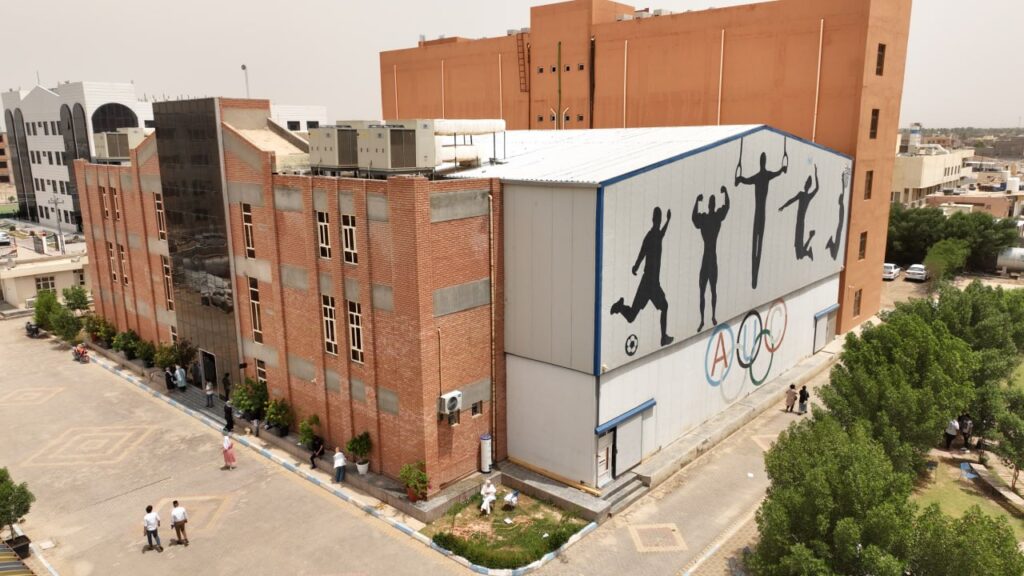
The University of Al-Maarif (UOA) demonstrates a strong commitment to promoting Good Health and Well-being (SDG 3) through the creation of an inclusive, supportive, and health-conscious campus environment. Central to this commitment is the UOA Sports Arena, a shared multi-purpose athletic and wellness facility that provides opportunities for physical activity, fitness training, recreational sports, and community engagement. The arena is utilized by students, faculty, university staff, and members of the surrounding community, reflecting the university’s belief that health is a collective and shared responsibility, and that universities play a vital role in shaping the health culture of society.
The UOA Sports Arena serves not only as a venue for sports activities, but also as a platform for encouraging healthy living habits, fostering positive social connections, developing leadership and teamwork skills, and supporting mental wellness. By offering accessible and safe sports facilities, structured exercise programs, awareness-raising campaigns, and community-centered events, the University of Al-Maarif contributes to building a healthier and more resilient society in the Al-Anbar region.
This initiative aligns directly with:
- SDG 3: Good Health and Well-being
- SDG 4: Quality Education
- SDG 10: Reduced Inequalities
- SDG 11: Sustainable Cities and Communities
- SDG 17: Partnerships for the Goals
1. Facilities and Infrastructure
The UOA Sports Arena is equipped with high-quality facilities designed to accommodate a wide range of physical activities, training sessions, recreational sports, and community events. These facilities are maintained according to safety standards and are accessible to users of different ages and physical abilities.
1.1 Fitness and Strength Training
The arena features a modern fitness center equipped with:
- Cardio workout machines (treadmills, stationary bicycles, ellipticals).
- Strength training equipment (machines, weight racks, resistance tools).
- Functional training zones (core, flexibility, balance exercise areas).
Professional fitness coaches and supervisors are present to support safe equipment use, assist training programs, and provide personalized health and fitness guidance.
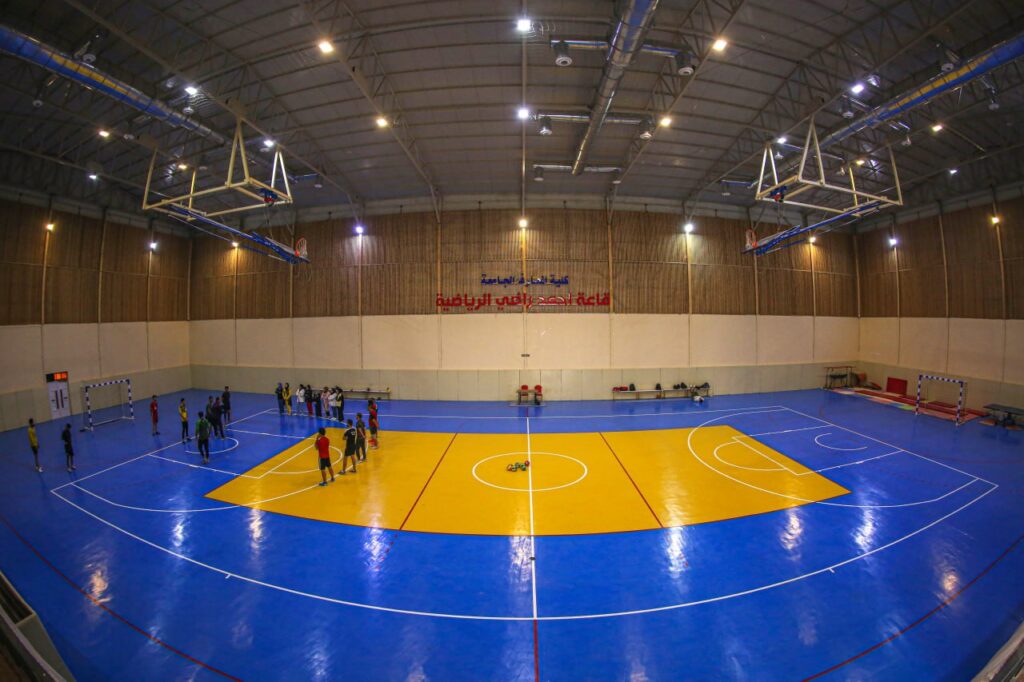
1.2 Indoor Multi-Purpose Sports Halls
The arena includes spacious indoor halls designed for:
- Basketball
- Volleyball
- Indoor football (futsal)
- Badminton
- Table tennis
These halls support both structured team practice and recreational play. They are used for academic physical education courses as well as inter-faculty and inter-university tournaments.
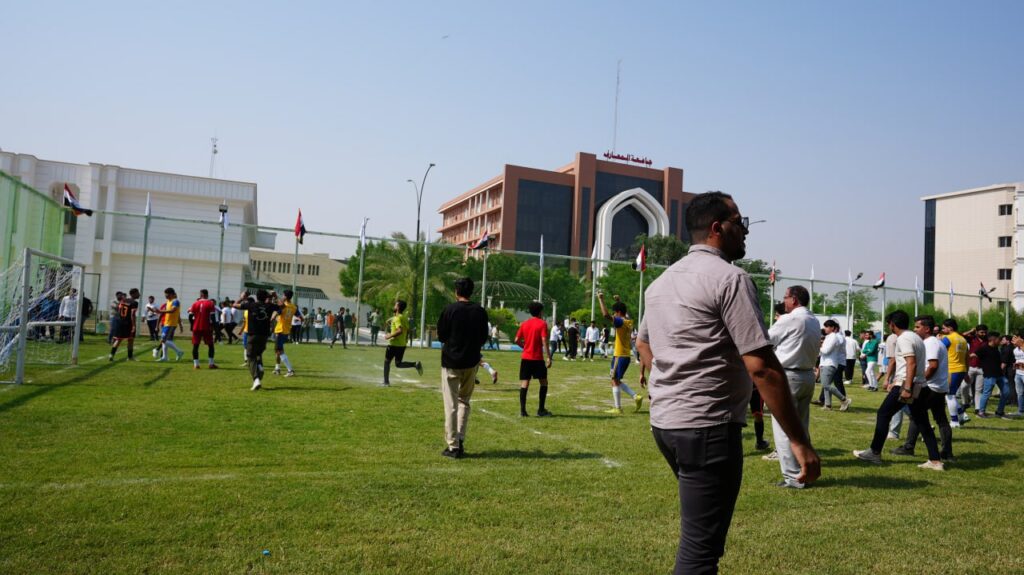
1.3 Outdoor Sports Grounds
UOA maintains outdoor athletic spaces, including:
- A standard football field
- Outdoor volleyball and basketball courts
- Running and warm-up tracks
These outdoor areas are used daily by students and community clubs, particularly for seasonal tournaments and fitness programs.
1.4 Accessibility and Safety
To ensure inclusiveness, the sports arena provides:
- Supervised training environments
- Accessible pedestrian walkways
- Scheduled time slots to ensure equal access for all users
- Medical first-aid assistance on site
This commitment ensures that sports participation is safe, respectful, and culturally appropriate.
2. Campus Sports Programs and Student Participation
Sports at UOA are viewed as a key element of student development and personal well-being. The Deanship of Student Affairs organizes structured and ongoing athletic programs that promote participation and engagement.
2.1 Student Sports Clubs
Students are encouraged to join university sports teams and clubs in:
- Football
- Volleyball
- Basketball
- Table tennis
- Athletics
- Fitness and strength building
These clubs compete in local, regional, and national university championships, contributing to student motivation, discipline, and a sense of belonging.
2.2 Inter-College and University Competitions
The university hosts internal tournaments among faculties to encourage healthy competition and teamwork. UOA also participates in national championships organized by:
- Ministry of Higher Education
- Iraqi Universities Sports Federation
Through these programs, UOA enhances the sporting culture of the campus and strengthens university identity.
3. Community Engagement and Shared Access
The UOA Sports Arena is considered a shared community resource that supports the health and well-being of the larger society.
3.1 School Partnerships
The university collaborates with public and private schools to organize:
- School sports festivals
- Training workshops for physical education teachers
- Fitness development programs for youth
- Friendly school tournaments hosted on UOA grounds
This partnership encourages children and adolescents to adopt active and healthy lifestyles at an early age.
3.2 Support for Local Sports Clubs and Associations
The sports arena is open for:
- Local youth clubs
- Sports academies
- Women’s fitness initiatives
- Community sports events
This shared use strengthens the university’s connection with the local community and promotes accessible health opportunities for all.
3.3 Public Health and Fitness Campaigns
UOA organizes awareness campaigns on:
- Physical exercise and cardiovascular health
- Healthy nutrition and obesity prevention
- Stress management and mental well-being
- Smoking and substance prevention
These activities are often supported by university faculty from the Medical Laboratory, Nursing, and Allied Health sciences.
4. Sports, Mental Health, and Social Well-being
The University of Al-Maarif recognizes the deep connection between physical activity and mental health. Participation in sports helps reduce stress, anxiety, and depression, while enhancing:
- Self-confidence
- Focus and academic performance
- Emotional resilience
- Social communication skills
The sports arena serves as a healthy social space, enabling positive student interaction and strengthening community identity.
5. SDG Alignment and Impact
| SDG | Contribution of the UOA Sports Arena |
|---|---|
| SDG 3 | Promotes healthy lifestyles, sports participation, mental health, and preventive wellness education. |
| SDG 4 | Integrates physical education into learning experiences and personal development. |
| SDG 10 | Ensures equal access to sports facilities and programs for women, youth, and underserved groups. |
| SDG 11 | Supports community sustainability through accessible public resources and shared facilities. |
| SDG 17 | Strengthens collaboration with ministries, schools, sports federations, and local communities. |