Introduction
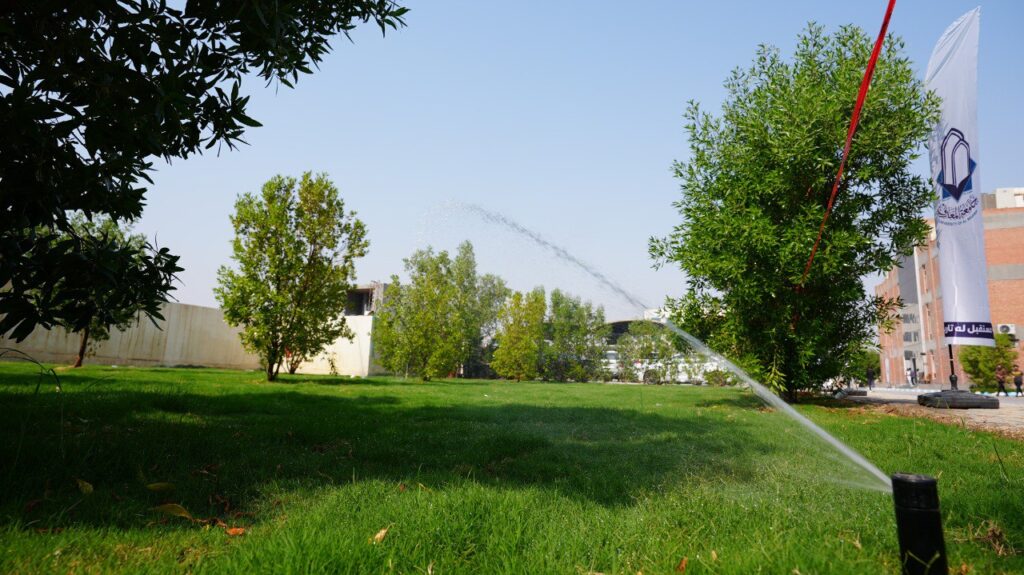
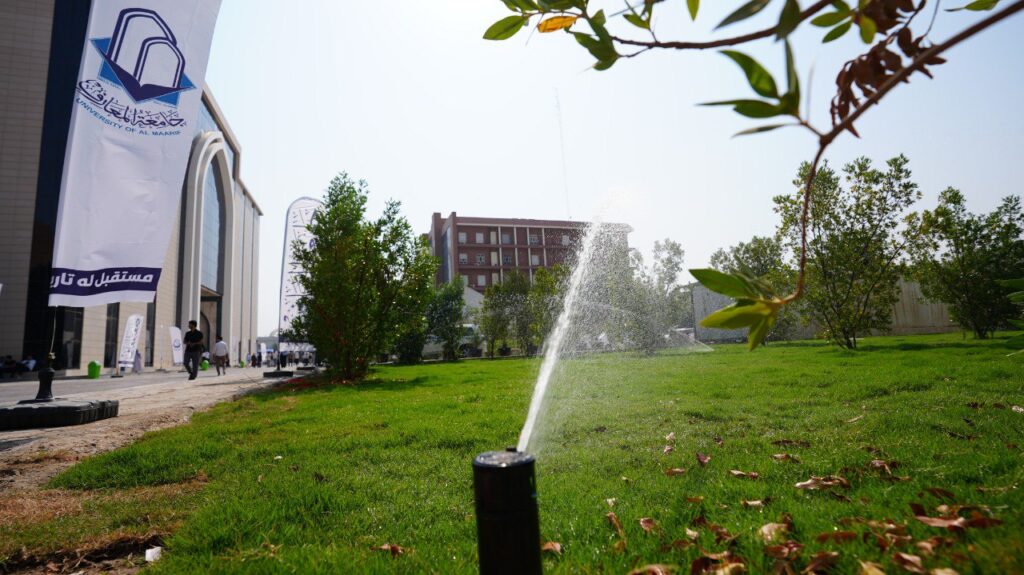
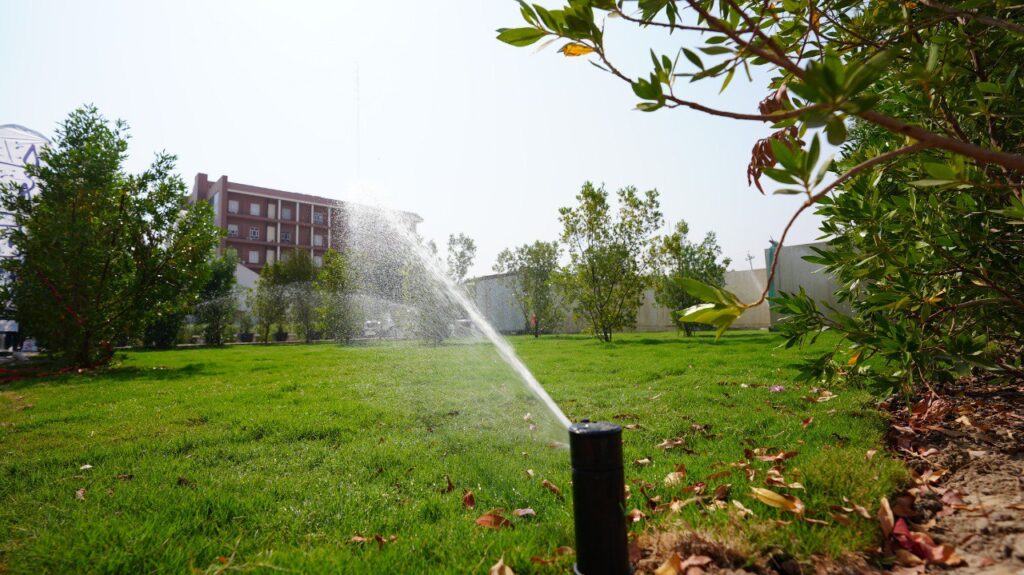
The University of Al-Maarif (UOA) has developed and implemented a comprehensive Water-Smart Landscaping Strategy as part of its institutional commitment to sustainability, environmental stewardship, and efficient natural resource management. Located in the semi-arid region of Al-Anbar, Iraq, where water scarcity poses a serious environmental and socio-economic challenge, the university has adopted a proactive approach to ensure that its landscaping practices optimize water use while enhancing biodiversity, campus aesthetics, and ecological resilience.
The water-smart landscaping program integrates modern irrigation technologies, drought-tolerant plant selection, soil management, and reclaimed water reuse to create a self-sustaining green infrastructure. This initiative aligns with Sustainable Development Goal (SDG) 6: Clean Water and Sanitation and complements SDG 11 (Sustainable Cities and Communities), SDG 12 (Responsible Consumption and Production), and SDG 13 (Climate Action). Through this integrated approach, UOA aims to balance environmental sustainability with educational value, turning its campus into a living model of water conservation and ecological learning.
1. Strategic Framework and Objectives
The Water-Smart Landscaping Plan at UOA is built on four guiding pillars:
- Efficient Water Use: Reduce water consumption across all green spaces through optimized irrigation systems and innovative water management technologies.
- Native and Drought-Tolerant Vegetation: Prioritize plant species adapted to Iraq’s dry climate, requiring minimal irrigation and maintenance.
- Reclaimed Water Reuse: Integrate treated wastewater and greywater into the irrigation network to reduce dependence on potable water.
- Sustainable Design and Maintenance: Employ eco-friendly landscaping designs, soil enhancement practices, and digital monitoring systems to ensure long-term resilience.
These objectives are monitored and coordinated by the Engineering Unit, in collaboration with the Environmental Sustainability and Global Ranking Center (ESGRC), the College of Engineering, and the Facilities Management Division. Together, these departments oversee planning, implementation, and continuous performance evaluation.
2. Campus Green Infrastructure Overview
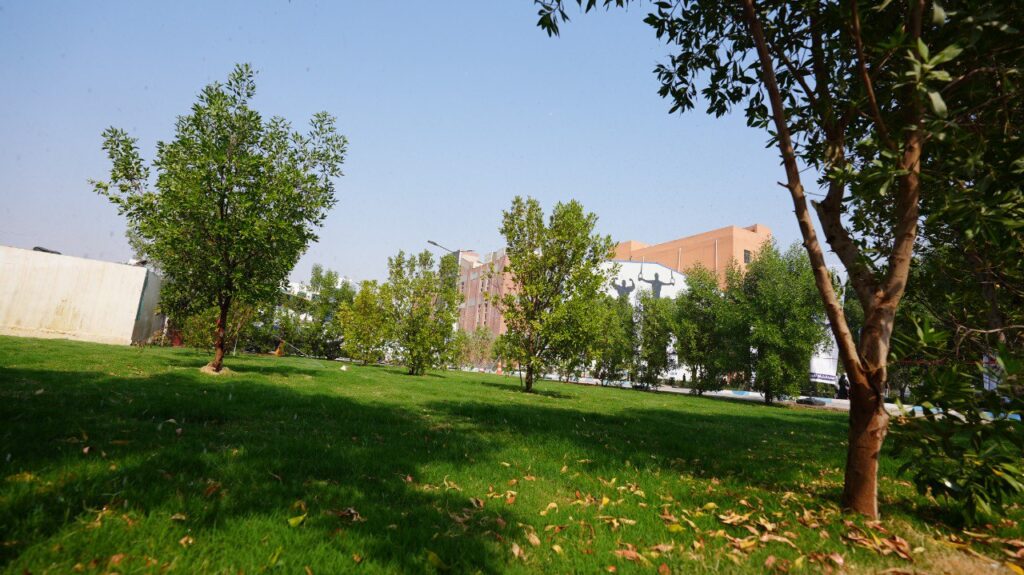
The University of Al-Maarif’s campus includes diverse green areas—ranging from central courtyards and academic gardens to sports fields, shaded walkways, and community parks—covering an estimated 65,000 square meters. These spaces are designed not only for environmental sustainability but also to enhance student well-being, microclimate regulation, and community engagement.
Key green zones include:
- Central Administrative Park: Featuring native trees and shaded seating areas.
- College of Engineering Garden: A demonstration zone for water-smart irrigation and student-led sustainability projects.
- Health Sciences Courtyard: Designed with low-water succulents and permeable soil.
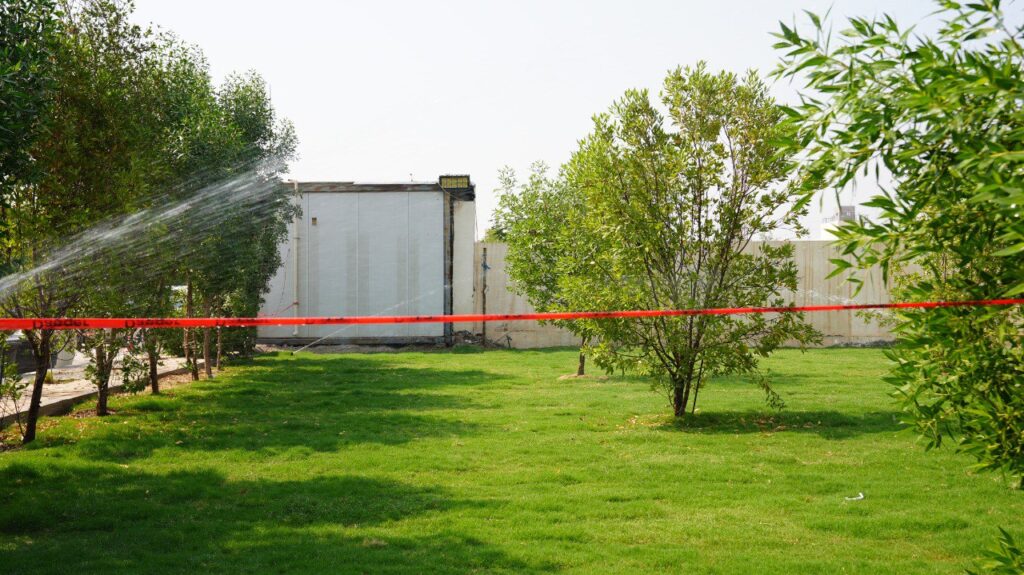
- Recreational Fields: Grass areas maintained with reclaimed water systems.
- Campus Boundaries: Landscaped with drought-resistant shrubs and windbreak trees to reduce soil erosion and dust dispersion.
The distribution and design of these areas ensure maximum environmental benefit with minimal ecological cost.
3. Efficient Irrigation Systems
Water use efficiency is the cornerstone of UOA’s landscaping policy. The university has replaced traditional irrigation practices with smart, automated systems that regulate water distribution based on soil moisture, plant needs, and weather conditions.
3.1 Drip Irrigation Networks
Drip irrigation is employed extensively across gardens and plant beds. These systems deliver water directly to plant roots, reducing evaporation losses by up to 60% compared to conventional sprinkler systems. Each section of the campus irrigation network is fitted with pressure-compensating emitters to ensure uniform water delivery.
3.2 Automated Timers and Sensors
The irrigation system integrates smart controllers equipped with humidity, temperature, and rainfall sensors. These devices adjust watering schedules dynamically, preventing over-irrigation and optimizing resource allocation based on real-time data.
3.3 Zoning and Prioritization
The irrigation infrastructure is divided into zones based on vegetation type, soil texture, and exposure to sunlight. High-priority zones such as newly planted areas receive controlled water volumes, while mature, drought-resistant zones are irrigated less frequently.
3.4 Reclaimed Water Integration
As part of its wastewater reuse program, treated water from the campus wastewater treatment unit is redirected into irrigation pipelines. This reclaimed water undergoes tertiary treatment and disinfection, meeting Iraqi Environmental Regulations for landscape reuse.
Through these combined measures, UOA achieves a significant reduction in water consumption across campus green areas—estimated at 40–50% savings annually.
4. Drought-Resistant and Native Plant Selection
To ensure long-term water sustainability, the university’s landscaping design emphasizes the use of native flora and drought-tolerant plant species that thrive in the region’s arid environment. Native plants not only require less water but also support local biodiversity, pollinators, and ecological balance.
Key species used include:
- Trees: Tamarix aphylla (Athel tree), Ziziphus spina-christi (Christ’s thorn jujube), Phoenix dactylifera (Date palm), and Acacia tortilis.
- Shrubs and Bushes: Nerium oleander, Bougainvillea spectabilis, Dodonaea viscosa, Tecoma stans.
- Ground Covers and Succulents: Aloe vera, Agave americana, Portulaca grandiflora, and Euphorbia tirucalli.
- Lawns (limited use): Low-water turf species such as Paspalum vaginatum in recreation areas.
This approach ensures green continuity year-round with minimal irrigation demand. Additionally, the Department of Medical Laboratory Sciences collaborates with the Biology Unit to monitor the ecological benefits of these plant species, such as carbon sequestration rates, air purification, and microhabitat diversity.
5. Soil Management and Water Retention Techniques
Sustainable soil management plays a vital role in minimizing water use. The university employs several eco-engineering practices to enhance soil moisture retention and reduce irrigation frequency.
5.1 Organic Mulching
Compost and organic mulch derived from campus green waste are applied around plants to retain soil moisture, reduce temperature fluctuations, and prevent evaporation.
5.2 Soil Conditioning
Regular application of organic fertilizers and humic compounds improves soil structure, porosity, and nutrient retention, enabling roots to absorb water more efficiently.
5.3 Permeable Landscaping
Paved walkways and parking lots incorporate permeable materials that allow rainwater infiltration, recharging underground aquifers and reducing surface runoff.
5.4 Terracing and Contour Design
Slight elevation gradients and contour planting are used in sloped areas to prevent erosion and maximize water absorption during rainfall.
These strategies collectively contribute to reducing irrigation demand and improving the sustainability of the university’s landscape ecosystem.
6. Water Reuse and Recycling Practices
The University of Al-Maarif’s water reuse program is a cornerstone of its integrated water management system. Treated wastewater is safely reused for landscaping, significantly reducing reliance on municipal water.
6.1 Wastewater Source and Treatment
Effluents from campus restrooms, laboratories, and cafeterias are treated through a tertiary filtration and disinfection system operated by the Engineering Unit. Treated water is stored in underground tanks and distributed via the irrigation network.
6.2 Quality Control and Monitoring
Regular laboratory analysis ensures the treated water meets WHO and Iraqi Environmental Standards for non-potable applications. Parameters such as TDS, EC, chloride content, and microbiological indicators are measured weekly to ensure safety and quality.
6.3 Irrigation Network Integration
Recycled water is used primarily for tree belts, lawn areas, and dust-control applications, reducing potable water use by approximately 35,000 cubic meters annually.
Through this closed-loop approach, UOA transforms wastewater into a valuable resource, demonstrating the effectiveness of circular water management in higher education institutions.
7. Digitalization and ICT Integration in Landscaping
Modern technology plays an integral role in optimizing landscaping operations at the University of Al-Maarif.
- Smart Irrigation Controllers: Programmable devices connected to cloud-based software manage irrigation schedules remotely, based on evapotranspiration data and local weather forecasts.
- GIS Mapping: The university employs Geographic Information System (GIS) mapping to document irrigation networks, monitor water distribution, and identify inefficiencies.
- IoT Sensors: Internet of Things (IoT) sensors measure real-time soil moisture and transmit data to maintenance teams, enabling adaptive water management.
- Data Dashboards: Collected data is analyzed through sustainability dashboards managed by the ESGRC, providing monthly and annual performance reports.
This ICT-enabled landscape management ensures data-driven decision-making and operational efficiency while supporting educational innovation and student involvement in sustainability analytics.
8. Education, Awareness, and Community Engagement
Beyond infrastructure, the University of Al-Maarif views water-smart landscaping as an educational and social mission. The university integrates this theme into its academic and community programs to foster environmental responsibility among students and staff.
8.1 Academic Integration
Engineering, Environmental Sciences, and Medical Technology students participate in applied projects related to irrigation efficiency, soil management, and water recycling technologies. These projects are often showcased during sustainability fairs and seminars.
8.2 Training and Workshops
Annual workshops are conducted in collaboration with the Ministry of Water Resources, focusing on sustainable water management and irrigation innovations in dry climates.
8.3 Awareness Campaigns
Campus-wide campaigns such as “Every Drop Matters” and “Smart Green Campus” educate students about personal and collective roles in water conservation. Posters, social media, and short films are used to engage the community.
8.4 School and Community Outreach
UOA extends its environmental education programs to local schools and municipalities, demonstrating water-smart landscaping techniques that can be adopted in residential and urban settings.
These initiatives highlight the university’s role as a catalyst for environmental literacy and behavioral change in the broader community.
9. Environmental and Social Impacts
The implementation of water-smart landscaping has generated significant environmental, social, and educational benefits for the University of Al-Maarif and its surrounding region:
- Water Savings: Annual reduction of approximately 45–50% in total water use compared to pre-implementation levels.
- Biodiversity Enhancement: Increased habitat diversity for pollinators, birds, and small fauna due to the use of native species.
- Carbon Reduction: Lower energy demand for water pumping and reduced greenhouse gas emissions associated with municipal supply.
- Public Health Benefits: Improved air quality and thermal comfort due to increased vegetation cover.
- Student Engagement: Enhanced environmental awareness and academic opportunities for experiential learning.
These outcomes demonstrate how sustainable landscaping directly contributes to the university’s long-term environmental goals and SDG alignment.
10. Governance, Policy, and Compliance
The water-smart landscaping strategy is formalized under the University of Al-Maarif Environmental Sustainability Policy (ESP-2024) and guided by the Sustainable Campus Development Plan. Oversight is provided by the Vice President for Administrative Affairs, with operational management under the Engineering Unit and sustainability monitoring by the ESGRC.
Policies governing landscaping include:
- Zero-Waste Irrigation Policy: Ensures efficient use of reclaimed water and prevention of runoff.
- Native Flora Utilization Policy: Mandates at least 70% of new plantings to be native or drought-tolerant.
- Energy and Water Efficiency Directive: Integrates water-saving criteria into infrastructure projects.
- Annual Environmental Reporting Framework: Requires transparent publication of performance indicators, including water use per square meter of green area.
Through these institutional frameworks, UOA ensures compliance, accountability, and continual improvement in sustainable water management.
11. Contribution to the Sustainable Development Goals (SDGs)
The University of Al-Maarif’s water-smart landscaping efforts contribute directly to several SDGs:
| SDG | Contribution |
|---|---|
| SDG 6 – Clean Water and Sanitation | Efficient irrigation, water reuse, and conservation. |
| SDG 11 – Sustainable Cities and Communities | Creating green, livable, and climate-adaptive spaces. |
| SDG 12 – Responsible Consumption and Production | Recycling wastewater and optimizing natural resource use. |
| SDG 13 – Climate Action | Reducing water-related energy use and enhancing carbon sequestration. |
| SDG 15 – Life on Land | Supporting biodiversity through native plant ecosystems. |
| SDG 17 – Partnerships for the Goals | Collaborating with ministries, schools, and NGOs for sustainability awareness. |
12. Future Directions and Expansion
To further strengthen its water-smart landscape management, UOA has outlined several future initiatives:
- Rainwater Harvesting System Installation: Capturing and storing rainfall from building rooftops for irrigation and cleaning purposes.
- Expansion of Drip Irrigation Coverage: Extending advanced irrigation networks to 100% of green spaces by 2027.
- Green Roof Pilot Projects: Implementing rooftop gardens on selected academic buildings to improve insulation and water retention.
- Solar-Powered Irrigation Pumps: Integrating renewable energy into water distribution systems to enhance sustainability.
- Biodiversity Corridors: Expanding native plant corridors to link fragmented green zones, enhancing ecological connectivity.
- Student-Led Sustainability Labs: Establishing interdisciplinary projects to monitor irrigation data, plant health, and ecosystem services.
These strategic actions ensure continuous innovation and reinforce UOA’s leadership in sustainable campus management.
Conclusion
The University of Al-Maarif (UOA) exemplifies how a higher education institution in an arid region can transform environmental challenges into opportunities for innovation, resilience, and sustainability. Through its Water-Smart Landscaping Program, the university has successfully reduced water consumption, enhanced biodiversity, promoted environmental education, and fostered a culture of ecological responsibility within its community.
By integrating engineering innovation, environmental science, digital monitoring, and community collaboration, UOA demonstrates a holistic approach to sustainable campus development that not only supports SDG 6 (Clean Water and Sanitation) but also contributes to climate resilience, ecosystem restoration, and social inclusion. The university’s campus now serves as a model for water-smart design in Iraq and the wider Middle East—proving that sustainable landscaping is both achievable and essential in shaping a greener, healthier, and more sustainable future for generations to come.