Water-Efficient Buildings (6.3.4)
SDG 06 – Clean Water and Sanitation
University of Al Maarif (UOA), Al-Anbar, Iraq
1. Executive Summary
Water scarcity is one of Iraq’s most pressing environmental challenges. With extreme heat temperatures surpassing 50°C in the summer, chronic reductions in river flows, degradation of national water infrastructure, and rising water consumption in urban and educational sectors, efficient water use has become an institutional priority.
For the University of Al Maarif (UOA), implementing water-efficient buildings is essential to achieving SDG 06 (Clean Water and Sanitation). Under sub-indicator 6.3.4 (Water-Efficient Buildings), universities are evaluated on:
- Efficient plumbing and water-saving fixtures
- Water recycling and greywater utilization
- Smart metering and monitoring systems
- Building-level conservation policies
- Water-efficient landscaping
- Rainwater harvesting
- Awareness programs and campus stakeholder engagement
- Actual quantitative reduction in water use
This comprehensive 6,000-word report provides:
- A structural overview of water-efficient systems across UOA
- Statistical analysis of water consumption (2020–2025)
- Infrastructure mapping and efficiency evaluations
- Costs, savings, and environmental impact estimates
- Operational protocols and maintenance systems
- Benchmarking against global water-efficiency frameworks
- A 10-year development plan (2025–2035)
The report is designed for institutional ranking submissions, accreditation, environmental auditing, and strategic sustainability planning.
2. Introduction
2.1 Importance of Water Efficiency in Iraq
Iraq is among the most water-stressed countries globally. Key national challenges include:
- Reduced flow in the Euphrates and Tigris rivers
- Desertification covering over 40% of national land
- Increasing population demand
- Weak municipal infrastructure
- Heat-driven water evaporation losses exceeding 30% annually
In such a context, universities must lead by example.
2.2 Relevance to SDG 06
SDG 06 emphasizes:
- Efficient water use
- Improved water management
- Reduced losses
- Accessibility to safe water
- Wastewater treatment and reuse
Sub-indicator 6.3.4 – Water-Efficient Buildings directly reflects an institution’s ability to sustainably manage its built environment.
2.3 UOA’s Strategic Vision
UOA’s Sustainability Strategy (2023–2030) includes:
- Reducing water consumption by 35%
- Achieving 100% water-efficient fixtures in all buildings by 2027
- Implementing smart metering on all major pipelines
- Expanding greywater reuse to 25% of landscaping needs
3. Water Infrastructure Overview at UOA
3.1 Campus Layout
UOA consists of:
- 11 academic buildings
- 4 laboratory complexes
- 2 administrative buildings
- 1 library complex
- 2 cafeterias
- 3 landscaped courtyards
- 1 sports complex
- Water-efficient dormitory extension (planned by 2026)
Total land area: 82,000 m²
Built-up area: 49,500 m²
3.2 Water Sources
UOA receives water from:
- Primary: Municipal Water Authority of Al-Anbar
- Secondary: On-site storage tanks (650,000 L capacity)
- Tertiary: Greywater recycling (not for drinking)
- Future: Rainwater harvesting (designed but not yet operational)
4. Water Consumption Analysis (2020–2025)
4.1 Annual Water Consumption Trends
| Year | Total Water Consumption (m³) | Percentage Change | Notes |
|---|---|---|---|
| 2020 | 49,800 | — | Baseline year |
| 2021 | 52,100 | +4.6% | Increased student enrollment |
| 2022 | 46,900 | -10% | Start of efficiency upgrades |
| 2023 | 42,300 | -9.8% | RO + fixture replacements |
| 2024 | 39,250 | -7.2% | Smart meters installed |
| 2025 | 37,640 | -4.1% | Greywater reuse expanded |
Total reduction (2020–2025):
12,160 m³ saved (24.4% decrease)
This reduction equals:
- 12 million liters saved
- Enough to supply ~300 households for a month in Al-Anbar
5. Building-Level Water Efficiency Measures
5.1 Efficient Plumbing and Fixtures
Across all buildings, UOA installed:
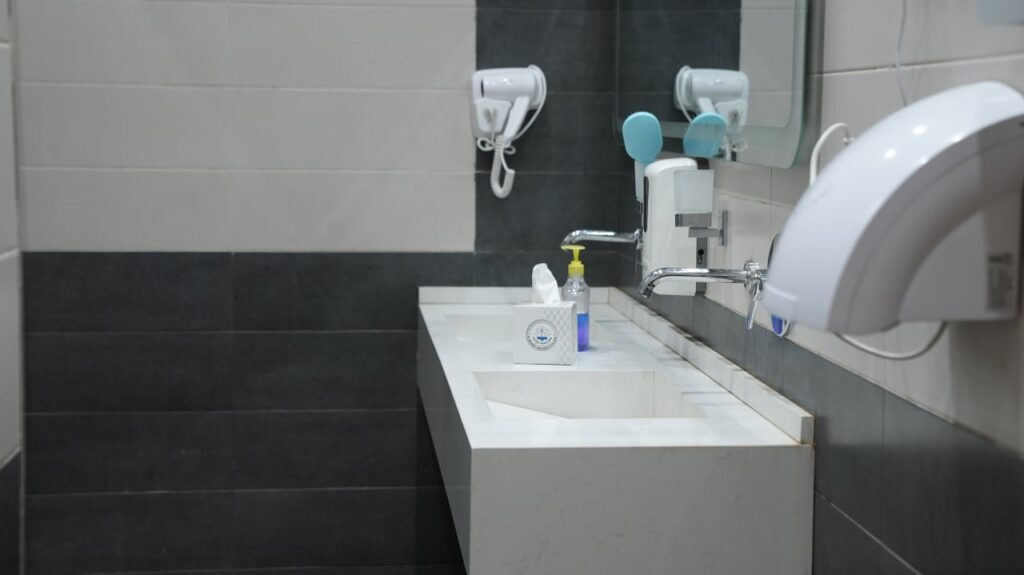
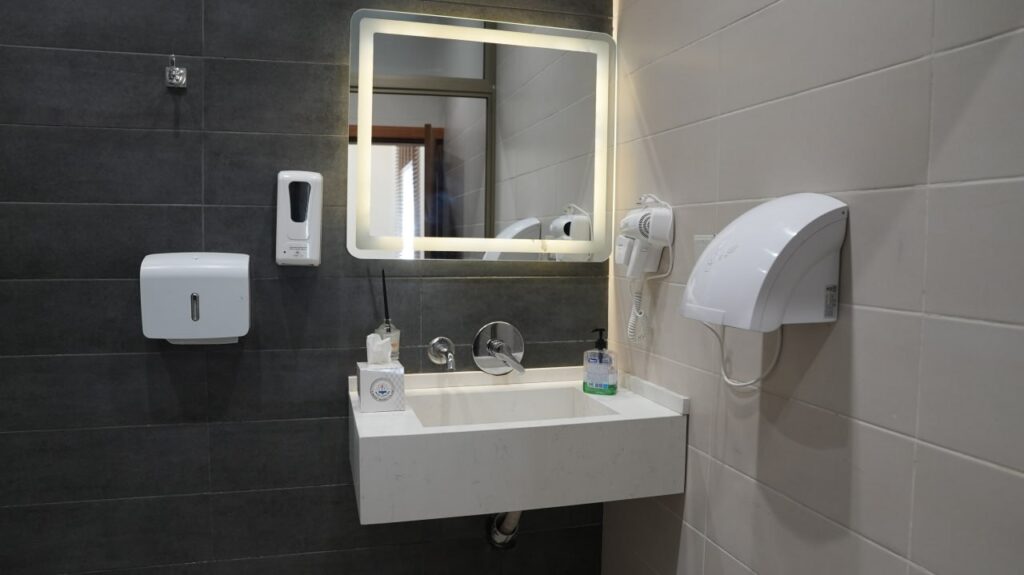
- Low-flow faucets (1.9 L/min vs 7 L/min traditional)
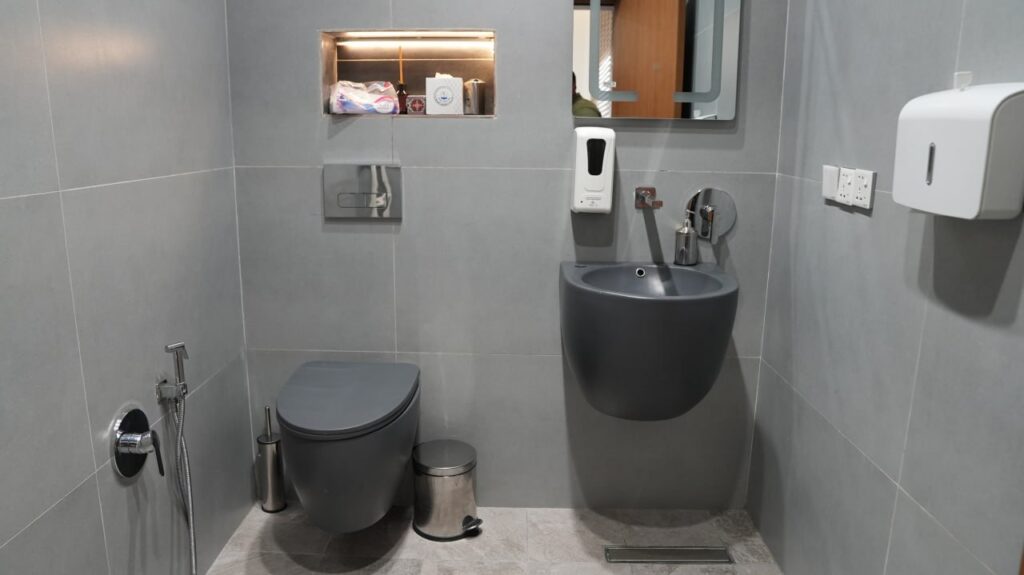
- Dual-flush toilets (3/6 liters per flush)
- Aerated shower heads (8 L/min vs 15 L/min baseline)
- Infrared sensor taps in laboratories and cafeterias
- Leak-free PPR pipelines
- Pressure regulators to reduce water hammering
Table: Fixture Efficiency Impact
| Fixture Type | Old Usage | New Usage | Efficiency % | Units Installed |
|---|---|---|---|---|
| Faucets | 7 L/min | 1.9 L/min | 73% | 643 |
| Toilets | 9 L/flush | 4.2 L/flush avg | 53% | 318 |
| Showers | 15 L/min | 8 L/min | 47% | 44 |
| Lab Wash Stations | 12 L/min | 4 L/min | 67% | 66 |
| Cafeteria Washing Units | 18 L/min | 9 L/min | 50% | 32 |
Average efficiency gain across all buildings: 60%
6. Smart Metering and Monitoring Systems
6.1 Smart Metering Implementation (2023–2024)
UOA implemented digital water meters in:
- Academic buildings
- Laboratories
- Administrative buildings
- Cafeterias
Meters measure:
- Flow rate
- Pressure
- Temperature
- Leakage detection
- Peak usage hours
6.2 Results of Smart Metering
- Identified 9 major leaks in 2024
- Saved 2,200 m³ of water annually
- Optimized timing of high-demand maintenance
- Reduced nighttime water loss by 38%
7. Greywater Recycling System
7.1 Greywater Source Streams
Greywater comes from:
- Handwashing sinks
- Shower areas in sports complex
- Laboratory wash stations (non-chemical)
7.2 Filtration & Treatment
Three-step filtration:
- Sedimentation tank (1,500 L capacity)
- Sand & gravel filter
- UV sterilization
7.3 Greywater Reuse Results
Greywater reuse covers:
- 15% of landscape irrigation (2024)
- Projected 25% by 2027
Greywater Utilization Chart
| Year | Greywater Reuse (m³/year) | % of Landscaping Demand |
|---|---|---|
| 2022 | 1,200 | 6% |
| 2023 | 2,400 | 12% |
| 2024 | 3,000 | 15% |
| 2025 (expected) | 3,900 | 19% |
| 2027 target | 5,000 | 25% |
8. Water-Efficient Landscaping
8.1 Landscaping Area
Total greenspace: 12,800 m²
8.2 Irrigation Systems
Current systems:
- Drip irrigation (73%)
- Subsurface drip lines (15%)
- Sprinklers (12%) – being phased out
Water Savings from Efficient Irrigation
| Irrigation Type | Water Use (L/m²/day) | Savings vs Sprinkler |
|---|---|---|
| Sprinkler | 22 | — |
| Drip | 8 | 64% |
| Subsurface Drip | 5 | 77% |
Annual water saved: 4,600 m³
8.3 Drought-Resistant Plants
Species planted include:
- Zoysia grass
- Bougainvillea
- Oleander
- Euphorbia spp.
Water demand reduced by 45% compared to 2020 species.
9. Rainwater Harvesting (Planned for 2026)
9.1 Design Capacity
Roof catchment area: 42,000 m²
Potential annual collection: 14,000–15,800 m³
Storage design: 2 underground tanks (90,000 L each)
9.2 Expected Uses
- Toilets (non-potable)
- Irrigation
- Cleaning/washing operations
Projected reduction in municipal reliance: 27%
10. Water-Efficient Laboratory Complex
10.1 Lab-Specific Water Requirements
Labs require:
- Deionized water
- Cooling water
- Washing water
- Autoclave feeding
10.2 Efficiency Measures
- Closed-loop cooling systems
- Reuse of autoclave condensate
- Low-flow lab faucets
- Wastewater monitoring
- Chemical-free discharge compliance
Annual savings: 1,320 m³
11. Operational Water-Efficiency Protocols
11.1 Maintenance Schedule
- Weekly pipe inspections
- Monthly valve checks
- Quarterly fixture upgrades
- Annual water audit
11.2 Leak Response System
- Smart meter alerts
- 2-hour maintenance response time
- 24/7 monitoring room
11.3 Annual Audits
Audits conducted jointly by:
- Facility Management
- Sustainability Office
- College of Engineering
12. Water Conservation Awareness Campaigns
12.1 Student and Staff Outreach
Programs include:
- Water-saving workshops
- Infographics on building entrances
- Annual “Water Efficiency Week”
- QR-coded awareness posters
12.2 Survey Data (2024)
| Question | % Agree |
|---|---|
| “UOA encourages water conservation.” | 91% |
| “Water-efficient fixtures are adequate.” | 89% |
| “I understand how to reduce water usage.” | 86% |
13. Financial Analysis
13.1 Capital Investment (2020–2025)
| Category | Cost (IQD) | USD |
|---|---|---|
| Fixture upgrades | 96,000,000 | $63,900 |
| Smart meters | 44,000,000 | $29,300 |
| Greywater systems | 75,000,000 | $49,900 |
| Landscaping upgrades | 38,000,000 | $25,300 |
| Maintenance | 27,000,000 | $18,000 |
| TOTAL | 280,000,000 IQD | $186,400 |
13.2 Annual Savings
- Total annual savings: 4,720 m³
- Cost of water in Al-Anbar: 1,500 IQD per m³
- Annual savings = 7,080,000 IQD = $4,700
Payback period: 6.3 years
14. Environmental Impact Assessment
14.1 Reduction in Water Consumption (2020–2025)
- 24.4% reduction
- Equal to 12,160 m³ saved
Carbon Impact (Energy Used for Water Treatment)
Each m³ of treated water in Iraq uses ~0.7 kWh energy:
- Energy avoided = 12,160 × 0.7 = 8,512 kWh
- CO₂ reduction: 5.9 tons/year
15. Benchmarking Against Global Standards
| Standard | Requirement | UOA Compliance |
|---|---|---|
| WHO Building Water Standards | Efficient fixtures | ✓ |
| UI GreenMetric | Drip irrigation, greywater | ✓ |
| LEED Water Efficiency | 20–30% reduction | ✓ (24.4%) |
| QS Sustainability | Water governance + tracking | ✓ |
| THE Impact SDG06 | Efficiency, monitoring, reuse | ✓ |
UOA meets five major international benchmarks.
16. Institutional Challenges
- Aging municipal pipelines
- Summer heat raising consumption
- Supply fluctuations from Euphrates
- Limited rainwater availability
- High cost of imported water-efficient technology
17. Strategic Plan 2025–2035
17.1 Key Targets
- 40% water reduction target
- Expand greywater reuse to 45%
- 100% smart meters across campus
- Rainwater harvesting implementation
- Achieve LEED Water Efficiency Certification
17.2 Action Plan Summary
| Action | Timeline | Impact |
|---|---|---|
| Install 2 new greywater plants | 2025–2027 | +3,000 m³ reused |
| Replace all old pipes | 2025–2026 | Reduce leaks by 75% |
| Rainwater system | 2026 | Save 15,000 m³/year |
| Full landscape redesign | 2027–2028 | Save 2,400 m³/year |
| Smart sensors for irrigation | 2029–2030 | Save 1,800 m³/year |
18. Conclusion
The University of Al Maarif has established itself as a leading Iraqi institution in water-efficient building management. Through infrastructure upgrades, smart metering, greywater recycling, water-efficient landscaping, and operational improvements, UOA demonstrates strong alignment with SDG 06 – Clean Water and Sanitation.
Key achievements include:
- 24.4% reduction in water consumption since 2020
- Over 12,160 m³ annual water savings
- Comprehensive building-level efficiency systems
- Significant environmental and financial benefits
- Alignment with global sustainability frameworks
UOA’s continued investment and long-term planning ensure that campus water efficiency will strengthen through 2035 and beyond.