Introduction
The University of Al-Maarif (UOA) has established itself as a growing academic institution committed not only to excellence in teaching and research, but also to fostering impactful partnerships that advance sustainable development at the local, national, and international levels. This commitment aligns directly with the United Nations Sustainable Development Goal 17: Partnerships for the Goals, which emphasizes collaboration and collective action as essential drivers for achieving all other SDGs.
UOA recognizes that meaningful progress in areas such as quality education, public health, clean energy, climate action, innovation, and social development can only be achieved through sustained cooperation among educational institutions, government bodies, civil society organizations, private sector entities, and international agencies. Therefore, partnership-building is not a supplementary activity at UOA—it is a core component of the university’s institutional strategy for long-term development and community impact.
UOA’s research partnerships are built on key principles:
| Principle | Meaning in Practice | UOA Focus |
|---|---|---|
| Mutual benefit | Shared resources and knowledge for common goals | Education, innovation, sustainability |
| Community engagement | Ensuring outcomes benefit society directly | Health, environment, youth development |
| Capacity building | Developing skills, leadership, and research culture | Faculty development and student training |
| Accountability and transparency | Clear documentation and assessment of impacts | Measurable SDG-aligned outcomes |
Through these partnerships, UOA actively contributes to the creation, dissemination, and application of knowledge that improves lives, strengthens institutions, and promotes sustainable progress throughout Iraq and beyond.
Institutional Framework Supporting Partnerships
1. Office of International Relations and Cultural Exchange
This office coordinates:
Academic mobility programs
Joint degrees and research agreements
Visiting scholar collaborations
International conference participation
It serves as the primary gateway for global institutional engagement.
2. Sustainability and Global Ranking Unit
This unit ensures that all partnership activities:
Align with SDG goals
Are documented for ranking submission
Produce measurable societal or environmental impact
3. Faculties and Research Centers
Each college maintains its own partnership portfolio based on academic specialization, including:
Engineering and Medical Devices Techniques (technology & innovation)
Pharmacy and Health Sciences (public health collaboration)
Computer Science and IT (digital transformation projects)
Business Administration (entrepreneurship and leadership networks)
Types of Partnerships Developed by UOA
| Partnership Category | Key Functions | Example Roles |
|---|---|---|
| Academic and Research Institutions | Joint research, faculty exchange, curriculum development | Universities, research institutes |
| Government Ministries | Policy alignment, workforce development, public services | Ministries of Education, Health, Youth |
| Healthcare Sector Partners | Medical training, public health outreach, clinical research | Hospitals, clinics, medical networks |
| Private Sector and Industry | Entrepreneurship support, internships, applied R&D | Technology firms, industrial suppliers |
| Non-Governmental Organizations (NGOs) | Community development and social impact projects | Local NGOs, humanitarian initiatives |
| International Agencies | Capacity building, global research funding | UNESCO, WHO, DAAD, Erasmus+ |
Major Research and Academic Partnership Domains
A. Partnerships to Enhance Education Quality (SDG 4)
UOA collaborates closely with:
The Iraqi Ministry of Higher Education
Quality Assurance and Accreditation Boards
Regional and international universities
These partnerships:
Strengthen academic program design
Enable joint teaching initiatives
Facilitate the exchange of educational innovations
UOA routinely hosts workshops, seminars, and training programs for schoolteachers, university faculty, and early-career researchers, improving the overall educational ecosystem in Al-Anbar and surrounding regions.
B. Partnerships in Public Health and Medical Research (SDG 3)
Through agreements with hospitals, health centers, and medical associations, UOA supports:
Clinical training for medical and health sciences students
Joint research on disease prevention and treatment
Community health campaigns and medical outreach events
These programs directly benefit local communities, especially in underserved areas where access to healthcare is limited.
C. Partnerships Supporting Clean Energy, Climate, and Sustainability Research (SDGs 7 & 13)
UOA works with:
Renewable energy suppliers
Engineering and technology companies
Environmental research organizations
Research focuses include:
Solar energy systems optimization
Waste-to-energy feasibility models
Climate adaptation and heat mitigation research for Al-Anbar
The campus is also used as a testbed for renewable energy prototypes, making it a living sustainability laboratory.
D. Partnerships for Innovation, Entrepreneurship, and Employment (SDG 8 & SDG 9)
The university collaborates with:
Business incubators and startup accelerators
Chambers of commerce and industry
Corporate and nonprofit project sponsors
These partnerships provide:
Internships and hands-on training experiences
Career development workshops
Support for student-led entrepreneurial ventures
Such collaborations help bridge the gap between academic learning and labor market needs.
E. Community and Social Development Partnerships (SDGs 10 & 11)
UOA plays a central role in:
Literacy campaigns
Village development support
Rehabilitation and youth leadership initiatives
Cultural and heritage preservation activities
These community-driven projects reinforce social cohesion, inclusiveness, and equal opportunity.
Research Output Strengthened by Partnerships
UOA research partnerships have resulted in:
Peer-reviewed journal publications
Conference proceedings
Joint student research projects
Policy studies and social impact assessments
These outcomes reflect:
Increased research capacity
Faculty development
Enhanced student research participation
Strengthening of Iraq’s knowledge economy
Capacity Building and Knowledge Exchange
UOA conducts:
Faculty training programs
Visiting scholar exchanges
International research internships for students
Dual supervision of graduate research projects
These activities expand academic networks and raise institutional research standards.
Community Impact and Social Responsibility
Through partnership-supported research and service activities, UOA:
Addresses public health needs
Supports schools and youth groups
Promotes digital literacy
Advances sustainability awareness in the community
These contribute directly to SDG-aligned social progress in Al-Anbar.
| # | Research Title | Link |
|---|---|---|
|
1 |
Intimate partner violence against pregnant women during the COVID-19 pandemic: a systematic review and meta-analysis |
|
|
2 |
Comprehensive review on the Bis–heterocyclic compounds and their anticancer efficacy |
|
|
3 |
Application of extracellular vesicles derived from mesenchymal stem cells as potential therapeutic tools in autoimmune and rheumatic diseases |
|
|
4 |
Cytotoxicity evaluation of environmentally friendly synthesis Copper/Zinc bimetallic nanoparticles on MCF-7 cancer cells |
|
|
5 |
Shining the light on clinical application of mesenchymal stem cell therapy in autoimmune diseases
|
|
|
6 |
Effects of sulfur dioxide inhalation on human health: A review |
|
|
7 |
Anticancer Drug-Loading Capacity of Green Synthesized Porous Magnetic Iron Nanocarrier and Cytotoxic Effects Against Human Cancer Cell Line |
|
|
8 |
Engineering and surface modification of carbon quantum dots for cancer bioimaging |
|
|
9 |
Application of aluminum nitride nanotubes as a promising nanocarriers for anticancer drug 5-aminosalicylic acid in drug delivery system |
|
|
10 |
Development of ensemble machine learning approaches for designing fiber-reinforced polymer composite strain prediction model |
 |
|---|
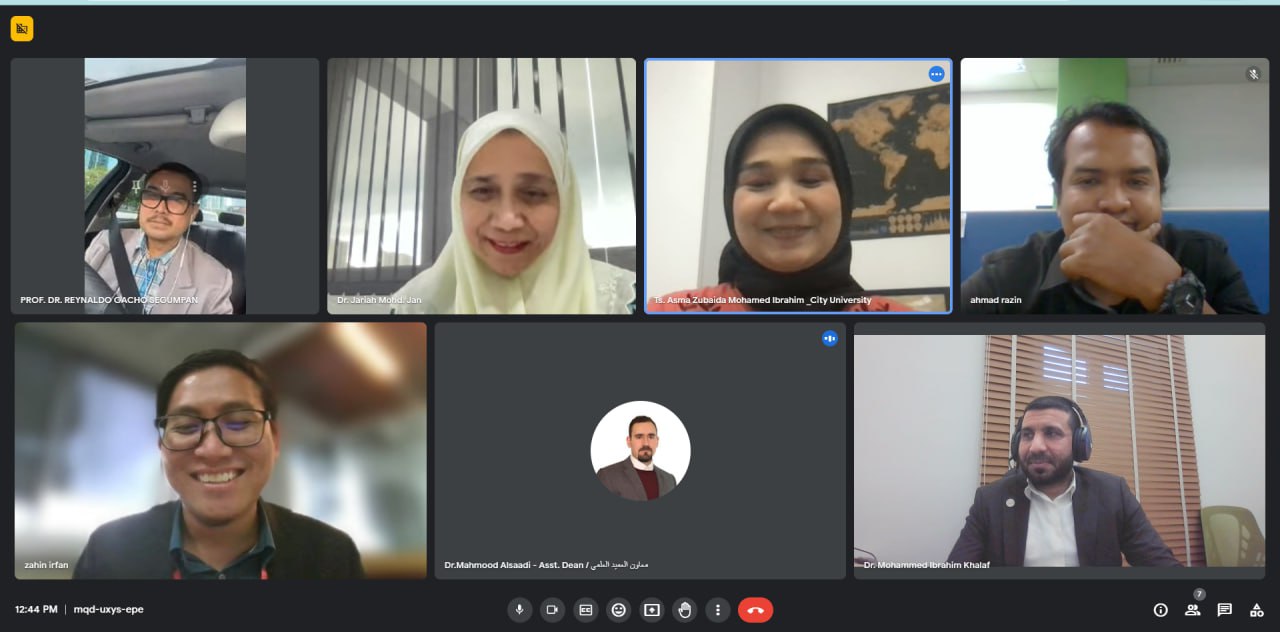
AUC Activates Cooperation Agreement with City University Malaysia |
On Tuesday, 28 December 2023, Al-Maarif University College held an electronic meeting with the University of City–Malaysia to activate existing cooperation agreements. The meeting was attended by the Deputy Dean for Scientific Affairs, Dr. Mahmood Abd Al-Razzq, and Dr. Mohammed Ibrahim Khalaf, Manager of the Quality Assurance and Academic Accreditation Unit. Discussions focused on collaboration in academic, scientific, cultural, research, and training programs, including courses, workshops, seminars, exchange visits, and specialist training. This meeting aimed to implement the college’s international agreements, enhance scientific and academic standards, and promote knowledge sharing and capacity building through partnerships with global universities. |
 |
|---|
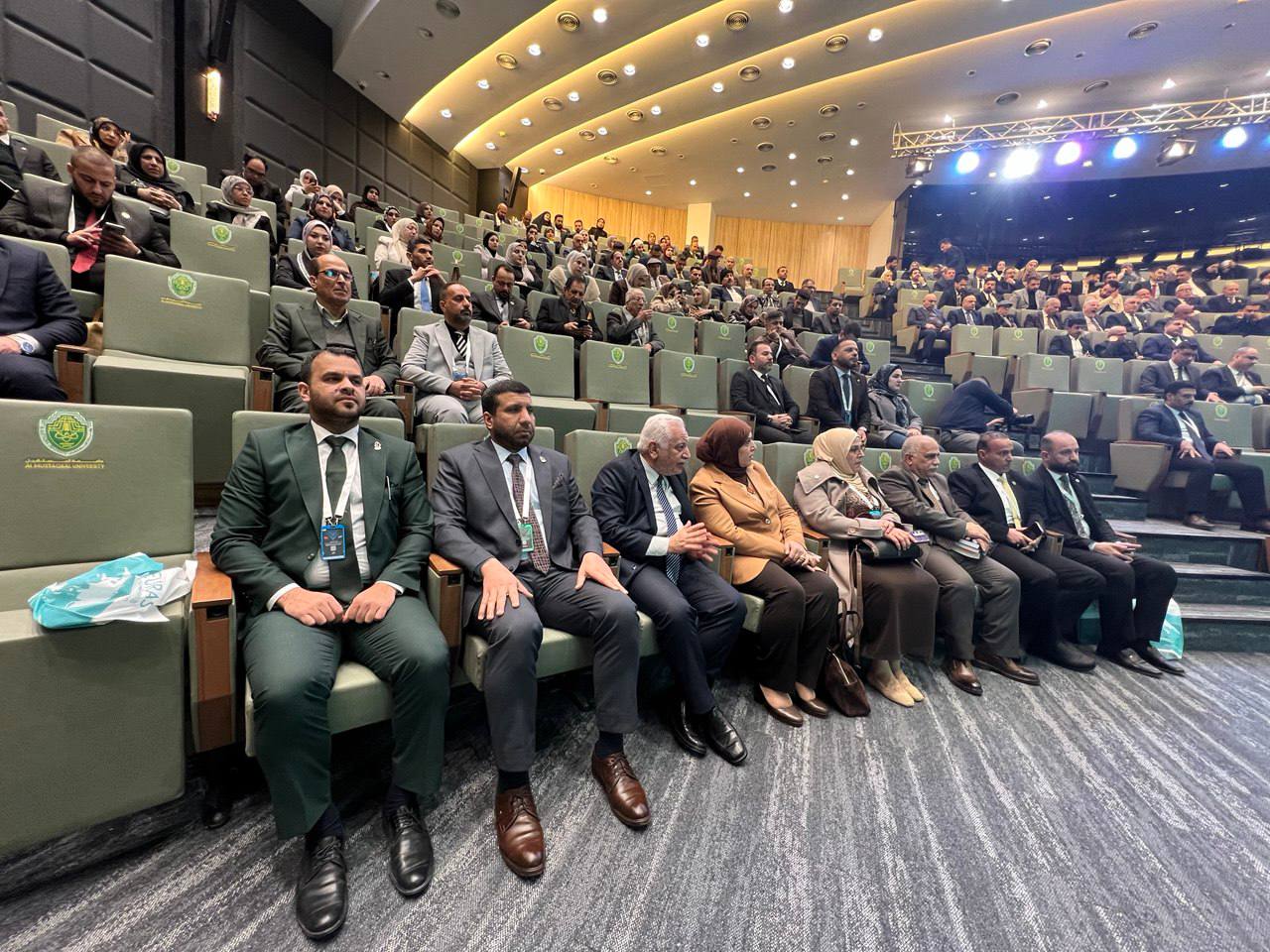
Al-Maarif University Participates in the International “EURASIA ACADEMY” Forum at Al-Mustaqbal University |
Al-Maarif University participated in the international “EURASIA ACADEMY” forum hosted by Al-Mustaqbal University, represented by Asst. Prof. Dr. Mohammed Ibrahim Khalaf, Dean of the College of Science, and Asst. Prof. Dr. Mohammed Rabee’ Hashim, Dean of the College of Engineering Technologies, on behalf of the University President. The forum was organized in cooperation with the Union of European and Asian Universities (EURASIA) and witnessed wide international participation from universities in Turkey, Europe, and Asia. The event focused on strengthening international academic cooperation, exchanging scientific expertise, and discussing quality, sustainability, and global partnerships in higher education. |
 |
|---|
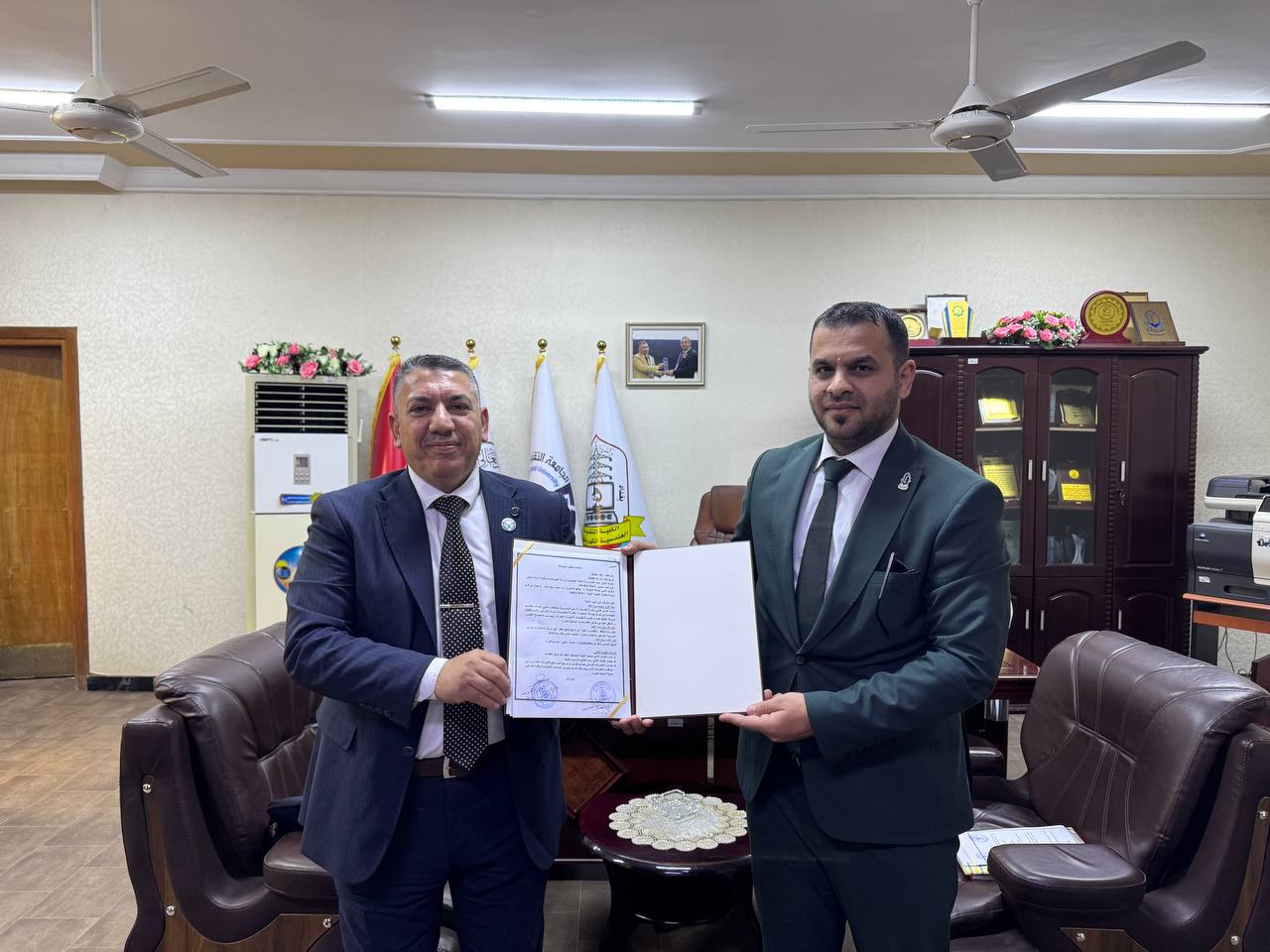
Visit of the Deanship of the College of Engineering Technologies at Al-Maarif University to the Middle Technical University |
Based on the directives of the Ministry of Higher Education and Scientific Research and Al-Maarif University to strengthen cooperation between public and private institutions, a delegation from the College of Engineering Technologies at Al-Maarif University, headed by the Dean, Asst. Prof. Dr. Mohammed Rabee’ Al-Dahhan, visited the Middle Technical University – Electrical Engineering Technical College in Baghdad. The delegation included the heads of the Computer Engineering Technologies and Medical Devices Engineering Technologies departments. During the visit, an agreement was reached to sign a memorandum of understanding to enhance scientific and technical cooperation in curricula, laboratories, scientific visits, and accreditation examinations. The meeting also discussed developing joint academic, research, and training programs aligned with labor market needs. |