Published Progress – SDG5 (17.3.5)
Public reporting on university progress and performance related to SDG5 (Gender Equality).
Introduction: Advancing Gender Equality through Education and Empowerment
Sustainable Development Goal 5 (SDG 5) focuses on achieving gender equality and empowering all women and girls. In the Iraqi context, where rebuilding communities and institutions is central to national progress, gender equality plays a transformative role in fostering social cohesion, inclusive growth, and sustainable development.
The University of Al Maarif (UoA), as one of Iraq’s leading private universities, has made gender equality a central pillar of its institutional strategy. UoA recognizes that empowering women through education, research, and leadership opportunities contributes directly to Iraq’s Vision 2030 and aligns with the Ministry of Higher Education and Scientific Research’s National Strategy for Women’s Empowerment.
Through inclusive admissions, supportive academic environments, gender-responsive policies, and leadership development initiatives, UoA promotes a culture of equity, respect, and opportunity for all members of its academic community.
1. Government and Institutional Support for Women in Iraq
1.1 National Policy Framework for Women’s Empowerment
The Government of Iraq has demonstrated strong commitment to SDG 5 through the establishment of national frameworks such as:
- The National Strategy for the Advancement of Women (2020–2030),
- The Iraqi Vision 2030 Agenda, and
- The National Action Plan for Women, Peace, and Security (NAP 1325).
These frameworks emphasize the inclusion of women in decision-making processes, economic participation, education, and public service.
University of Al Maarif aligns with these national policies by creating gender-inclusive environments, ensuring equitable access to education and employment, and promoting women’s representation at all institutional levels.
1.2 Partnership with NGOs and Ministries
UoA collaborates with local and international organizations, including the Iraqi Women’s Empowerment Directorate, UNDP Iraq, and UN Women, to implement educational and professional initiatives that advance female participation in academia, research, and entrepreneurship.
Through such partnerships, the University supports awareness campaigns, capacity-building workshops, and mentoring programs that empower women both within the university and the broader community.
2. Gender Equality at the University of Al Maarif
2.1 Equal Access to Higher Education
UoA provides equal opportunities for admission and academic advancement to both men and women across all disciplines, including medicine, pharmacy, engineering, and law — fields that have traditionally seen gender imbalance.
Female students currently make up over 45% of the total student body, reflecting the University’s progress toward gender parity in higher education.
Scholarships and financial aid programs specifically designed for female students from low-income families have helped reduce barriers to access. The Al Maarif Women’s Empowerment Scholarship, established in 2022, provides tuition waivers and mentorship to promising female students pursuing degrees in STEM and health sciences.
2.2 Supporting Women in Academia and Leadership
UoA maintains an inclusive employment policy ensuring that women have equal opportunities in academic, research, and administrative positions.
Currently, 36% of faculty members and 40% of middle management roles are held by women, a figure that continues to rise under the University’s Gender Equity Advancement Plan (GEAP 2025).
The University’s leadership development programs focus on empowering women through training in governance, research management, and strategic planning. Female faculty are actively encouraged to apply for international research grants, editorial roles, and academic exchange programs.
3. Institutional Governance: The Equal Opportunity and Diversity Committee (EODC)
3.1 Establishment and Objectives
In 2021, the University of Al Maarif established the Equal Opportunity and Diversity Committee (EODC) to ensure gender equity in all institutional operations. The Committee functions under the supervision of the Office of the President and aligns its mandate with SDG 5 and Iraq’s Vision 2030.
The EODC’s main objectives are to:
- Mainstream gender equality in university governance and policy.
- Promote inclusion through gender-responsive planning and data monitoring.
- Ensure fair recruitment, evaluation, and promotion practices.
- Support women’s professional growth through mentorship and training.
- Engage with external partners to share best practices on gender inclusion.
3.2 Policy Integration and Accountability
The University’s Equity, Diversity, and Inclusion (EDI) Policy mandates fairness and equality in all academic and administrative decisions.
It explicitly prohibits discrimination based on gender, age, disability, ethnicity, religion, or socio-economic background.
Annual EODC reports assess gender balance, leadership representation, and salary equity, ensuring transparency and institutional accountability.
4. Women’s Empowerment Programs at UoA
4.1 Women in STEM Initiative
Recognizing the underrepresentation of women in science and technology fields, UoA launched the Women in STEM Empowerment Program in collaboration with UNESCO Iraq and the Ministry of Higher Education.
The initiative provides targeted scholarships, laboratory internships, and research mentorship for female students in engineering, computer science, and environmental sciences.
In 2024, over 80 female students benefited from this program, with 15 receiving recognition for innovation projects in renewable energy and biotechnology.
4.2 Leadership and Professional Development Workshops
Through its Center for Professional and Personal Development (CPPD), the University organizes regular workshops and boot camps to build leadership, negotiation, and entrepreneurship skills among female students and staff.
Programs such as “Women Leading the Future” and “EmpowerHER” feature women leaders from academia, government, and industry who share experiences and strategies for success.
4.3 Health, Well-being, and Family Support Services
The University recognizes that holistic empowerment includes physical and mental well-being.
Its Student Counseling and Wellness Unit provides services focused on maternal health, mental health, and reproductive education.
Additionally, family-friendly policies such as maternity leave, flexible work arrangements, and on-campus childcare support ensure that women can pursue their careers without compromising personal responsibilities.
5. Research and Knowledge Creation on Gender Equality
5.1 Gender Studies and Research Excellence
The Center for Social Research and Development Studies (CSRDS) conducts research on gender issues, women’s rights, and social inclusion in Iraq.
Recent projects include:
- “Women in Post-Conflict Reconstruction: Challenges and Opportunities in Higher Education” (2022–2024),
- “Gender Gaps in STEM Fields across Iraqi Universities” (2023), and
- “Cultural Perceptions of Women in Leadership Roles” (2022).
The findings from these studies are disseminated through national conferences, peer-reviewed journals, and policy dialogues to inform future educational reforms.
5.2 Gender Data and Impact Evaluation
UoA collects disaggregated data on gender participation across all institutional levels. This includes faculty hiring, student enrollment, research outputs, and leadership representation.
These metrics are aligned with SDG Indicator 5.5.2 (proportion of women in managerial positions) and reported annually to the Ministry of Higher Education and Scientific Research.
6. Celebrating Women’s Achievements and Contributions
6.1 Recognition and Awards
Each year, the University of Al Maarif Excellence Awards honor outstanding female students, researchers, and staff who demonstrate academic excellence, leadership, or community service.
Recent awardees include:
- Dr. Rana Al-Kubaisi, recognized for her groundbreaking work on public-health policy in Iraq.
- Eng. Noor Al-Dulaimi, a mechanical engineering student, who developed a sustainable irrigation system that won first prize at the National Student Innovation Fair (2023).
6.2 Cultural and Awareness Campaigns
Events such as International Women’s Day, Arab Women’s Week, and National Women in Leadership Day are commemorated annually through lectures, exhibitions, and student-led discussions.
These events foster awareness about gender equality, women’s rights, and the importance of equal participation in academia and society.
7. Equity, Diversity, and Inclusion Policy at UoA
7.1 Diversity Definition and Institutional Philosophy
At University of Al Maarif, diversity means celebrating differences and ensuring that every member of the community feels valued and respected.
The University’s EDI Charter defines diversity as encompassing gender, nationality, disability, religion, and socio-economic background, emphasizing inclusion as a driver of institutional excellence.
7.2 Fairness and Recruitment Practices
UoA applies transparent recruitment procedures based on merit, competence, and experience.
Job advertisements explicitly encourage women to apply for all roles, including senior management. Performance evaluations and promotions are reviewed by gender-balanced committees to eliminate bias and ensure fair representation.
8. Equal Opportunity Framework and Strategic Initiatives
8.1 Purpose and Structure
The Equal Opportunity Framework (EOF) guides the University’s actions toward mainstreaming gender equality across all operations.
It is structured around four pillars:
- Policy and Governance,
- Education and Research,
- Leadership and Representation, and
- Outreach and Partnerships.
8.2 Key Initiatives under EOF
Initiative 1: Institutionalizing Gender Equity
- Creation of a centralized Gender Policy Office to oversee data, compliance, and impact reporting.
- Development of gender-responsive curricula and inclusion of SDG 5 content in ethics and civic courses.
Initiative 2: Partnerships and Knowledge Exchange
- Organization of conferences on Women in STEM and Sustainable Development.
- Collaboration with UNDP and Iraqi Women’s League to exchange international best practices.
Initiative 3: Empowerment through Awareness
- Hosting Women@UoA Forums focusing on leadership, entrepreneurship, and mentorship.
- Conducting awareness campaigns on gender-based violence prevention and workplace equality.
9. Women’s Leadership and Decision-Making at UoA
The University of Al Maarif is committed to ensuring women’s full and effective participation at all decision-making levels, in line with SDG Target 5.5.
9.1 Representation and Participation
As of 2024:
- 40% of Deans and Vice Deans are women.
- 47% of administrative leadership roles are held by women.
- Female faculty lead 33% of research projects funded by the University.
This upward trend reflects the University’s success in building a gender-balanced leadership structure.
9.2 Mentorship and Leadership Pipeline
The Future Women Leaders Program (FWLP) identifies promising female academics and administrators, providing coaching, leadership-shadowing experiences, and international exchange opportunities.
The program aims to increase women’s representation in top-level decision-making to 50% by 2028.
10. Community Engagement and Social Responsibility
10.1 Women’s Community Service Initiatives
UoA’s Community Service and Social Responsibility Unit (CSSRU) leads outreach programs targeting rural and disadvantaged women.
Initiatives include:
- “Women for Change” — a microfinance and entrepreneurship training program for widows and single mothers.
- “Healthy Mothers, Healthy Futures” — a public-health awareness campaign on maternal health, nutrition, and wellness.
- “Girls in Science” — a mentorship program encouraging high school girls to pursue STEM careers.
10.2 Partnerships with Civil Society
Collaborations with the Iraqi Red Crescent Society, International Rescue Committee, and Women’s Support Organization (WSO) enable the University to extend its gender programs into communities affected by conflict and displacement, empowering women through education and skills-building.
11. International Conferences and Global Engagement
UoA organizes the annual “Equal Opportunities and Sustainable Development Conference”, in collaboration with the University of Baghdad and UNESCO Iraq Office.
The 2024 conference theme, “Gender, Peace, and Innovation in a Transforming Iraq,” attracted more than 300 participants from universities, government agencies, and NGOs.
These forums strengthen cross-sectoral dialogue and contribute to global discussions on gender equity and inclusive governance in post-conflict societies.
12. Monitoring, Evaluation, and SDG Alignment
12.1 Tracking Progress
UoA monitors its gender-equality initiatives through measurable indicators such as:
- Female student enrollment,
- Women’s participation in research and governance,
- Gender pay parity,
- and number of gender-focused community programs.
Annual reports are submitted to the UoA Quality Assurance and Accreditation Directorate (QAAD) and publicly shared for transparency.
12.2 Table: UoA Gender Equality Indicators (2021–2024)
| Indicator | 2021 | 2022 | 2023 | 2024 |
|---|---|---|---|---|
| Female student enrollment (%) | 39 | 43 | 45 | 47 |
| Female faculty representation (%) | 28 | 33 | 36 | 40 |
| Women in leadership roles (%) | 25 | 32 | 38 | 40 |
| Gender-focused workshops | 6 | 10 | 14 | 18 |
| Research projects on women’s issues | 3 | 5 | 7 | 10 |
13. Future Roadmap (2025–2030)
The University of Al Maarif’s Gender Equity Vision 2030 sets out the following goals:
- Achieve 50% female representation in senior management.
- Launch a Regional Center for Women’s Studies and Leadership.
- Expand STEM scholarships for women to 100 annually.
- Introduce Gender Equality certification training for all staff.
- Partner with international networks to publish research on women’s empowerment in Iraq.
- Develop community-based programs benefiting 10,000 women nationwide by 2030.
Conclusion
Through its policies, programs, and partnerships, the University of Al Maarif demonstrates a steadfast commitment to Sustainable Development Goal 5 — Gender Equality.
By fostering inclusive education, empowering women in leadership, supporting gender-focused research, and promoting social equity, UoA contributes meaningfully to national progress and global sustainability efforts.
The University stands as a model of empowerment and inclusivity in Iraqi higher education, preparing a generation of women who are confident, capable, and equipped to lead the nation toward a more just, equal, and prosperous future.
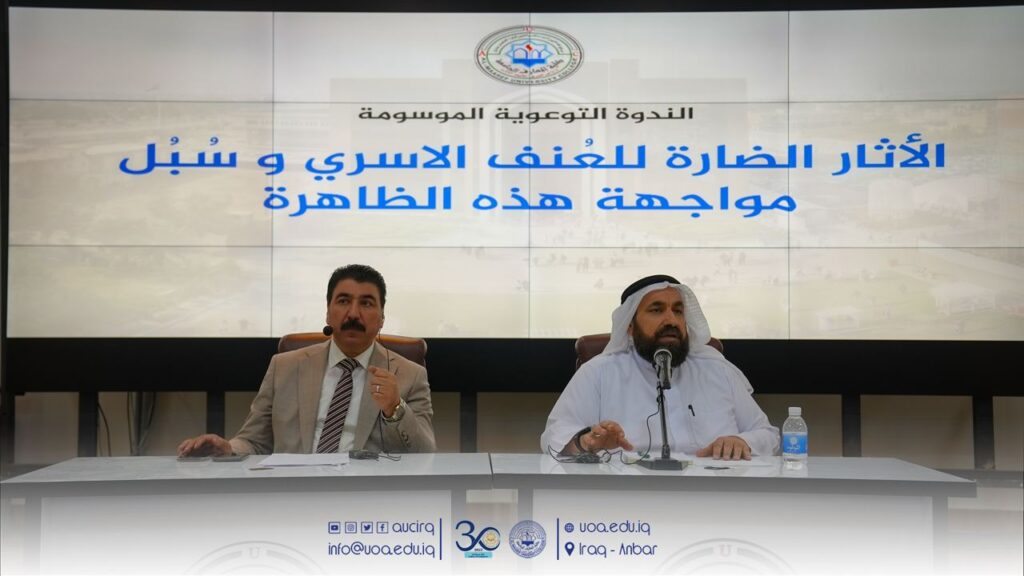
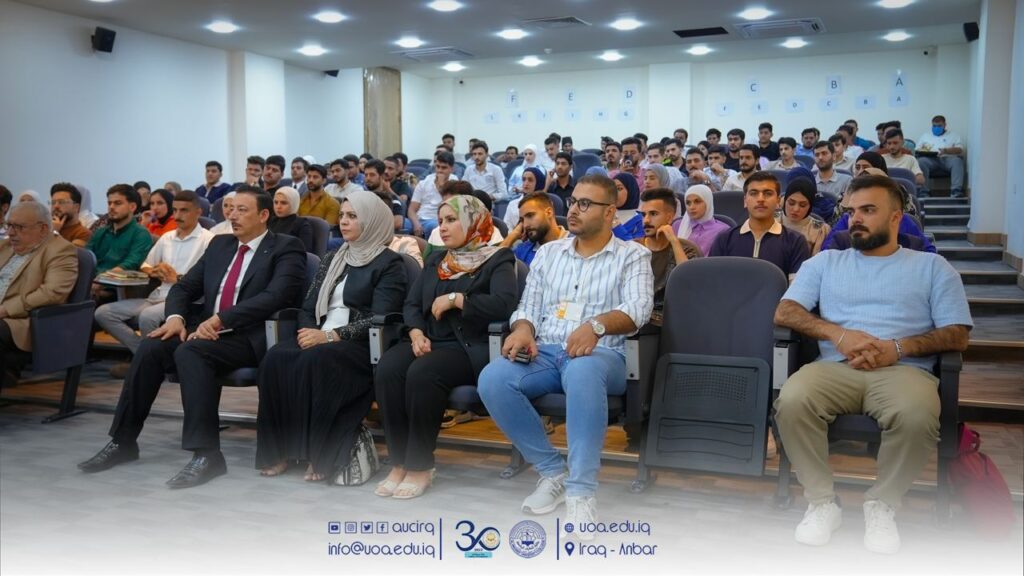
Link: https://uoa.edu.iq/news/week-of-al-maarif-to-combat-violence-against-women
Link: https://uoa.edu.iq/news/womens-role-in-raising-the-scientific-level-at-the-university
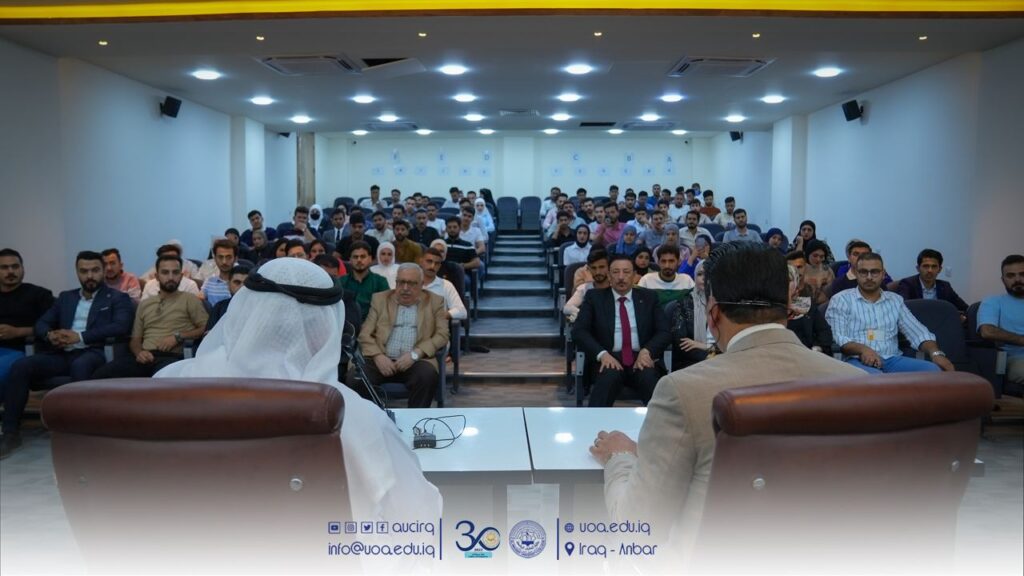
Link: https://sustainability.uoa.edu.iq/index.php/ar/2023/12/31/an-educational-seminar-at-auc/