SDG 16: Peace, Justice, and Strong Institutions
University of Al Maarif’s Commitment to SDG 16: Promoting Peace, Justice, and Institutional Integrity through Education and Civic Engagement
Sustainable Development Goal 16 (SDG 16) aims to promote peaceful and inclusive societies, ensure access to justice for all, and build effective, accountable, and transparent institutions.
The University of Al Maarif (UOA) in Iraq recognizes the essential role that education plays in nurturing ethical leadership, strengthening public institutions, and fostering a culture of peace and justice. Through education, research, and community partnerships, the university contributes to Iraq’s broader vision of building resilient and just societies governed by the rule of law.
Legal and Social Justice Education
The University of Al Maarif plays a key role in supporting peace and justice through academic programs in law, political science, and social studies. These programs prepare students to understand and uphold principles of human rights, ethical governance, and social responsibility.
By integrating courses on constitutional law, human rights, public administration, and conflict resolution, the university cultivates graduates who are capable of serving with integrity in Iraq’s judicial, governmental, and civic sectors — promoting fairness and justice in their communities.
Advocacy for Human Rights and Good Governance
Through seminars, workshops, and student-led discussions, the University of Al Maarif fosters open dialogue on justice, accountability, and civic participation.
Faculty and students regularly engage in academic research and public advocacy that address key national challenges, such as anti-corruption efforts, institutional transparency, and the protection of human rights.
By promoting awareness of legal and ethical standards, the university supports Iraq’s national drive toward stronger, more accountable public institutions.
Empowering Civil Society and Community Engagement
UOA collaborates with non-governmental organizations, community leaders, and youth initiatives to empower civil society in Iraq. These partnerships help strengthen local capacity in peacebuilding, legal awareness, and civic responsibility.
Students and faculty participate in volunteer and outreach programs that aim to bridge gaps between citizens and institutions — encouraging active participation in community development and governance.
Conflict Resolution and Peacebuilding Programs
Recognizing Iraq’s need for long-term stability, the University of Al Maarif emphasizes peace education and mediation skills.
Through academic modules and extracurricular activities, students learn about negotiation, dialogue facilitation, and conflict prevention.
These programs contribute to local and national peacebuilding efforts by preparing graduates who can work effectively in reconciliation, humanitarian, and community leadership roles.
Ethical Leadership and Institutional Integrity
The university integrates ethics and accountability into all disciplines, promoting a culture of honesty, respect, and professionalism.
Workshops on leadership ethics, anti-corruption practices, and institutional governance equip students with the tools to become ethical leaders who serve with transparency and fairness.
By cultivating these values, the University of Al Maarif contributes to the development of strong, trustworthy institutions that can support Iraq’s democratic and developmental goals.
Partnerships with Governmental and Institutional Bodies
To strengthen institutional collaboration, the University of Al Maarif works closely with government ministries, judicial authorities, and policy research centers.
These partnerships aim to enhance public administration, performance evaluation, and good governance practices.
Joint initiatives — including policy studies, student internships, and advisory research — contribute to developing effective, transparent, and accountable government institutions aligned with Iraq’s national development strategies.
Promoting Access to Justice and Civic Awareness
UOA actively supports access to justice through academic and outreach programs that address social inequalities and legal barriers.
Law students, under faculty supervision, participate in legal awareness campaigns that educate citizens about their rights and the judicial process.
These community-centered initiatives aim to empower marginalized populations by improving their understanding of legal protections and access to fair treatment.
Student Governance and Democratic Participation
The Student Council at the University of Al Maarif embodies the principles of representation, participation, and transparency — reflecting the core values of SDG 16.
Students are encouraged to form and manage clubs and associations based on shared interests, fostering civic engagement, teamwork, and leadership skills.
Through elections, debates, and project-based learning, students gain firsthand experience in democratic participation and ethical decision-making within an academic framework.
Performance Measurement and Data Transparency
In line with Iraq’s national efforts toward institutional accountability, UOA promotes data-driven decision-making and transparent performance evaluation within its administration.
Drawing inspiration from Iraq’s Central Statistical Organization and national development frameworks, the university encourages the use of performance indicators and feedback systems to enhance educational quality and service delivery.
This aligns with Iraq’s move toward greater government transparency and efficiency in achieving the goals of the Iraq Vision 2030.
Conclusion
The University of Al Maarif is deeply committed to advancing peace, justice, and strong institutions through its educational mission, civic engagement, and ethical governance.
By promoting legal education, supporting civil society, empowering youth, and collaborating with government institutions, the university plays a vital role in shaping a more peaceful, just, and accountable Iraq.
Through its ongoing initiatives, UOA stands as a model of how higher education can nurture leaders and citizens dedicated to building trust, integrity, and stability within their communities and the nation as a whole.
 |
|---|
|
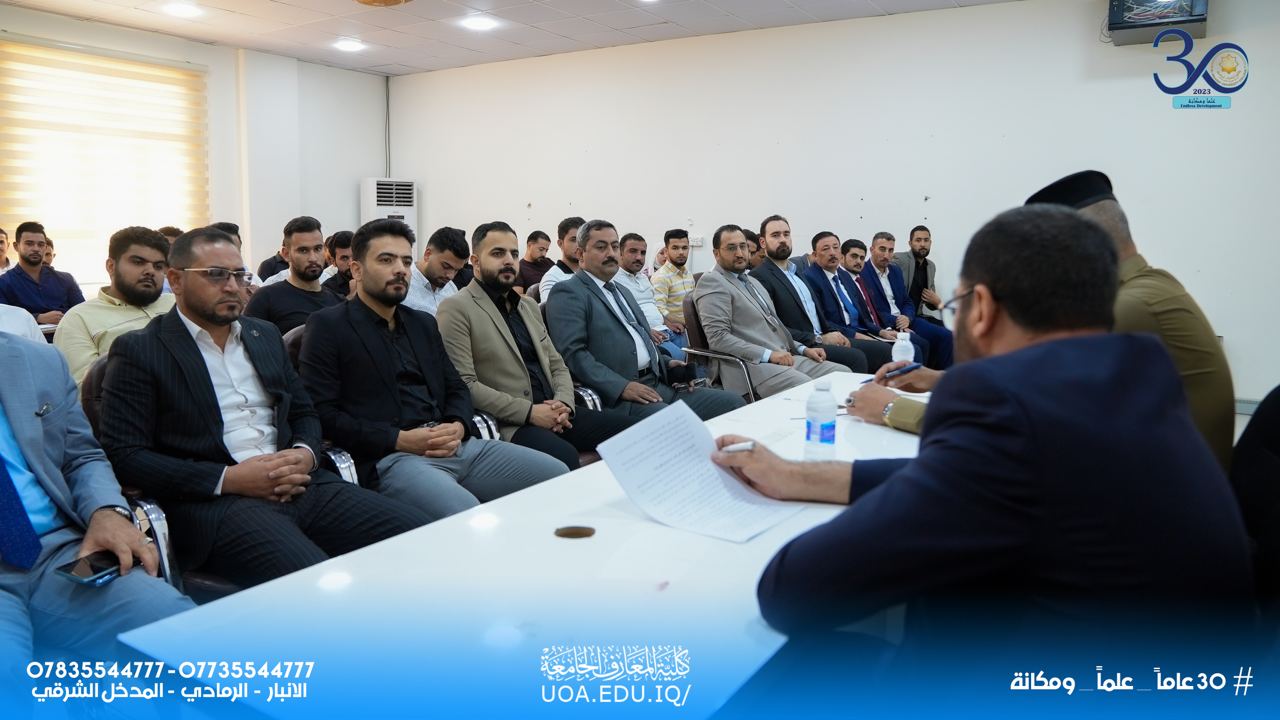
AUC Held an Awareness Seminar about the Danger of Unauthorized Weapon On Wednesday, 18th October 2025, the Continuing Learning Unit at Al-Maarif University College held an awareness seminar on heavy weapons outside the country presented by Asst. Dr. Ali Mikhlif Hammad, a member of the teaching staff in the Department of Law, and Officer Haitham Abdel Aziz, Manager of the organization’s inventory in the hands of the country / Anbar Police Command, discussed the legal background of this phenomenon, its causes, consequences, and results, and what is the legitimacy of the measures taken by the country. |