SDG 15: Life on Land
University of Al Maarif’s Commitment to Preserving Life on Land through Environmental Stewardship and Sustainable Development
Sustainable Development Goal 15 (SDG 15) emphasizes the need to protect, restore, and sustainably manage terrestrial ecosystems, forests, and biodiversity. As Iraq continues its journey toward ecological recovery and sustainable growth, the University of Al Maarif (UOA) stands as a committed educational institution promoting environmental stewardship, biodiversity conservation, and responsible land use.
Through education, research, and community engagement, the University of Al Maarif contributes to protecting Iraq’s unique terrestrial landscapes — from the river valleys of the Tigris and Euphrates to its deserts, agricultural plains, and mountainous ecosystems.
Environmental and Biodiversity Conservation Education
The University of Al Maarif actively integrates biodiversity conservation into its teaching and community outreach. Environmental awareness and sustainability concepts are incorporated into academic programs across disciplines, especially in the Colleges of Science, Engineering, and Education.
Students explore topics such as ecosystem protection, wildlife conservation, soil restoration, and sustainable land use. Through lectures, environmental campaigns, and field visits, the university fosters a culture of respect for Iraq’s natural resources and instills a sense of responsibility toward protecting the nation’s biodiversity and land ecosystems.
Research on Terrestrial Ecosystems and Land Restoration
Research is a cornerstone of UOA’s contribution to SDG 15. The university encourages faculty and student-led studies on land degradation, desertification, and sustainable agriculture — issues that are highly relevant to Iraq’s ecological challenges.
UOA’s researchers collaborate with local environmental organizations, governmental bodies, and NGOs to conduct applied studies on:
- The impact of pollution and urban expansion on soil and plant life;
- Methods to combat desertification in arid regions of Anbar and central Iraq;
- Restoration of riverbank ecosystems along the Euphrates and Tigris basins;
- Use of native species in reforestation and soil stabilization projects.
By generating local knowledge, UOA contributes to the development of evidence-based environmental strategies that can guide Iraq’s long-term land management policies.
Reforestation and Habitat Restoration Initiatives
The University of Al Maarif is actively engaged in reforestation and habitat restoration initiatives, supporting national and local environmental campaigns.
In collaboration with municipal authorities and the Ministry of Environment, the university organizes tree-planting drives on campus and in surrounding communities. These efforts help rehabilitate degraded land, increase green cover, and mitigate the effects of climate change.
Students and staff regularly participate in the “Green Iraq” and “One Million Trees” campaigns, which aim to restore Iraq’s vegetation and combat the rise in desert dust storms. These initiatives are both symbolic and practical steps toward building healthier, greener urban and rural environments.
Community Engagement and Environmental Awareness
The University of Al Maarif sees community engagement as vital for sustainable environmental progress. The university conducts awareness workshops and school outreach programs to educate youth and citizens on waste reduction, afforestation, and responsible land use.
Through the Environmental Awareness Club, students lead local clean-up campaigns, organize seminars on biodiversity protection, and participate in environmental observation events such as World Environment Day and Iraq National Tree Day.
These activities encourage collective action and inspire local communities to preserve their surrounding landscapes — from farmlands and parks to desert oases and riverbanks.
Partnerships for Land and Ecosystem Conservation
Recognizing that sustainable development requires collaboration, UOA partners with governmental agencies, research centers, and NGOs working in the environmental field.
Through joint projects with the Iraqi Ministry of Environment, Anbar Governorate Council, and international organizations such as UNEP and UNDP, the university contributes to environmental policy research and capacity-building for sustainable land management.
These partnerships support initiatives in:
- Soil erosion prevention and water resource management,
- Habitat restoration and biodiversity monitoring,
- Policy development for protected areas and wildlife sanctuaries,
- Sustainable reforestation and urban greening.
Sustainable Agriculture and Resource Management
Agriculture remains vital to Iraq’s economy, yet it faces immense challenges due to soil degradation, water scarcity, and climate variability. The University of Al Maarif supports sustainable agriculture research and practices that enhance food security while protecting natural resources.
Faculty and students collaborate with local farmers and agricultural experts to promote techniques such as:
- Efficient irrigation systems to reduce water waste;
- Crop rotation and organic farming to maintain soil fertility;
- Integrated pest management to minimize chemical usage;
- Agroforestry models that combine trees and crops for ecological balance.
Through these efforts, UOA contributes to building resilient agricultural systems that align with both SDG 2 (Zero Hunger) and SDG 15 (Life on Land).
Integration into Curriculum and Student Initiatives
The principles of sustainability, land conservation, and environmental ethics are embedded in the university’s academic framework.
Courses across disciplines include case studies on Iraq’s environmental challenges, such as desertification, river pollution, and habitat loss. Students are encouraged to develop innovative solutions — from green technology applications to social campaigns addressing environmental degradation.
Student-led clubs and research groups at UOA often focus on ecological innovation and sustainable development, organizing academic competitions, environmental fairs, and awareness drives under the SDG Committee for Environmental Responsibility.
UOA Center for Environmental and Sustainable Development Studies
The University of Al Maarif is developing its own Center for Environmental and Sustainable Development Studies, designed to advance environmental research, innovation, and public education in Iraq.
Vision
To become a leading hub for environmental research and innovation in Iraq, dedicated to creating sustainable solutions for ecological conservation, land management, and climate resilience.
Mission
The Center seeks to conduct interdisciplinary research, promote community awareness, and provide technical recommendations for sustainable practices in agriculture, forestry, waste management, and environmental governance.
Research Areas
- Biodiversity and Wildlife Conservation
- Desertification and Land Rehabilitation
- Climate Change Adaptation Strategies
- Environmental Policy and Governance
- Renewable Energy and Resource Efficiency
- Sustainable Water and Soil Management
Activities and Programs
- Conducting community-based reforestation projects in collaboration with local authorities.
- Hosting national seminars and environmental conferences on sustainability in Iraq.
- Publishing research papers and policy briefs addressing Iraq’s environmental priorities.
- Organizing training programs for teachers, youth, and professionals on green practices.
Green Campus and Afforestation Campaigns
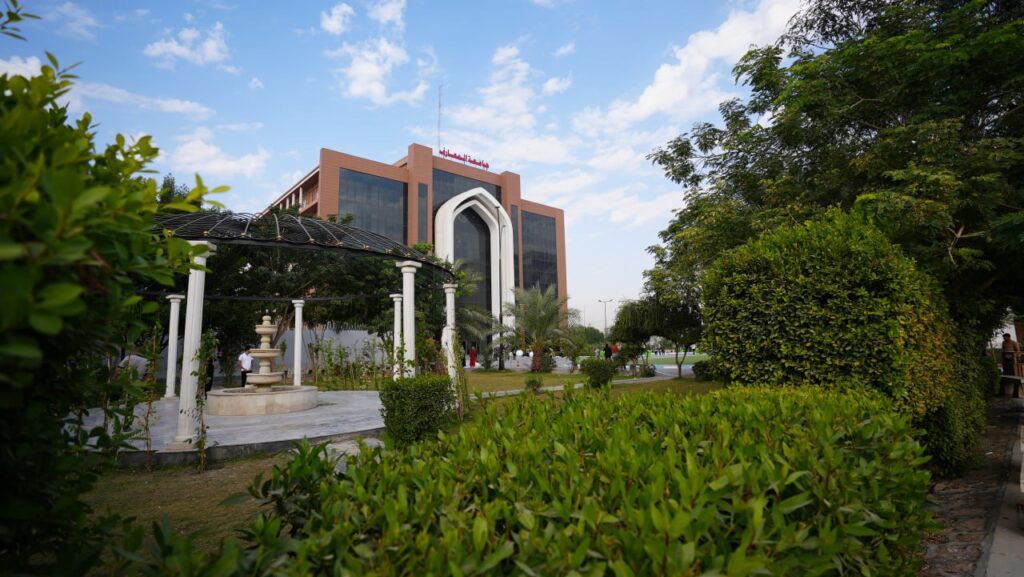
As part of its Green Campus Initiative, the University of Al Maarif has launched several internal projects to enhance sustainability within its operations.
The campus maintains green spaces, eco-friendly landscaping, and efficient waste and water management systems.
In partnership with local environmental groups and student volunteers, UOA has planted hundreds of native trees and shrubs to improve campus air quality and biodiversity. These green zones provide natural habitats for birds and small fauna, promoting a sense of environmental responsibility among students.
Conclusion
The University of Al Maarif is deeply committed to achieving SDG 15: Life on Land by combining education, research, and action. Through its efforts in environmental education, reforestation, sustainable agriculture, and community engagement, the university contributes to the conservation of Iraq’s natural heritage.
By nurturing environmentally conscious leaders, conducting research that addresses land degradation, and promoting partnerships for ecosystem restoration, the University of Al Maarif reinforces its role as a national leader in sustainability education.
In doing so, UOA not only supports Iraq’s environmental restoration goals but also advances the global mission of protecting and preserving life on land for future generations.