
SDG 12: Responsible Consumption and Production
University of Al Maarif’s Commitment to SDG 12: Advancing Sustainable Consumption, Production, and Waste Management in Iraq
Sustainable Development Goal 12 (SDG 12) emphasizes ensuring sustainable consumption and production patterns to promote efficient resource use, minimize waste, and protect the environment for future generations.
In alignment with Iraq’s National Environmental Strategy and Action Plan (NESAP) and Iraq Vision 2030, the University of Al Maarif (UOA) is dedicated to fostering environmental awareness, reducing waste, encouraging sustainable practices, and developing innovative solutions for responsible consumption and production.
Through research, education, and community engagement, UOA promotes a culture of environmental responsibility that contributes to Iraq’s transition toward a more sustainable and circular economy.
Campus-Wide Initiatives for Waste Reduction
The University of Al Maarif has implemented comprehensive waste reduction and recycling initiatives across its campus.
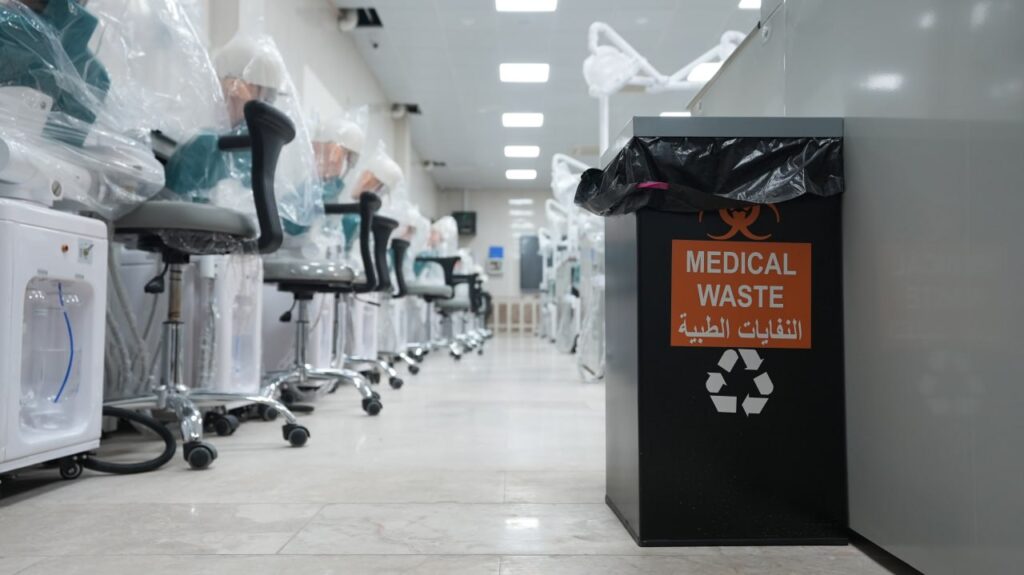
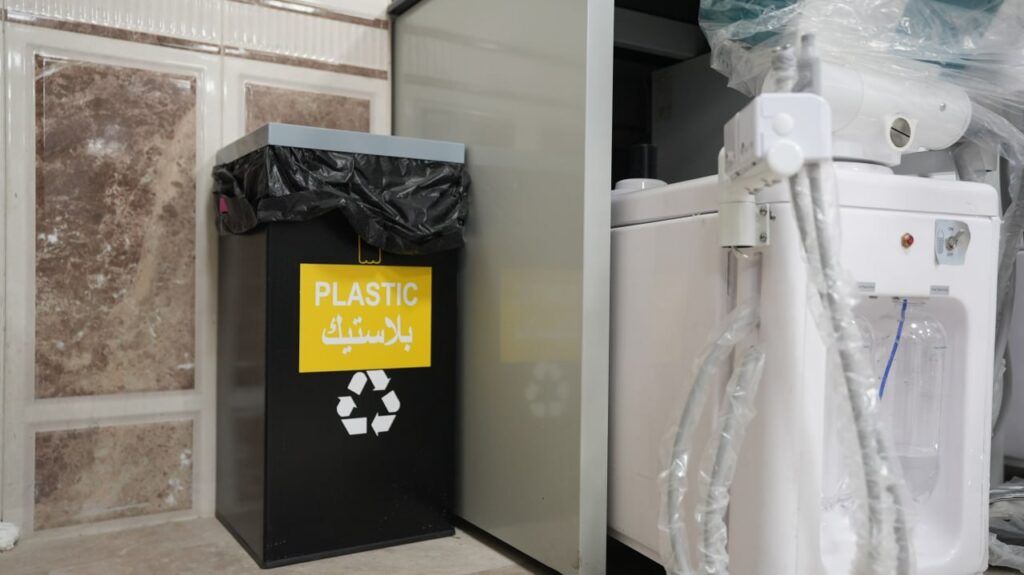
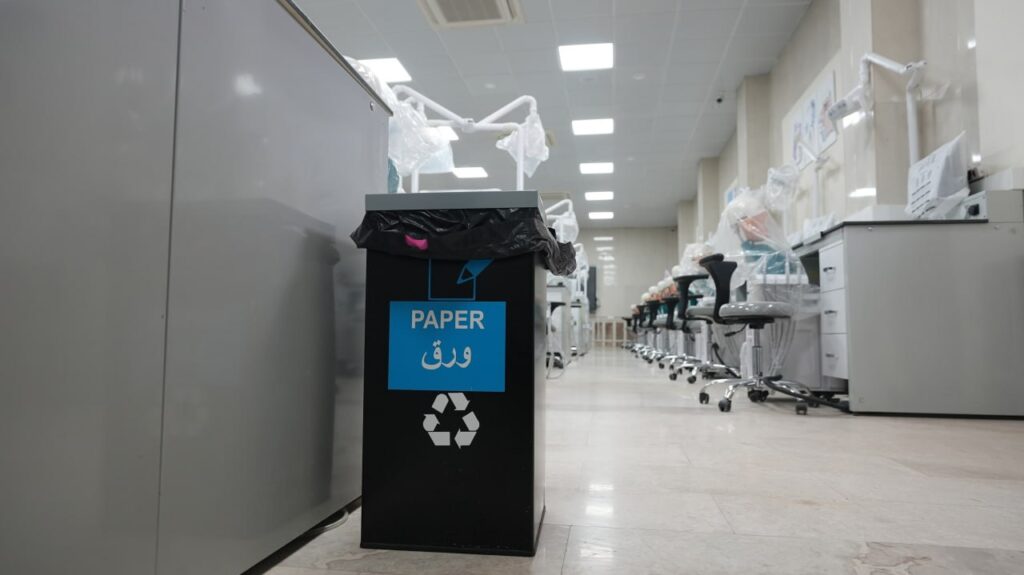
Designated recycling bins are available throughout university buildings to encourage waste segregation at the source, separating paper, plastic, and organic waste for proper recycling and disposal.
Administrative departments have also adopted digital documentation and paperless communication systems to minimize paper waste, while awareness posters and student campaigns highlight the importance of reducing consumption and reusing resources.
These initiatives align with UOA’s commitment to maintaining a clean, green, and sustainable campus environment.
Reducing Plastic Usage
Plastic pollution is a growing concern in Iraq’s cities and waterways. In response, the University of Al Maarif has taken proactive steps to reduce single-use plastic consumption across its campus.
Plastic bottles and disposable packaging are gradually being replaced with reusable and biodegradable alternatives, supported by educational campaigns encouraging students and staff to adopt sustainable habits.
Through initiatives such as “Plastic-Free Campus Days” and workshops on plastic alternatives, UOA is cultivating a generation of environmentally conscious citizens who understand the environmental costs of plastic dependency and act to reduce it.
Promoting Circular Economy and Sustainable Resource Use
UOA promotes circular economy principles—a system that focuses on reuse, repair, recycling, and sustainable resource management.
Students and researchers are encouraged to explore innovative ways to repurpose materials, develop eco-friendly production methods, and design sustainable business models that minimize waste.
By promoting these practices through its academic programs—especially in engineering, business, and environmental science—the university nurtures a mindset of resource efficiency and sustainability consistent with Iraq’s growing need for green innovation.
Awareness and Educational Programs
The University of Al Maarif conducts regular environmental awareness campaigns, seminars, and sustainability workshops for students, faculty, and local communities.
Topics include waste management, pollution control, recycling methods, and sustainable consumption behaviors.
Through courses integrated into various programs, UOA teaches students to understand the life cycle of products and encourages critical thinking about the economic, social, and environmental implications of consumption.
Student-led clubs and initiatives, such as EcoGreen Society and Clean Campus Campaign, play a key role in promoting sustainable living within the university community.
Engagement with Local Communities
UOA extends its sustainability efforts beyond the campus by actively engaging with local communities and municipal authorities to promote environmental awareness and responsible consumption.
Through collaborations with local NGOs, environmental agencies, and schools, the university organizes community clean-up campaigns, recycling drives, and environmental education sessions in Al-Anbar and Baghdad governorates.
These outreach initiatives aim to strengthen public understanding of sustainability, reduce waste generation, and promote community-driven environmental stewardship — a key part of Iraq’s journey toward SDG 12 implementation.
Partnerships for Sustainable Waste Management
The University of Al Maarif collaborates with local waste management companies, municipal services, and environmental organizations to improve waste handling and recycling efficiency.
These partnerships help establish safe and systematic waste disposal channels, promote recycling industries, and support research into eco-friendly waste treatment technologies.
In addition, UOA’s environmental engineering faculty conducts applied studies on solid waste recycling, energy recovery from waste, and composting methods that can be implemented at both institutional and municipal levels across Iraq.
Integration of Sustainability into Academic Curriculum
Sustainability concepts are deeply integrated into the curriculum and research programs at UOA.
Courses in environmental science, civil engineering, business administration, and social studies include modules on sustainable development, resource efficiency, and environmental ethics.
Through project-based learning and case studies, students explore Iraq’s environmental challenges—such as water scarcity, waste management, and pollution—and propose innovative, localized solutions.
These educational efforts aim to equip graduates with the skills and knowledge necessary to advance sustainable production systems in Iraq’s emerging economy.
UOA Center for Environmental and Sustainability Studies
To further its sustainability mission, the University of Al Maarif established the Center for Environmental and Sustainability Studies (CESS), dedicated to advancing research and innovation in environmental protection, renewable energy, and sustainable waste management.
Vision:
To become a leading center in Iraq for research, innovation, and education in environmental sustainability, fostering responsible resource use and a culture of ecological balance.
Mission:
To conduct interdisciplinary research and community outreach that contributes to reducing environmental degradation, managing natural resources sustainably, and promoting environmentally conscious practices in Iraq.
Research Focus Areas:
- Waste management and recycling systems
- Renewable energy and sustainable technologies
- Water conservation and resource management
- Climate change and emissions reduction
- Environmental policy and green governance
- Sustainable agriculture and food systems
Center Activities Include:
- Conducting applied research addressing Iraq’s environmental challenges
- Hosting national workshops and symposiums on sustainability
- Collaborating with industry and government agencies on green projects
- Training students and professionals in sustainability leadership
Through this center, UOA plays a strategic role in supporting Iraq’s environmental objectives and in building a knowledge base for green transition policies.
Monitoring Environmental Impact and Carbon Footprint
The University of Al Maarif regularly assesses its environmental impact and carbon footprint to identify opportunities for improvement.
Energy audits are conducted to monitor consumption and efficiency, while solar power and energy-saving technologies are increasingly used in campus operations.
Data collection focuses on electricity use, transportation, water consumption, and waste output, with the goal of developing measurable strategies to reduce greenhouse gas emissions and enhance environmental performance.
These assessments help UOA align its sustainability actions with international standards such as the UN Global Compact and the UNEP Green University Framework.
National and Regional Context: Iraq’s Path Toward Sustainable Consumption
Iraq faces major challenges in waste management, pollution control, and unsustainable consumption patterns due to rapid urbanization and limited environmental infrastructure.
National initiatives—such as the Iraq Environmental Strategy and Action Plan, and the National Solid Waste Management Framework—aim to establish integrated systems for recycling, reduce plastic pollution, and promote circular economy practices.
UOA contributes to these national efforts through education, research, and advocacy—helping train professionals and policymakers who can guide Iraq toward more sustainable consumption and production systems that balance economic growth with environmental protection.
Conclusion
Through education, innovation, and community engagement, the University of Al Maarif demonstrates its commitment to Sustainable Development Goal 12: Responsible Consumption and Production.
The university’s efforts to reduce waste, minimize plastic usage, promote recycling, and advance sustainability research reflect its broader mission to nurture environmentally responsible citizens and drive Iraq’s sustainable development agenda.
By embedding sustainability into every aspect of campus life—from infrastructure and research to curriculum and community service—UOA continues to lead by example in shaping a more resource-efficient, eco-conscious, and resilient Iraq.