SDG 11: Sustainable Cities and Communities
University of Al Maarif’s Role in Advancing SDG 11: Building Sustainable, Resilient, and Inclusive Communities in Iraq
Sustainable Development Goal 11 (SDG 11) seeks to make cities and human settlements inclusive, safe, resilient, and sustainable.
In Iraq—a country undergoing rapid urbanization and reconstruction after years of conflict—achieving SDG 11 is vital for national stability and the well-being of its citizens.
The University of Al Maarif (UOA) embraces this global objective through its academic, research, and community engagement initiatives that promote sustainable urban planning, cultural preservation, social inclusion, and environmental protection.
UOA’s commitment aligns with Iraq’s National Development Plan (2023–2027) and the Iraqi Vision 2030, both of which emphasize the creation of livable, green, and resilient cities that enhance the quality of life and promote economic and environmental sustainability.
Sustainable Urban Development and Smart Infrastructure
The University of Al Maarif actively contributes to the discourse and practice of sustainable urban planning by integrating sustainability principles into its research, curriculum, and community projects.
Through partnerships with local municipalities, NGOs, and urban development agencies, UOA engages in projects that promote efficient land use, renewable energy integration, and resilient urban infrastructure.
The university also encourages the exploration of “smart city” concepts, emphasizing the role of data, digital innovation, and technology in improving urban services.
Research groups and student innovators work on projects related to energy-efficient building design, waste reduction systems, and smart water management, helping cities across Iraq transition toward greener urban models.
Affordable and Environmentally Sustainable Housing
Recognizing that access to adequate and affordable housing is a major challenge in Iraq, UOA supports initiatives that promote sustainable housing design and inclusive community development.
Through its architecture, civil engineering, and environmental studies programs, students and faculty collaborate on research and design projects focused on low-cost, energy-efficient housing suited to Iraq’s climate and socio-economic conditions.
In partnership with government housing departments and private construction firms, the university promotes the use of locally sourced, eco-friendly materials and passive design principles that reduce energy consumption.
These initiatives align with Iraq’s broader urban reconstruction strategy and contribute to achieving SDG 11.1: ensuring access for all to adequate, safe, and affordable housing.
Transportation and Sustainable Mobility
Urban congestion, limited public transport options, and high vehicle emissions pose major challenges to Iraq’s cities.
To address these issues, UOA promotes research and innovation in sustainable mobility solutions.
The university’s engineering departments and research centers conduct studies on eco-friendly public transport systems, non-motorized mobility (cycling and walking), and the electrification of urban transport.
UOA also works with local governments to organize awareness campaigns and planning workshops focused on sustainable transportation strategies, highlighting how improved mobility can enhance productivity, reduce pollution, and improve access to education and healthcare.
Waste Management and Environmental Protection
The University of Al Maarif prioritizes sustainable waste management practices both on campus and within the surrounding community.
Through its Green Campus Initiative, the university has implemented systems for waste segregation, recycling, and safe disposal of laboratory and electronic waste.
Students and faculty participate in regular clean-up drives, recycling campaigns, and public workshops aimed at educating the community on responsible waste management and circular economy principles.
At the research level, UOA scientists are exploring innovative solutions for solid waste reuse, including biogas generation from organic waste and the transformation of construction waste into reusable materials.
These projects directly support SDG 11.6, which focuses on reducing the environmental impact of cities by improving air quality and waste management.
Cultural Heritage and Urban Identity
As one of Iraq’s leading academic institutions, UOA is deeply committed to preserving Iraq’s cultural and architectural heritage.
The university collaborates with the Ministry of Culture and local heritage organizations to document, protect, and revitalize historical landmarks and traditional architecture, particularly in cities like Baghdad, Ramadi, and Mosul, where reconstruction is ongoing.
Courses in architecture, history, and cultural studies emphasize the importance of heritage preservation in sustainable development.
Through exhibitions, field studies, and research projects, students explore how cultural identity can be integrated into modern urban planning, ensuring that development respects Iraq’s rich history and traditions.
Disaster Resilience and Climate Adaptation
Given Iraq’s vulnerability to climate-related risks, including desertification, heatwaves, and flooding, UOA prioritizes research and education in disaster resilience and climate adaptation.
The university’s environmental and civil engineering programs train students to design climate-resilient infrastructure capable of withstanding extreme weather events.
Collaborating with national agencies such as the Iraqi Meteorological Organization and the Ministry of Environment, UOA participates in projects that assess urban risk and develop strategies for climate adaptation, early warning systems, and urban water management.
By promoting resilience at both the community and policy levels, the university contributes to the long-term sustainability of Iraq’s cities.
UOA’s Sustainable Campus and Green Practices
The University of Al Maarif models sustainability within its own operations.
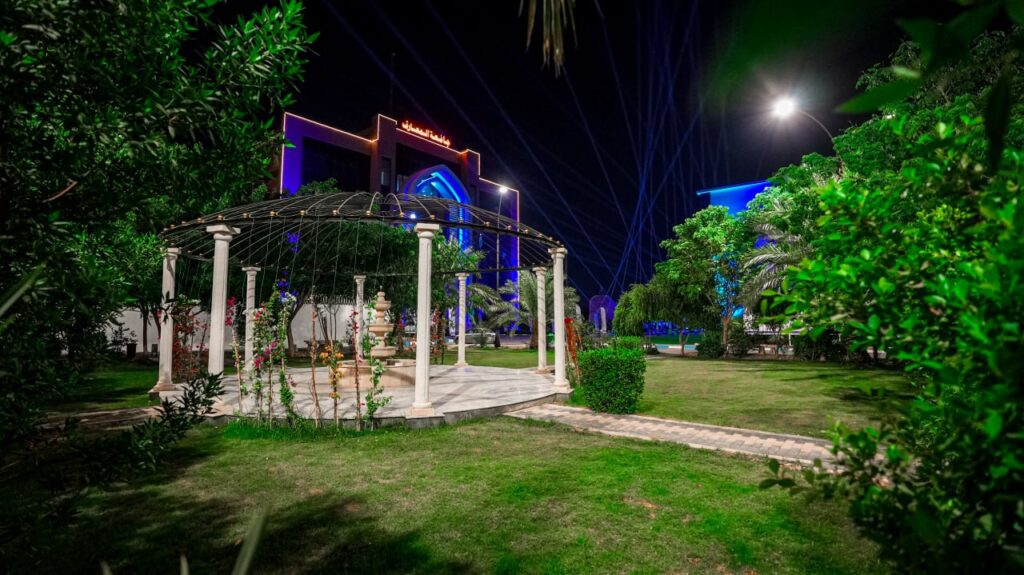
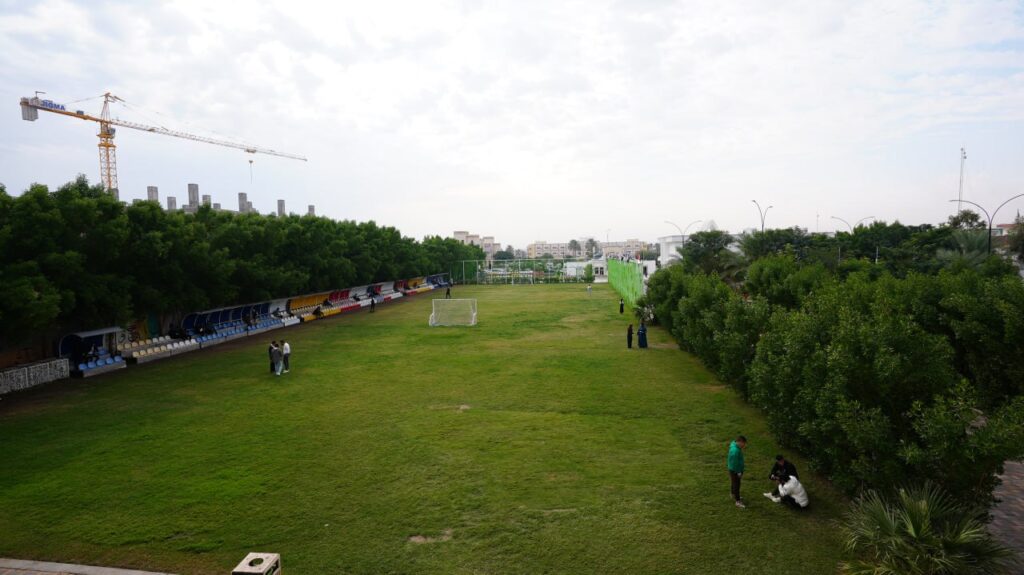
The campus incorporates energy-efficient lighting, solar panels, water conservation systems, and eco-friendly landscaping.
Green design principles guide new construction, ensuring that all facilities minimize energy consumption and environmental footprint.
In addition, UOA has adopted digitalization and paperless systems to reduce resource waste, while promoting green transport by encouraging carpooling, cycling, and electric vehicle use among staff and students.
These practices embody the principles of SDG 11.7, which seeks to provide universal access to safe, inclusive, and accessible green spaces.
Sustainability Education and Awareness
UOA integrates sustainability concepts into its curriculum across multiple disciplines—engineering, business, law, and social sciences.
Courses on urban sustainability, environmental policy, and green innovation prepare students to design solutions for the challenges facing Iraq’s urban environments.
Regular workshops, seminars, and conferences focus on sustainable development, renewable energy, and environmental justice, promoting a culture of environmental responsibility within the university community.
The university also celebrates key environmental days—such as World Environment Day and World Cities Day—through public awareness events, exhibitions, and student-led sustainability projects.
Research and Innovation for Sustainable Cities
Research is central to UOA’s contribution to SDG 11.
The University Research Center and the Deanship of Scientific Affairs encourage interdisciplinary projects on urban sustainability, smart city design, climate adaptation, and green technologies.
Recent initiatives include:
- Studies on water-efficient irrigation and green roof technologies for arid regions.
- Development of low-carbon construction materials using industrial waste.
- Analysis of urban heat islands and mitigation strategies in Iraqi cities.
- Research on social housing and inclusive urban design for internally displaced populations.
Through publications, conferences, and partnerships, UOA disseminates knowledge that informs both policy and practice in Iraq’s urban development sector.
Community Engagement and Social Responsibility
The University of Al Maarif maintains a strong community service ethos, emphasizing civic engagement and sustainable development.
Students and staff participate in community clean-up drives, tree-planting campaigns, and urban beautification projects across Al-Anbar and Baghdad.
The university also partners with local councils and NGOs to promote environmental education, public health, and social cohesion in rapidly growing urban areas.
These community projects empower students to become active contributors to the development of sustainable, inclusive communities—a core principle of SDG 11.
Inclusive and Accessible Spaces
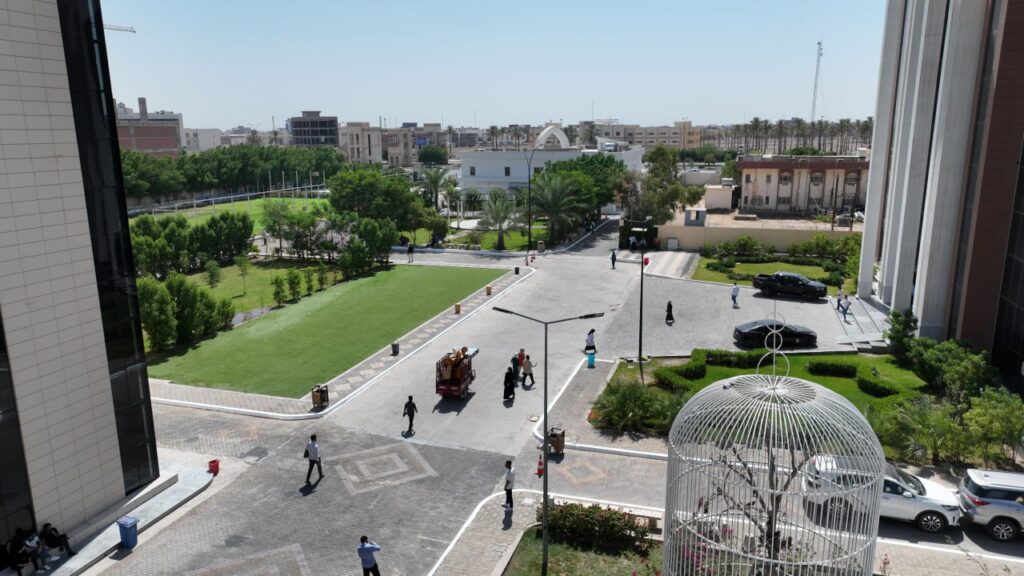
UOA’s campus is designed to be inclusive and accessible for all, including individuals with disabilities.
Facilities feature ramps, elevators, assistive technologies, and accessible classrooms to ensure equal access to learning and participation.
The university promotes cultural diversity and interfaith dialogue, fostering a safe and welcoming environment that reflects Iraq’s multicultural identity.
This commitment supports SDG 11.7, emphasizing the importance of inclusive public spaces for all citizens.
National and Local Partnerships for Urban Sustainability
To strengthen its impact, the University of Al Maarif collaborates with key national and international partners, including:
- The Ministry of Environment and Urban Development – for climate resilience and sustainable urban planning.
- The Ministry of Higher Education and Scientific Research – for integrating sustainability across academic institutions.
- Local municipalities and NGOs – for community-level sustainability initiatives.
- UN-Habitat and UNESCO Iraq – for projects in urban reconstruction, heritage preservation, and sustainable design.
These partnerships enhance Iraq’s ability to achieve SDG 11 while positioning UOA as a leading academic partner in sustainable urban development.
Conclusion
The University of Al Maarif stands at the forefront of Iraq’s journey toward sustainable and resilient cities.
Through education, research, community service, and innovation, the university contributes directly to achieving SDG 11: Sustainable Cities and Communities.
UOA’s initiatives—ranging from sustainable campus practices and housing design to urban research and community engagement—reflect its commitment to shaping a greener, safer, and more inclusive future for Iraq.
By nurturing a generation of socially responsible graduates and fostering partnerships for sustainable development, the University of Al Maarif reinforces its role as a catalyst for urban renewal and environmental stewardship, ensuring that Iraq’s cities grow not only in size but also in sustainability and resilience.