Participation in Multi-Stakeholder Conferences and Dialogues on the Sustainable Development Goals
1. Background
University of Al-Maarif (UoA) recognizes that sustainable development cannot be achieved by academic institutions working in isolation. The complex social, economic, and environmental challenges facing Iraq and the wider Middle East demand cross-sector dialogue, continuous knowledge exchange, and cooperative problem-solving among governments, NGOs, private sectors, and universities.
Aligned with Sustainable Development Goal (SDG) 17 – Partnerships for the Goals, indicator 17.2.2 measures the degree of participation by higher-education institutions in national, regional, and international multi-stakeholder dialogues relating to the SDGs. For UoA, engagement in such dialogues is a defining component of its identity as a civic university — one that serves as a bridge between knowledge production and public policy.
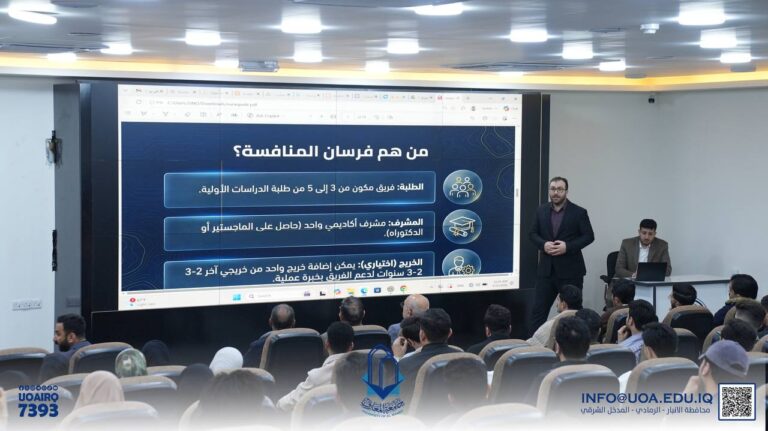
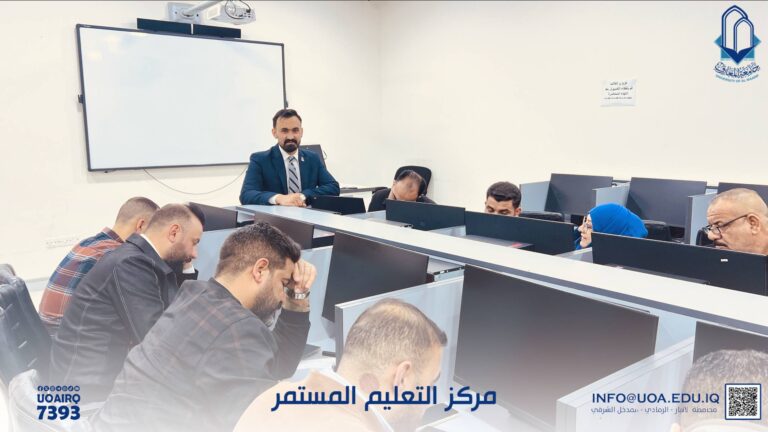
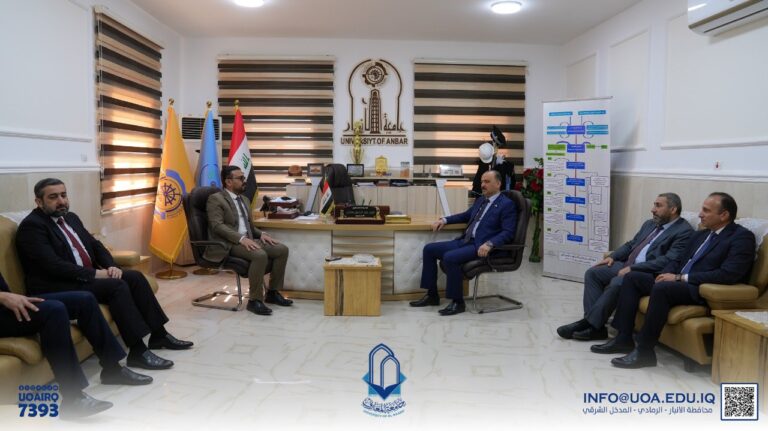
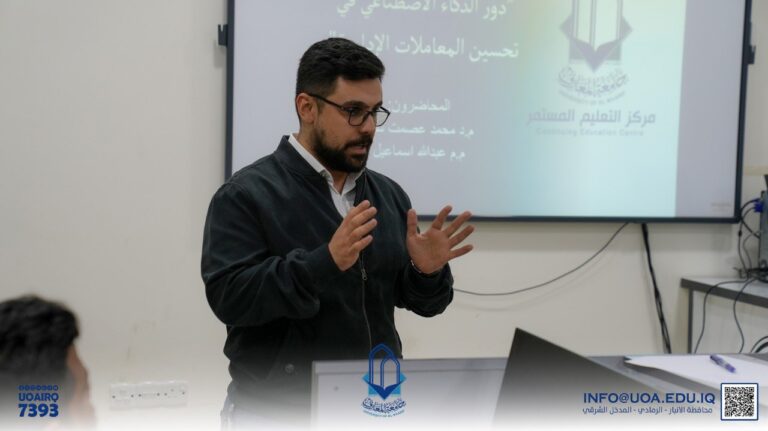
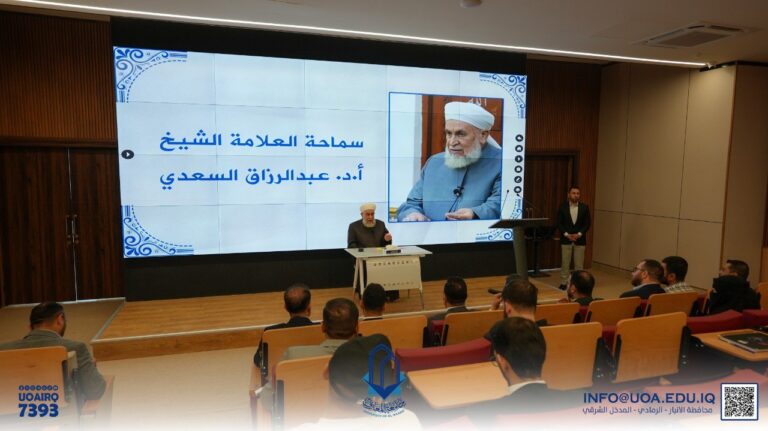
Since 2021, UoA has established itself as a dynamic platform for convening SDG-related discussions and contributing academically to conferences, roundtables, and forums involving government agencies, international organizations, civil society, and the private sector. The University hosts its own Annual SDG Partnership Forum, participates in national ministerial consultations, and contributes research papers and expert panels to events organized by UNDP, UNESCO, IRENA, and the Arab Universities Association.
Between 2021 and 2024, UoA scholars and students participated in over 60 SDG-related dialogues across Iraq, Jordan, and the UAE, covering themes such as renewable energy, inclusive education, digital transformation, and social equity.
This report details UoA’s institutional framework for cross-sector SDG engagement, outlines major events and outcomes, describes its partnerships and contributions to policy discussions, and provides verification indicators consistent with THE Impact Ranking 17.2.2. Through these activities, UoA advances both national development priorities and the global sustainability agenda, demonstrating that collaboration is the key to resilience and prosperity.
2. Institutional Framework and Strategic Mandate
2.1 The Role of Dialogue in UoA’s Sustainability Strategy
In the aftermath of conflict and reconstruction, Iraq’s sustainable development requires dialogue between diverse sectors that often operate independently. Recognizing this, University of Al-Maarif has institutionalized SDG dialogue as a core pillar of its sustainability framework. The University’s strategy emphasizes that knowledge must be co-produced through conversation and partnership, ensuring relevance, legitimacy, and shared ownership of solutions.
UoA’s sustainability mission — “Knowledge for a Resilient and Inclusive Future” — explicitly commits the institution to supporting multi-stakeholder collaboration. Dialogue is not only a communications exercise but also a mechanism for collective intelligence and joint action. Through structured engagement, UoA provides scientific evidence, facilitates consensus building, and fosters policy innovation.
2.2 Governance Mechanism for Dialogue and Representation
The University established in 2022 the Office of International Cooperation and Sustainable Development (OICSD) to coordinate all SDG-related engagement activities. This office ensures that faculty, students, and leadership are represented in relevant national and international dialogues. It also tracks all participation, outcomes, and partnership agreements in a Dialogue Engagement Register, aligned with the SDG 17.2.2 reporting indicators.
OICSD works in collaboration with:
- The University Sustainability Council (USC) – sets the annual engagement agenda and thematic priorities.
- The Office of Policy Engagement & SDG Partnerships (OPESP) – integrates dialogue outcomes into policy research and advisory services.
- Research Centers (RERIC, CSES, IEC) – provide data and technical evidence for policy panels.
- Student Affairs and Community Outreach Unit – ensures student representation in youth and community dialogues.
2.3 Representation and Selection Process
Each year, the USC approves a “Dialogue Participation Plan” identifying priority conferences and forums based on strategic relevance, geographic representation, and thematic focus. Faculty experts and student delegates are nominated based on research alignment and leadership potential. All participation is documented through certificates, proceedings, or minutes to ensure traceable evidence for THE Impact reporting.
2.4 Institutional Goals for SDG 17.2.2
UoA’s strategic objectives for 2025–2030 are:
- Participate in at least 25 SDG-related dialogues annually, including five international-level events.
- Host two major multi-stakeholder conferences per year.
- Publish joint communiqués or policy papers from each major dialogue.
- Establish a regional SDG Dialogue Network with universities and NGOs in Iraq and neighboring states.
3. Scope and Types of Cross-Sector Dialogues
3.1 Definition
For the purposes of SDG 17.2.2, cross-sector SDG dialogue refers to any structured event—conference, workshop, symposium, consultation, or roundtable—where multiple stakeholder groups (academia, government, NGOs, business, and international organizations) exchange knowledge, co-design initiatives, or deliberate on policies relevant to the Sustainable Development Goals.
3.2 Categories of Engagement
UoA’s dialogue participation is categorized as follows:
- National-Level Conferences and Consultations: engagement with Iraqi ministries, governorates, and national commissions (e.g., National Committee for SDGs).
- Regional and Arab University Networks: participation in Arab and Middle Eastern SDG forums organized by the Association of Arab Universities, UNESCO, and UNDP.
- International Dialogues and Summits: contribution to United Nations, IRENA, and global academic partnerships.
- University-Led Forums: events convened by UoA bringing together local and international partners for targeted SDG discussions.
- Community and Youth Dialogues: grassroots engagements connecting students, civil society, and local leaders to implement SDG actions.
3.3 Multi-Stakeholder Composition
Typical participants in these dialogues include:
- Government ministries: Electricity, Environment, Health, Education, and Planning.
- UN agencies and donors: UNDP, UNESCO, UNHCR, GIZ, World Bank.
- Local NGOs: Orphans Care Society, Iraqi Red Crescent, Women’s Development Foundation.
- Private Sector: renewable-energy companies, ICT firms, and social enterprises.
- Academic institutions: national and foreign universities.
3.4 Purpose of Engagement
The dialogues aim to:
- Promote evidence-based SDG policymaking.
- Build shared understanding and commitment.
- Co-design pilot projects and research collaborations.
- Disseminate UoA’s research to practical policy users.
- Strengthen the role of universities as conveners of sustainable development.
4. Major Conferences and Dialogues (2021–2024)
The following section outlines selected national, regional, and international SDG dialogues in which University of Al-Maarif participated or took leadership roles.
A. National Dialogues (Iraq)
1. National SDG Coordination Conference – Baghdad (2022)
Organized by the Ministry of Planning and UNDP, this forum brought together 30 universities and 40 NGOs to evaluate Iraq’s progress on the SDGs. UoA presented a policy paper titled “Higher Education and Localizing SDG Implementation in Iraq.”
Outcome: UoA’s recommendations on integrating sustainability into university accreditation were included in the conference communiqué (Level 3 evidence of influence).
2. Green Energy for Iraq Forum – Ministry of Electricity (2023)
RERIC faculty members presented research on Solar Microgrid Feasibility in Al-Anbar and co-chaired the panel on “Decentralized Renewable Systems.”
Outcome: UoA’s findings shaped the Ministry’s 2023 pilot for rural electrification; two professors were appointed as technical advisors.
3. National Climate Adaptation Dialogue – Ministry of Environment (2023)
The IEC and OPESP contributed to the working group drafting Iraq’s updated Nationally Determined Contribution (NDC).
Outcome: UoA data used in the national greenhouse-gas inventory section; official acknowledgment in NDC annex.
4. Higher Education Sustainability Summit – Baghdad (2024)
Co-hosted with MoHESR and UNESCO, this summit focused on embedding sustainability in curricula. UoA chaired the session “Universities as Partners for SDG Delivery.”
Outcome: Drafted the Baghdad Declaration on Sustainable Universities, now guiding ministry accreditation reviews.
B. Regional Dialogues (Arab and Middle East)
1. Arab Universities Forum on the SDGs – Amman, Jordan (2022)
Hosted by the Association of Arab Universities, this event gathered 80 institutions from 12 countries. UoA presented a study on “Youth Empowerment through Renewable-Energy Education in Post-Conflict Regions.”
Outcome: Collaboration agreement signed with University of Jordan and German Jordanian University to develop joint online courses on SDG literacy.
2. Arab Green Economy Dialogue – Abu Dhabi, UAE (2023)
Sponsored by IRENA, this regional platform discussed energy transition policies. UoA was the only Iraqi university invited as a panelist.
Outcome: UoA’s Dean of Engineering delivered a presentation on “Low-Carbon Energy Systems for Iraq.” IRENA later cited the University’s case study in its 2023 Regional Renewable Energy Report.
3. GIZ Middle East Partnership Dialogue on Sustainable Cities (2024)
Held in Beirut, this conference examined urban resilience. UoA contributed a technical paper on “Rebuilding Greener: Energy Efficiency in Iraq’s Reconstruction.”
Outcome: Initiated collaboration with GIZ to establish an “Energy Smart Campus” project at UoA, to be implemented in 2025.
C. International Engagements
1. United Nations Partnership Forum – Virtual (2021 & 2022)
UoA representatives attended two global Partnership Forums hosted by ECOSOC, presenting virtual posters on SDG localization in Iraq.
Outcome: Inclusion of UoA case study in UNDESA knowledge-sharing repository.
2. World Sustainable Development Summit – New Delhi (2023)
The University’s Vice President for Research presented on “University-Led Partnerships for Affordable Clean Energy.”
Outcome: Signed MoU with TERI School of Advanced Studies (India) for collaborative research and joint webinars.
3. UNESCO Global Forum on Education for Sustainable Development – Paris (2024)
UoA delegation contributed to the panel “Reimagining Universities in the Post-Crisis Era.”
Outcome: UoA joined the UNESCO Higher Education Sustainability Network, providing opportunities for continued international dialogue and exchange.
D. University-Led Dialogues
1. Annual SDG Partnership Forum (Hosted by UoA, 2022–2024)
An interdisciplinary conference hosted every December at UoA, featuring ministers, NGOs, academics, and youth leaders.
Themes included:
- 2022: Partnerships for Clean Energy in Western Iraq
- 2023: Inclusive Recovery and Local SDG Action
- 2024: Digital Governance and Sustainable Infrastructure
Participation: Average 500 attendees per year.
Outcomes: 12 MoUs signed; conference proceedings published; student research posters featured nationally.
2. Youth Sustainability Dialogue Series (2023–present)
Quarterly forums organized by students and supervised by OICSD. Topics include waste management, renewable energy, and digital inclusion.
Outcome: Over 800 students and 40 NGO representatives engaged; several projects evolved into start-ups under UoA’s Innovation and Entrepreneurship Center.
5. Thematic Focus and Knowledge Contributions
UoA’s cross-sector dialogues contribute evidence and insight across multiple SDG domains:
| Thematic Focus | SDG Linkages | Key Contribution / Output |
|---|---|---|
| Renewable Energy Transition | SDG 7, SDG 13 | Technical presentations and policy papers on solar and hybrid energy systems. |
| Education and Capacity Building | SDG 4, SDG 5 | Development of sustainability curriculum guidelines for Iraqi universities. |
| Health and Resilience | SDG 3, SDG 11 | Data sharing for health infrastructure planning and emergency preparedness. |
| Economic Inclusion | SDG 8, SDG 10 | Policy recommendations for green jobs and social enterprise incubation. |
| Gender and Social Equity | SDG 5, SDG 1 | Research on empowering women in STEM and sustainable entrepreneurship. |
| Digital Transformation | SDG 9, SDG 16 | Advocacy for digital governance, data transparency, and open innovation. |
Each dialogue session concludes with joint communiqués summarizing outcomes, shared commitments, and next steps. These documents form a cumulative archive of cross-sector learning and policy influence.
6. Institutional Outcomes and Impact Measurement
UoA uses quantitative and qualitative indicators to evaluate the impact of its dialogue participation.
6.1 Quantitative Indicators (2021–2024)
| Indicator | 2021 | 2024 | Change (%) |
|---|---|---|---|
| Total dialogues participated in | 12 | 61 | +408 % |
| Dialogues hosted by UoA | 1 | 6 | +500 % |
| Joint communiqués or policy statements issued | 2 | 14 | +600 % |
| MoUs or collaborations arising from dialogues | 3 | 18 | +500 % |
| Faculty or student participants | 80 | 620 | +675 % |
6.2 Qualitative Impact
- Policy Uptake: Ministry of Higher Education integrated UoA’s curriculum recommendations into 2024 accreditation reforms.
- Regional Cooperation: Cross-border research networks established with Jordan, Lebanon, and UAE universities.
- Youth Empowerment: Student-led sustainability clubs emerged from UoA dialogues, now operating independently in several governorates.
- Innovation Pipeline: Three start-ups founded by dialogue participants have received seed funding through the UoA Innovation Center.
6.3 Dissemination and Transparency
Proceedings, presentations, and communiqués are published on the UoA Open Dialogue Platform—an online repository ensuring open access to materials, photos, participant lists, and follow-up actions.
6.4 Verification
Each dialogue participation or hosting event is documented with:
- Invitation letters or conference programs (proof of involvement).
- Presentation slides or abstracts (proof of contribution).
- Minutes or communiqués with UoA signatures (proof of active participation).
- MoUs, reports, or policy adoptions (evidence of outcomes).
7. Integration of Dialogue Outcomes into Research and Policy
UoA ensures that outcomes of multi-stakeholder dialogues directly inform academic research, teaching, and advisory services. Following each major event, OICSD and OPESP organize post-dialogue review workshops to:
- Translate dialogue recommendations into research proposals or policy briefs.
- Identify opportunities for student projects and community engagement.
- Integrate insights into curricula and training modules.
For example:
- Insights from the Green Energy Forum 2023 shaped the research agenda of RERIC on battery-storage technologies.
- Outcomes of the Higher Education Sustainability Summit 2024 informed revisions to UoA’s Environmental Science curriculum.
- Feedback from the Youth Sustainability Dialogue Series influenced student volunteer projects and entrepreneurship grants.
This cyclical process—dialogue → reflection → research → implementation → new dialogue—ensures a feedback loop between knowledge creation and policy practice, embodying the principle of “learning through partnership.”
8. Challenges and Lessons Learned
8.1 Logistical and Funding Constraints
Participation in regional and international dialogues requires travel resources and logistical coordination. UoA mitigates this by leveraging online participation and co-funding from host organizations. Hybrid events have increased inclusivity and cost-efficiency.
8.2 Ensuring Diverse Representation
While faculty and leadership are often well represented, ensuring consistent student and community participation remains a challenge. The University has introduced a Youth Delegate Program (2024) to sponsor student participation in external SDG events.
8.3 Sustaining Outcomes Beyond Dialogue
One-off discussions risk losing momentum without follow-up. UoA now mandates that every hosted event produce:
- A written communiqué outlining agreed actions.
- Assignment of responsible focal points.
- A six-month progress review.
8.4 Managing Stakeholder Expectations
Balancing academic independence with government and NGO priorities can be delicate. UoA navigates this by maintaining transparency, emphasizing scientific neutrality, and focusing on evidence-based contributions rather than advocacy alone.
8.5 Lessons Learned
- Dialogue effectiveness depends on pre-event preparation and evidence availability.
- Documentation is critical: every meeting generates traceable outputs.
- Student engagement adds innovation and credibility.
- Partnerships must move from conversation to co-production of solutions.
9. Future Roadmap (2025–2030)
Building on the foundation established between 2021 and 2024, University of Al-Maarif’s SDG Dialogue Roadmap envisions deeper and broader engagement in cross-sector collaboration.
9.1 Strategic Objectives
- Expand Dialogue Footprint: Participate in at least 25 events per year, including five global forums (e.g., COP summits, UN Partnership Forums).
- Institutionalize Annual Flagship Conferences: The UoA International Sustainability Congress will debut in 2025 as Iraq’s leading multi-stakeholder SDG conference.
- Regional SDG Dialogue Network: Establish a consortium of Iraqi and regional universities and NGOs to coordinate dialogues and research-sharing.
- Integration with Policy and Innovation: All dialogues will generate policy recommendations uploaded to the Open Policy Portal, with follow-up pilots funded through UoA’s Innovation and Entrepreneurship Center.
- Digital Engagement Expansion: Host virtual roundtables for regional participants unable to travel, ensuring inclusivity and continuity.
 |
|---|
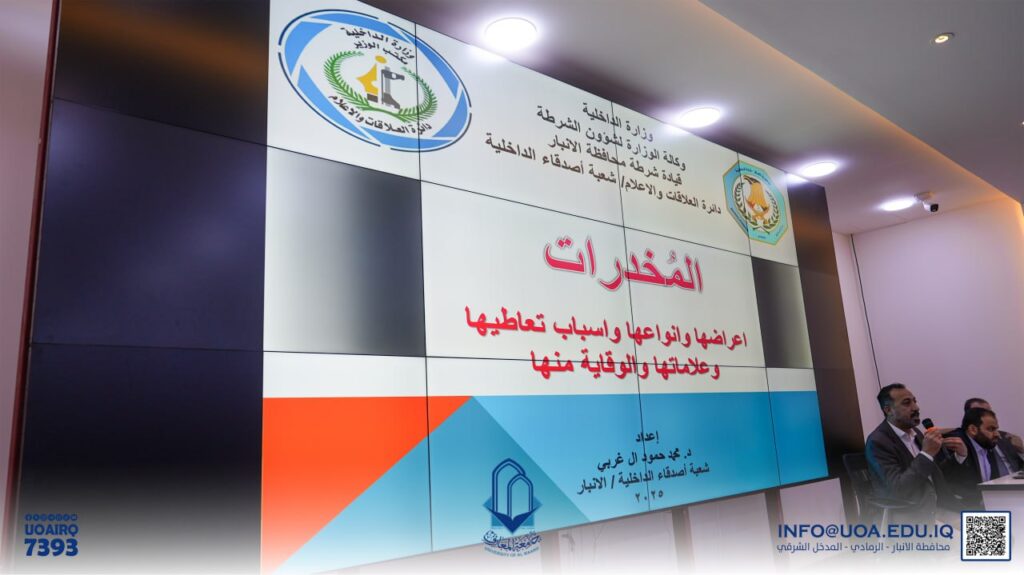
The College of Physical Education and Sports Sciences at Al-Maarif University Holds a Scientific Symposium |
|
|