Community SDG Education (17.4.3)
Outreach Educational Activities for Alumni, Local Communities, and Displaced Populations
1. Introduction
The University of Al Maarif (UOA), located in the historic city of Anbar, Iraq, stands as a leading private institution devoted to advancing education, research, and community service in the western region of the country. Al Maarif’s mission is deeply rooted in its commitment to the United Nations Sustainable Development Goals (SDGs), particularly through education that extends beyond the campus walls. In alignment with SDG 17 (Partnerships for the Goals) and SDG 4 (Quality Education), UOA has developed comprehensive outreach educational initiatives targeting three primary stakeholder groups: alumni, local communities, and displaced populations.
Community SDG Education (SDG 17.4.3) represents one of the university’s most transformative pillars, focusing on empowering individuals and groups with the knowledge, skills, and awareness required to promote sustainable living, resilience, and social inclusion. Through academic programs, community workshops, training partnerships, and inter-institutional collaboration, the University of Al Maarif has positioned itself as a catalyst for societal development in the Anbar region and beyond.
2. Strategic Alignment with SDGs and National Priorities
The University of Al Maarif’s outreach educational framework is directly aligned with Iraq’s National Development Plan (NDP) 2023–2027, which prioritizes post-conflict reconstruction, social cohesion, and educational modernization. The university integrates these priorities with the United Nations 2030 Agenda for Sustainable Development, particularly focusing on:
- SDG 4: Quality Education – Ensuring inclusive and equitable education for all.
- SDG 5: Gender Equality – Promoting equal opportunities in education and professional growth.
- SDG 8: Decent Work and Economic Growth – Enhancing employability and entrepreneurship.
- SDG 10: Reduced Inequalities – Addressing disparities faced by displaced and marginalized groups.
- SDG 16: Peace, Justice, and Strong Institutions – Promoting civic education and ethical awareness.
- SDG 17: Partnerships for the Goals – Fostering collaboration with government agencies, NGOs, and international organizations.
These alignments demonstrate that Al Maarif’s educational outreach is not limited to academic engagement but serves as a systemic intervention for sustainable social transformation. The university’s approach integrates capacity building, digital literacy, sustainability education, and peace-building into community-based education, reflecting its institutional vision for inclusive and resilient development in post-conflict Iraq.
3. Educational Outreach for Alumni
3.1 Alumni Engagement as Lifelong Learning Partners
The University of Al Maarif considers its alumni an integral extension of its educational community. In response to the evolving socio-economic conditions in Iraq, the university launched the Al Maarif Lifelong Learning and Alumni Development Program (ALLADP) in 2021. This initiative ensures that alumni remain connected to the university’s intellectual ecosystem and continuously update their professional competencies, particularly those linked to sustainability and the SDGs.
Workshops, webinars, and professional certification courses are organized quarterly, addressing topics such as:
- Sustainable Business and Corporate Responsibility (SDG 8, SDG 12)
- Renewable Energy and Environmental Management (SDG 7, SDG 13)
- Digital Transformation and Ethical AI (SDG 9, SDG 16)
- Public Health and Well-being (SDG 3)
- Gender Equity and Social Justice in the Workplace (SDG 5, SDG 10)
These alumni-centered activities serve two functions: (1) maintaining alumni engagement through continued education and (2) building a professional network that applies SDG principles in public administration, private enterprises, and NGOs.
3.2 Alumni-Led Community Training and Mentorship
The Al Maarif Alumni Association, in collaboration with the university’s Center for Sustainable Development Studies (CSDS), coordinates mentorship programs in which graduates volunteer to train students, entrepreneurs, and local youth. Many alumni are employed in government offices, education, and the private sector, enabling them to share practical insights on sustainability-oriented leadership.
Some notable programs include:
- The SDG Mentorship Week, where alumni professionals deliver lectures and workshops on integrating sustainability in business and education.
- Community Mentorship Circles, small group meetings led by alumni to mentor displaced youth and local women entrepreneurs on project development and job readiness.
These initiatives not only strengthen community ties but also ensure that UOA’s educational impact extends into Iraq’s emerging sustainable economy.
4. Educational Outreach to Local Communities
4.1 Local Development through Community Learning Centers
To extend its educational mission beyond the campus, the University of Al Maarif established Community Learning Centers (CLCs) in Ramadi, Hit, and Fallujah—three cities central to Anbar’s reconstruction process. These centers operate under the Community SDG Education Initiative (CSEI), launched in 2022.
The CLCs offer short-term educational programs and vocational workshops focusing on:
- Sustainable agriculture and water management (SDG 2, SDG 6)
- Waste management and recycling awareness (SDG 11, SDG 12)
- Small business development and entrepreneurship training (SDG 8)
- Human rights and peace education (SDG 16)
- Digital literacy and e-governance (SDG 9)
- Environmental conservation and climate resilience (SDG 13, SDG 15)
Through these centers, more than 3,500 community members have participated in sustainability education programs since 2022, including women, youth, farmers, and local civil servants.
4.2 Empowering Women and Youth
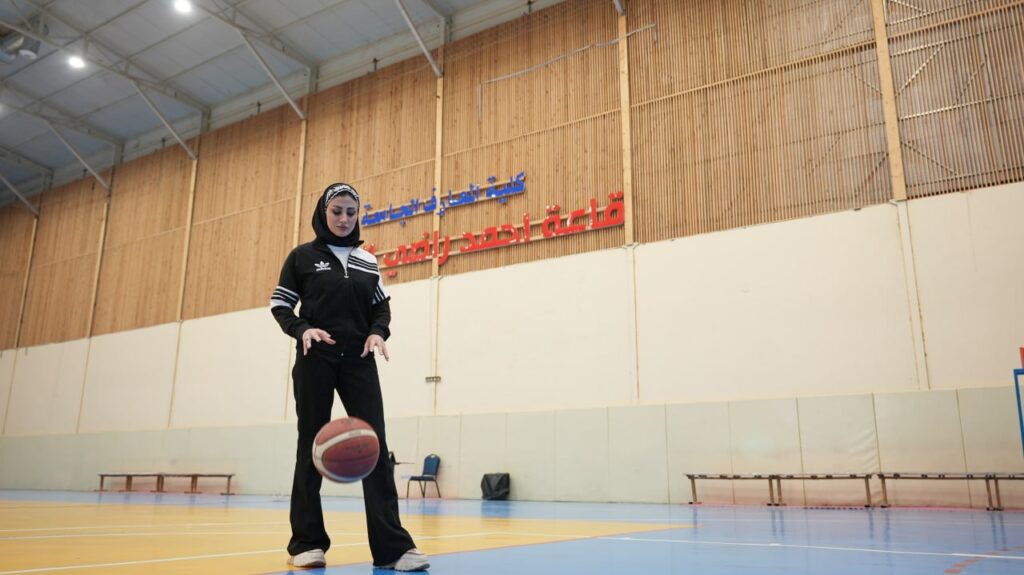
Recognizing the transformative role of women and youth in achieving the SDGs, UOA runs the “Empower Anbar” Program, in collaboration with the Iraqi Women’s Empowerment Organization (IWEO) and the UNDP Iraq Office. This program trains women leaders and young entrepreneurs in:
- Leadership and decision-making
- Financial literacy and small business management
- Climate awareness and eco-innovation
- Social entrepreneurship aligned with the SDGs
The program has empowered over 600 participants to initiate or join community development projects in Anbar Province, contributing to gender equality and economic revitalization.
4.3 Cultural Heritage and Environmental Protection
The university promotes eco-cultural education, emphasizing the protection of Iraq’s cultural heritage and environmental resources. Workshops in cooperation with the Anbar Directorate of Antiquities and Heritage and UNESCO Iraq teach participants how to link cultural preservation with sustainability goals—such as using eco-friendly materials in heritage restoration and promoting green tourism. This effort strengthens the connection between local identity and global sustainability values.
5. Educational Outreach for Displaced Populations
5.1 Context and Need
Anbar, one of Iraq’s most affected regions by conflict and displacement, hosts thousands of internally displaced persons (IDPs). The University of Al Maarif recognizes education as a key pillar of resilience, social inclusion, and peacebuilding. Its Displaced Communities Education Program (DCEP) provides non-formal and formal education opportunities for IDPs, including youth who lost access to higher education during years of instability.
5.2 SDG-Based Education for IDPs
The DCEP aligns with SDG 4.5 (equal access to education) and SDG 16 (peaceful and inclusive societies). It offers:
- Bridge Courses to help displaced students reenter higher education.
- Literacy and Numeracy Classes for adults who missed basic schooling.
- Life Skills and Vocational Training, including eco-agriculture, computer literacy, and community health education.
- Peacebuilding Workshops, using participatory education to teach conflict resolution and intercultural understanding.
Since its inception in 2020, DCEP has reached over 2,000 displaced learners, including many women-led households.
5.3 Partnerships and Funding
The program is supported by partnerships with the Iraqi Ministry of Migration and Displacement, UNHCR, and Save the Children Iraq. UOA faculty volunteer to design learning modules and conduct classes in temporary learning spaces. The university provides certification recognized by local authorities, enabling participants to reintegrate into formal education or employment pathways.
5.4 Digital Access and Innovation
To overcome mobility and accessibility challenges, UOA developed the Maarif e-Learning for All (MeLA) platform, which allows displaced learners to access SDG-focused educational materials online or through mobile applications. The platform includes video lectures, virtual classrooms, and interactive content in Arabic and English. It has been particularly valuable for displaced youth in remote camps, ensuring continuous access to education during crises.
6. Faculty and Student Engagement in Community SDG Education
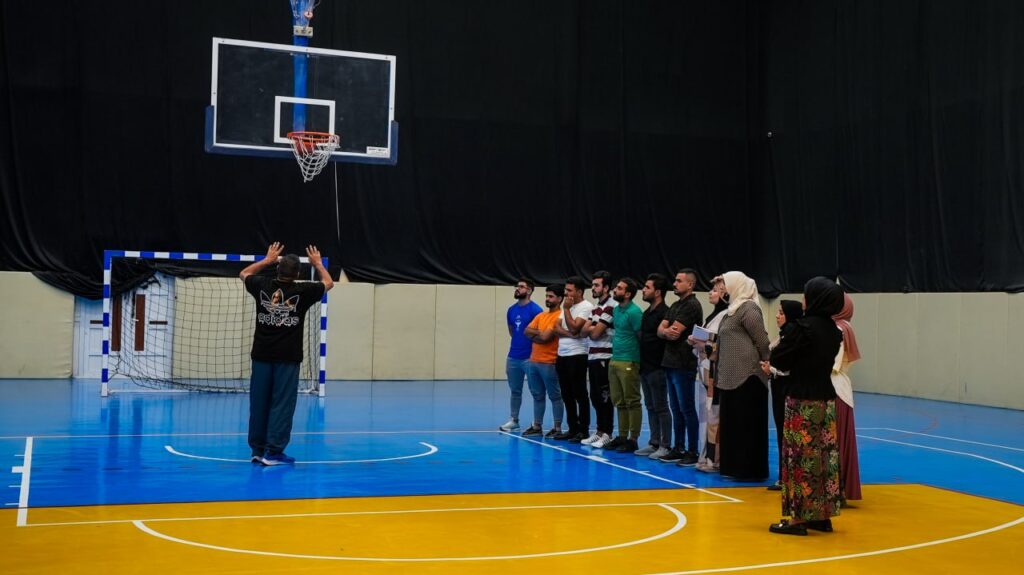
The University of Al Maarif fosters a culture of volunteerism among its faculty and students. Through the SDG Ambassadors Program, over 250 students serve as local educators and advocates, teaching schoolchildren and community members about sustainability, energy conservation, and waste reduction.
Faculty members integrate service-learning components into their courses, linking academic theory with real-world application. Examples include:
- Engineering students designing low-cost solar lamps for displaced families.
- Education students developing SDG-aligned curricula for rural schools.
- Business students conducting micro-enterprise training for local entrepreneurs.
These engagements help students understand their academic disciplines as tools for social good, reinforcing UOA’s mission to create responsible and sustainable citizens.
7. Partnerships and Collaborations
UOA’s outreach programs rely heavily on partnerships with national and international actors. Key partners include:
- UNDP Iraq – technical support for sustainable livelihoods programs.
- UNESCO Iraq Office – collaboration on educational and cultural heritage projects.
- International Organization for Migration (IOM) – integration of displaced populations through education.
- Anbar Provincial Council – coordination for local community outreach.
- Iraqi Ministry of Higher Education and Scientific Research – curriculum support for SDG-aligned courses.
- Private Sector Partners – joint initiatives on renewable energy and entrepreneurship.
These partnerships strengthen the university’s ability to deliver sustainable educational impact and contribute to Iraq’s national SDG framework.
8. Monitoring, Evaluation, and Impact Assessment
The Center for Sustainable Development Studies (CSDS) at UOA systematically monitors and evaluates community education programs using SDG-based indicators such as:
- Number of beneficiaries engaged in outreach education.
- Gender balance among participants.
- Employment outcomes of trained individuals.
- Community projects initiated by alumni or program graduates.
- Long-term impact on local economic and environmental conditions.
Annual impact reports are submitted to the university’s Sustainability and Quality Assurance Council, which aligns findings with THE Impact Ranking indicators.
So far, measurable outcomes include:
- 7,800+ total participants in SDG outreach programs since 2020.
- 45% female participation across all community education initiatives.
- Increase in community-led environmental projects in Ramadi and Fallujah by 35%.
- High re-enrollment rates of displaced students into formal education.
9. Challenges and Lessons Learned
While the university has achieved significant progress, challenges remain. These include limited funding for long-term community programs, infrastructural constraints in post-conflict areas, and digital accessibility for displaced populations.
To address these issues, UOA has:
- Diversified funding sources through partnerships and alumni donations.
- Expanded online education to reach remote learners.
- Built mobile teaching units for rural and camp-based outreach.
The main lesson learned is that sustainability education must be contextualized—tailored to local needs, cultures, and economic realities. Community SDG education becomes most effective when rooted in empathy, local knowledge, and long-term institutional commitment.
10. Conclusion: Sustaining the Future of Community SDG Education
The University of Al Maarif has firmly positioned itself as a leader in Community SDG Education in western Iraq. Through continuous outreach to alumni, local communities, and displaced populations, it fosters a learning ecosystem that extends the power of education beyond classrooms.
UOA’s initiatives reflect a holistic understanding of sustainability—one that integrates economic empowerment, environmental awareness, social inclusion, and ethical leadership. By equipping citizens with the tools to contribute to Iraq’s sustainable development, the university not only fulfills its educational mission but also upholds its moral responsibility to rebuild a resilient, equitable, and prosperous society.
Moving forward, UOA plans to expand its community SDG education model nationally through digital platforms and institutional partnerships, making Al Maarif a central contributor to Iraq’s journey toward achieving the UN Sustainable Development Goals by 2030.