Introduction
The world faces a defining challenge in the transition to sustainable energy systems. According to the United Nations, over 770 million people still lack access to electricity, and billions more rely on inefficient energy sources that contribute to pollution, poverty, and climate change. Addressing these challenges requires not only technological solutions but also education-driven transformation—a process in which universities play a leading role.
As a center of knowledge and community leadership, Al-Maarif University has positioned energy education as a strategic pillar of its sustainability mission. The University’s Community Energy Education Initiative seeks to cultivate public understanding of clean-energy technologies, promote behavioral change toward energy conservation, and empower communities to adopt renewable energy solutions.
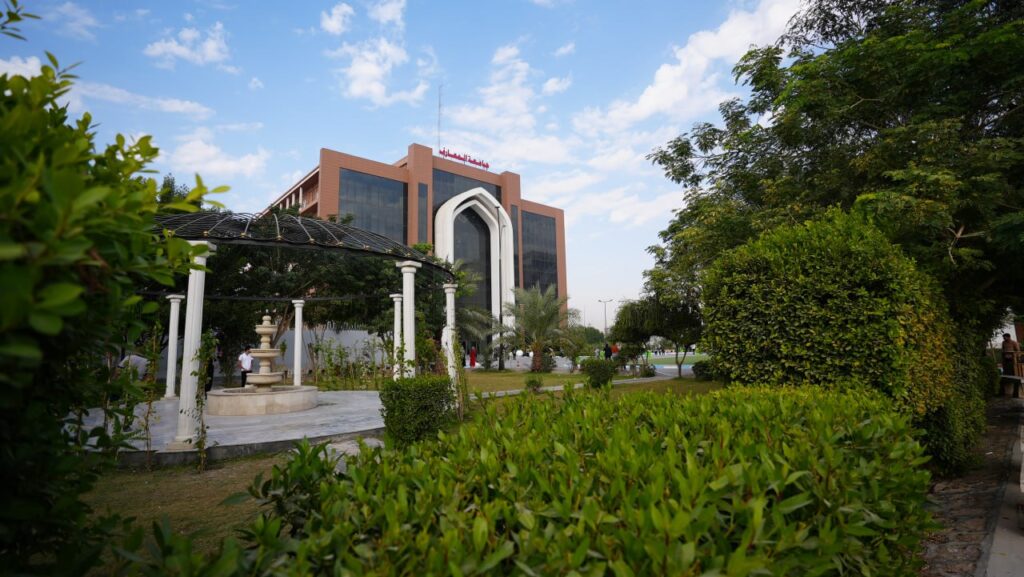
Located in Al-Anbar Governorate, Iraq, Al-Maarif University operates in a region characterized by high solar potential, rapid population growth, and rising energy demand. The University’s leadership recognizes that energy challenges in this context are not merely technical but socio-economic—requiring participatory learning, cross-sector collaboration, and capacity-building at all levels of society.
The Community Energy Education (CEE) strategy thus serves three interconnected goals:
- Educational Transformation: To integrate sustainability and clean energy into academic curricula, research projects, and professional development.
- Community Engagement: To extend the University’s educational reach into local communities through awareness campaigns, workshops, and collaborative energy projects.
- Sustainable Impact: To align local energy awareness with Iraq’s National Renewable Energy Strategy 2030 and the UN Sustainable Development Agenda.
Scope and Objectives of the Report
This report serves as both an academic record and a policy instrument demonstrating Al-Maarif University’s contributions to SDG 07 – Affordable and Clean Energy through educational and community initiatives. Specifically, it aims to:
- Present the institutional framework guiding energy education at Al-Maarif University.
- Document key programs and community engagement activities under the CEE initiative.
- Highlight partnerships, measurable outcomes, and case studies demonstrating local impact.
- Outline the University’s roadmap toward 2030 for advancing community energy literacy and renewable energy adoption.
The report is structured into six sections:
- Executive Summary and Introduction – outlines purpose and rationale.
- Institutional Context and Strategic Commitment – situates energy education within the University’s sustainability governance.
- Community Energy Education Framework – defines principles, structure, and methodologies.
- Programs, Activities, and Engagement Models – describes the range of implemented educational and community initiatives.
- Impact Measurement, Partnerships, and Case Studies – presents quantitative and qualitative outcomes.
- Future Roadmap and Conclusion – provides strategic recommendations and long-term vision.
Alignment with SDG 07
Al-Maarif University’s Community Energy Education efforts contribute directly to the indicators recognized by Times Higher Education (THE) Impact Ranking for SDG 07, particularly through:
- Education and research on clean energy and efficiency.
- Community outreach projects promoting energy literacy.
- Institutional practices that reduce energy use and increase renewable integration.
By empowering local citizens, businesses, and students with energy knowledge, the University exemplifies how higher education institutions can serve as agents of sustainable change.
Through this report, Al-Maarif University affirms its dedication to advancing the clean energy transition—not only on campus but also across communities—by transforming education into an instrument of empowerment, innovation, and environmental responsibility.

2.1 Institutional Overview
Founded in 2010, Al-Maarif University has evolved into one of Iraq’s leading centers of higher learning, recognized for its strong academic programs and its growing leadership in sustainability and community engagement. The University, located in Al-Anbar Governorate, serves as a vital institution in a region marked by post-conflict reconstruction, socio-economic transformation, and increasing energy demand.
The University’s mission emphasizes academic excellence, innovation, and community service, with sustainability positioned as a cross-cutting theme across education, research, and outreach. Over the past five years, Al-Maarif University has strategically integrated environmental sustainability and energy management into its institutional policies, curriculum design, and operational practices.
This integration reflects the University’s recognition that higher education plays a pivotal role in advancing the United Nations Sustainable Development Goals (SDGs), particularly SDG 07 – Affordable and Clean Energy, which aims to ensure access to reliable, sustainable, and modern energy for all.
2.2 Governance and Sustainability Structure
The University has established a robust governance system to guide sustainability-related initiatives, ensuring institutional accountability and continuous improvement. The following organizational bodies coordinate and oversee the implementation of energy-related and community education programs:
- University Sustainability Council (USC):
- Chaired by the Vice President for Administrative Affairs.
- Comprises deans, faculty representatives, and student ambassadors.
- Responsible for developing and monitoring sustainability strategies, including energy education policies.
- Sustainability and Energy Management Office (SEMO):
- Established in 2022 to coordinate campus-wide energy efficiency and awareness projects.
- Oversees the Smart Energy Monitoring System (SEMS) and collaborates with community organizations on outreach programs.
- Community Engagement Directorate (CED):
- Coordinates public education and outreach activities under the Community Energy Education (CEE) initiative.
- Facilitates partnerships with government ministries, NGOs, and local schools.
These governance structures ensure that sustainability is embedded in both institutional operations and community engagement activities, aligning Al-Maarif University’s mission with Iraq’s energy development and climate action objectives.
2.3 Strategic Alignment with National and Global Frameworks
Al-Maarif University’s energy education and outreach activities are designed to complement and reinforce broader national and international sustainability agendas.
At the national level, the University aligns with the Iraq National Renewable Energy Strategy 2030, which prioritizes increasing the share of renewables in the energy mix and improving public understanding of sustainable energy practices. The University’s educational programs directly support this by cultivating energy literacy and building technical capacity among youth and professionals.
At the international level, the University’s initiatives are guided by the principles of the United Nations 2030 Agenda for Sustainable Development, with particular focus on the following SDG 07 targets:
- 7.1: Ensuring universal access to affordable, reliable, and modern energy services.
- 7.2: Increasing substantially the share of renewable energy in the global energy mix.
- 7.3: Doubling the rate of improvement in energy efficiency.
- 7.A: Enhancing international cooperation and access to clean energy technology, research, and investment.
By aligning its programs with these targets, Al-Maarif University reinforces its role as a catalyst for sustainable energy transition in Iraq, serving as both a knowledge hub and a community partner.
2.4 Institutional Commitment to SDG 07
The University’s leadership has declared sustainability and energy awareness as strategic priorities in its Institutional Development Plan 2023–2030. This plan outlines clear objectives:
- Integrate clean energy concepts into 100% of undergraduate programs by 2026.
- Establish campus-based renewable energy systems for demonstration and learning.
- Expand community energy outreach to all districts of Al-Anbar Governorate.
- Publish annual Sustainability and SDG Progress Reports.
These objectives are reinforced by tangible investments. The University allocated 5% of its annual operational budget to sustainability projects, including renewable installations, awareness campaigns, and training programs.
Moreover, the University has embedded energy literacy across disciplines—engineering students analyze solar PV efficiency, business students study energy economics, and education majors develop teaching modules for school outreach.
This holistic integration demonstrates the University’s commitment not only to internal sustainability but also to transforming community energy behavior through education, research, and engagement.
2.5 Strategic Vision
Al-Maarif University’s long-term vision is to become a national model for community energy education and sustainability leadership. This vision is driven by a belief that energy education can empower citizens, reduce poverty, and strengthen national resilience.
Through strategic governance, stakeholder partnerships, and research-driven outreach, the University aims to produce graduates who are both technically skilled and socially responsible—individuals capable of advancing Iraq’s energy transformation agenda while fostering equitable access to clean, affordable power for all.
This institutional context forms the foundation upon which the Community Energy Education Framework (outlined in the next section) has been developed and implemented, ensuring coherence between academic purpose, community impact, and global sustainability goals.
3.1 Conceptual Foundation
The Community Energy Education (CEE) Framework at Al-Maarif University is built on the understanding that access to energy alone does not guarantee sustainable development; rather, it is the knowledge, behavior, and social capacity surrounding energy use that determine long-term sustainability outcomes.
Energy literacy—defined as the ability to understand, use, and make informed decisions about energy sources and consumption—is at the heart of the CEE program. It connects technical knowledge with social responsibility, encouraging individuals and communities to adopt cleaner, more efficient energy practices.
The framework aligns with the UNESCO Education for Sustainable Development (ESD) model, which emphasizes the integration of sustainability across all educational levels, promoting systems thinking, participatory learning, and community engagement. Through this approach, Al-Maarif University transforms education into an active tool for behavioral change, empowerment, and innovation in the field of affordable and clean energy.
3.2 Framework Objectives
The Community Energy Education Framework is guided by six key objectives:
- Awareness:
Increase public understanding of renewable energy technologies, energy efficiency, and the environmental impacts of fossil fuel dependence. - Capacity Building:
Equip students, educators, and community members with practical skills for implementing clean energy solutions in homes, schools, and small enterprises. - Research and Innovation:
Promote interdisciplinary research on sustainable energy systems, energy economics, and community adaptation strategies. - Community Partnership:
Foster collaborations between the University, local government, private sector, and civil society to co-develop educational programs and pilot projects. - Behavioral Change:
Encourage energy-conserving habits and sustainable consumption patterns among individuals and institutions. - Social Inclusion:
Ensure that women, youth, and marginalized populations are active participants and beneficiaries of clean energy education initiatives.
These objectives collectively drive Al-Maarif University’s mission to translate global sustainability goals into localized community empowerment.
3.3 Framework Components
The CEE Framework consists of four interrelated components—Curricular Integration, Research and Innovation, Community Outreach, and Institutional Operations—each contributing uniquely to the realization of SDG 07.
A. Curricular Integration
Energy education is embedded within all faculties, ensuring that students across disciplines gain knowledge relevant to their field:
- Engineering and Technology: Courses on solar PV systems, energy auditing, and sustainable infrastructure.
- Business and Economics: Modules on energy markets, financing models for renewables, and green entrepreneurship.
- Education: Development of school-based teaching materials to promote energy literacy in primary and secondary institutions.
- Humanities and Law: Studies on energy ethics, environmental policy, and equitable access to clean energy.
This holistic integration allows students to engage with sustainability concepts both theoretically and practically, transforming the entire campus into a “living laboratory” for energy learning.
B. Research and Innovation
The University established the Renewable Energy Research Unit (RERU) under its Faculty of Engineering to conduct applied research on small-scale solar technologies, hybrid energy systems, and off-grid solutions.
Collaborative student-faculty projects have resulted in several prototypes, such as:
- A solar-powered water filtration unit for rural communities.
- A low-cost micro solar grid model for educational demonstration.
- A smart energy monitoring application developed by computer science students.
These initiatives not only contribute to scientific knowledge but also serve as demonstration tools for public workshops and awareness campaigns.
C. Community Outreach and Training
Through the Community Engagement Directorate (CED), Al-Maarif University conducts energy workshops, training sessions, and awareness campaigns across Al-Anbar Governorate.
Programs include:
- Energy Awareness Days in local schools, teaching children about renewable energy through interactive experiments.
- Women in Energy Program, training female entrepreneurs to adopt solar energy solutions in small businesses.
- Village Energy Education Campaigns in partnership with local municipalities to demonstrate cost-effective solar home systems.
Each outreach initiative emphasizes participatory learning—encouraging community members not only to learn but to co-create solutions that respond to their specific energy challenges.
D. Institutional Operations as a Learning Model
The University campus itself serves as a demonstration platform for sustainability practices. Through the installation of solar PV panels, LED lighting retrofits, and real-time energy dashboards, the University exemplifies how institutions can operationalize clean energy principles.
Students and community visitors can monitor the performance of renewable systems, bridging the gap between education, research, and application. This “campus-as-classroom” model reinforces experiential learning and community visibility of sustainability practices.
3.4 Guiding Principles
The CEE Framework is underpinned by five guiding principles that ensure coherence, inclusivity, and long-term sustainability:
- Participation: Engage all stakeholders—students, faculty, community leaders, and local government—in program design and implementation.
- Relevance: Align educational content with the social, economic, and climatic realities of Al-Anbar Governorate.
- Accessibility: Deliver educational materials in both Arabic and English to maximize outreach and comprehension.
- Evidence-Based Practice: Use data from the Smart Energy Monitoring System (SEMS) to guide energy education and track community impacts.
- Sustainability and Continuity: Ensure that programs are not isolated events but continuous learning cycles integrated into institutional planning.
3.5 Expected Outcomes
By 2030, the Community Energy Education Framework aims to achieve the following measurable outcomes:
- Energy Literacy: At least 80% of Al-Maarif students and 50% of local households demonstrate improved understanding of clean energy principles.
- Capacity Development: Over 5,000 community members trained in renewable technologies and energy management.
- Behavioral Impact: Reduction of local energy wastage by 10% through awareness campaigns and behavioral interventions.
- Institutional Leadership: Recognition of Al-Maarif University as a national model for integrating community education with sustainable energy practices.
3.6 Summary
The Community Energy Education Framework serves as a comprehensive, participatory, and scalable model that unites academia and society in the pursuit of clean energy transformation. By integrating curriculum, research, outreach, and operations, Al-Maarif University positions itself as a regional leader in community-centered sustainability education.
The next section will illustrate how this framework translates into specific programs, initiatives, and engagement models that bring affordable and clean energy education to life across communities in Al-Anbar and beyond.
4.1 Overview
The Community Energy Education (CEE) Initiative at Al-Maarif University operationalizes the principles of sustainable energy education through a comprehensive portfolio of programs, community partnerships, and student-led activities. Each program is designed to translate knowledge into action, enabling individuals and institutions to make informed choices about energy use, renewable technologies, and environmental stewardship.
These initiatives follow a three-tier model of engagement:
- Campus-Based Programs – integrating energy learning within the university’s academic and operational ecosystem.
- Community Outreach Programs – extending education and capacity-building to schools, households, and local businesses.
- Partnership and Innovation Programs – collaborating with external organizations to scale impact and encourage innovation.
Through this structure, Al-Maarif University ensures that sustainability education transcends classroom boundaries and produces tangible community and environmental outcomes.
4.2 Campus-Based Programs
Campus-based programs form the foundation of the CEE initiative, embedding energy awareness and practice into the daily life of the University. These programs link teaching, research, and operations under a unified sustainability framework.
4.2.1 Energy Literacy Curriculum Integration
Since 2022, Al-Maarif University has embedded energy literacy modules across 80% of its academic programs. The modules include topics such as:
- Basics of renewable energy systems and efficiency.
- Local and global energy challenges.
- The role of behavioral change in reducing energy demand.
- Socio-economic implications of energy access and affordability.
Students from non-engineering disciplines—such as business, law, and education—receive training on how clean energy connects with economic resilience, policy reform, and social equity.
By 2024, the University aims for full integration of sustainability modules in all faculties, supported by a Green Curriculum Committee that ensures academic consistency and SDG alignment.
4.2.2 Renewable Energy Demonstration Facilities
The University operates several renewable energy demonstration units on campus that function as hands-on learning and research platforms.
- Solar Photovoltaic (PV) Laboratory: Installed in 2023 with a 50 kWp capacity, it provides live data on energy generation and efficiency, accessible through the Smart Energy Monitoring System (SEMS).
- Solar Thermal Training Unit: Demonstrates solar water heating for dormitories and canteens, serving both technical training and operational cost-reduction purposes.
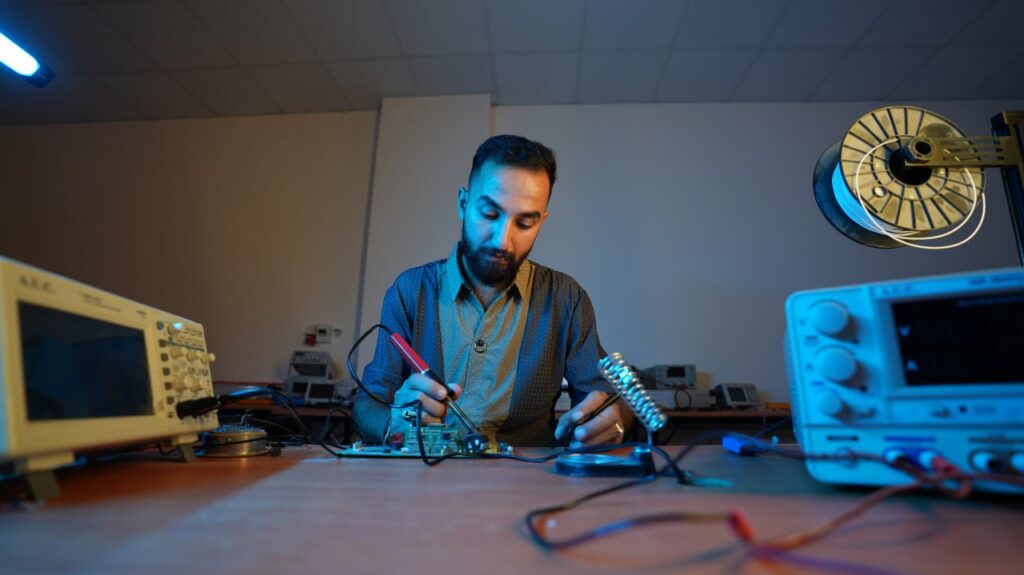
- Microgrid Prototype Laboratory: Allows electrical engineering students to experiment with energy storage, load balancing, and hybrid system design.
These installations are open to community visits and school tours, making the campus a public educational hub for renewable energy awareness.
4.2.3 Student-Led Sustainability Clubs
To foster youth engagement, Al-Maarif University established the Green Energy Club (GEC) in 2021. The club organizes awareness campaigns, energy audits, and innovation competitions that encourage students to apply classroom knowledge to real-world problems.
Activities include:
- Campus Energy Audits: Students evaluate building energy performance and propose improvement plans.
- Clean Energy Innovation Challenge: Annual competition for developing low-cost renewable technologies.
- Energy Awareness Week: Public exhibitions, art displays, and seminars on energy conservation.
The GEC has grown to more than 400 active members representing all faculties, and its annual activities are featured in the University’s Sustainability Report.
4.3 Community Outreach Programs
Community engagement lies at the heart of the University’s mission to democratize energy knowledge. The Community Engagement Directorate (CED) manages programs that extend the impact of energy education to schools, households, and local enterprises throughout Al-Anbar Governorate.
4.3.1 School Energy Awareness Campaigns
Since 2021, the University has partnered with local education directorates to conduct school-based energy education programs. Faculty members and trained student volunteers visit primary and secondary schools to conduct workshops on topics such as:
- “What is Renewable Energy?”
- “Saving Energy at Home and School.”
- “The Science of Solar Power.”
Interactive demonstrations—like small solar car races and DIY solar lantern workshops—help children grasp energy concepts through experiential learning. Over 1,800 school students across seven districts have participated in these sessions to date.
4.3.2 Women and Energy Empowerment Program
Recognizing the central role of women in household energy management, Al-Maarif University launched the Women and Energy Empowerment Program (WEEP) in 2022. This initiative provides training for women entrepreneurs, teachers, and community leaders on:
- Using solar-powered equipment for small businesses (e.g., sewing, refrigeration, and food processing).
- Managing household energy budgets and appliance efficiency.
- Understanding government incentives for renewable installations.
Workshops are conducted in collaboration with the Iraqi Ministry of Labor and Social Affairs and UNDP Iraq. By late 2024, WEEP had trained 350 women and facilitated the installation of 50 household solar kits in rural communities.
4.3.3 Village Energy Education Campaigns
In rural parts of Al-Anbar, access to energy remains limited. The Village Energy Education Campaigns (VEEC) aim to raise awareness and build technical skills for off-grid solar solutions. These campaigns include:
- Public lectures on clean energy benefits.
- Demonstrations of low-cost solar home systems.
- Training for local technicians in maintenance and installation.
By adopting a train-the-trainer approach, the University ensures that each campaign produces local facilitators capable of continuing education independently. Between 2021 and 2024, VEEC programs reached over 25 villages, impacting approximately 1,500 households.
4.4 Partnership and Innovation Programs
Strategic partnerships amplify the reach and impact of community energy education. Al-Maarif University collaborates with public agencies, non-governmental organizations, and private companies to create sustainable and scalable education models.
4.4.1 Renewable Energy Awareness Center (REAC)
Established in 2022, the Renewable Energy Awareness Center (REAC) serves as a joint initiative between Al-Maarif University and the Iraqi Ministry of Electricity. The Center functions as a coordination hub for energy education and policy dialogue, offering:
- Public exhibitions on renewable technologies.
- Short-term certificate courses in energy auditing and solar installation.
- Data collection and dissemination on energy efficiency best practices.
Since its establishment, REAC has hosted more than 20 workshops and exhibitions, attracting policymakers, educators, and industry representatives.
4.4.2 Clean Energy Week
Al-Maarif University hosts an annual Clean Energy Week—a flagship outreach event aligned with SDG 07. Activities include keynote lectures, technology exhibitions, and community competitions. The 2024 event featured:
- A solar design competition among engineering students.
- A policy roundtable on Iraq’s renewable energy future.
- Free energy audit services for local businesses.
This event draws over 1,000 participants annually and serves as a platform for knowledge exchange between academia, government, and the private sector.
4.4.3 Partnership with Local Industry
The University maintains partnerships with several renewable energy companies and engineering firms to provide internship and training opportunities for students. Partners such as Iraq SolarTech and Green Energy Solutions Ltd. collaborate with the University to offer:
- Field training for solar PV installation.
- Energy-efficiency audits in small industries.
- Community-based pilot projects using locally manufactured components.
These collaborations foster applied learning while strengthening the local renewable energy market and employment prospects for graduates.
4.5 Digital Engagement and Knowledge Dissemination
To expand access and visibility, Al-Maarif University integrates digital platforms into its community energy education strategy.
- Online Learning Portal: The University hosts an open-access e-learning site offering short courses on renewable energy and sustainability. By 2024, it had registered 2,300 online participants from across Iraq.
- Social Media Campaigns: The University’s “#Energy4All” awareness campaign reached an estimated 50,000 online viewers, featuring short educational videos and infographics in Arabic and English.
- Energy Data Dashboard: Publicly available dashboards display live solar generation data from campus PV systems, reinforcing transparency and public learning.
Digital tools have enabled the University to sustain outreach even during disruptions such as the COVID-19 pandemic, ensuring continuous engagement and education.
4.6 Student and Faculty Engagement
Community energy education is sustained through the active participation of both students and faculty members:
- Faculty Role: Professors serve as mentors and subject experts in community training sessions. The Faculty of Engineering leads technical training, while the Faculty of Business supports entrepreneurship programs for renewable ventures.
- Student Volunteers: Over 200 students participate annually as Energy Ambassadors, facilitating workshops, conducting surveys, and serving as local liaisons during outreach events.
This model creates a multi-generational learning ecosystem, where knowledge flows from classrooms to communities and returns as lived experience enriching academic inquiry.
4.7 Results and Observed Impact
The cumulative impact of Al-Maarif University’s CEE programs (2021–2024) is measurable and significant:
| Indicator | Result (as of 2024) | SDG 07 Alignment |
|---|---|---|
| Number of community participants trained | 3,200+ | 7.1, 7.2 |
| Schools engaged in outreach programs | 32 | 7.A |
| Women trained under WEEP initiative | 350 | 7.1 |
| Villages reached through VEEC campaigns | 25 | 7.2 |
| Renewable energy systems installed via demonstration programs | 6 | 7.2, 7.3 |
| Estimated community energy savings | ~180,000 kWh/year | 7.3 |
These outcomes demonstrate Al-Maarif University’s success in transforming community education into a tangible mechanism for advancing clean energy access and efficiency.
4.8 Summary
Through its comprehensive portfolio of programs, Al-Maarif University has created a replicable model of community energy education that unites academic knowledge, technical training, and civic responsibility.
From classrooms to rural villages, the University has built bridges of learning that empower citizens to understand, adopt, and advocate for renewable energy. These programs exemplify the spirit of SDG 07 – Affordable and Clean Energy, transforming energy education into a driving force for sustainable development in Iraq.
5.1 Purpose of Impact Measurement
For Al-Maarif University, measuring impact is not a procedural formality but a critical process for verifying how education translates into sustainable behavioral change and real-world energy improvements.
Impact measurement ensures that the Community Energy Education (CEE) programs deliver meaningful progress toward SDG 07 targets 7.1 (access), 7.2 (renewables), and 7.3 (efficiency).
The University applies a results-based monitoring and evaluation (M&E) approach that combines quantitative data (participation rates, energy savings, renewable capacity) with qualitative indicators (awareness shifts, social inclusion, and institutional partnerships).
5.2 Monitoring and Evaluation Framework
The CEE’s Monitoring, Evaluation, and Learning (MEL) framework operates through four sequential phases:
- Baseline Assessment:
Initial energy literacy and awareness surveys conducted in 2021 across students and nearby communities established a reference point. Only 28 % of respondents demonstrated basic understanding of renewable-energy concepts. - Ongoing Monitoring:
Each outreach and training program is tracked through attendance logs, pre- and post-training questionnaires, and follow-up interviews to gauge changes in behavior and knowledge. - Performance Indicators:
Data are compiled under four primary indicators:- Reach: Number of individuals engaged in CEE programs.
- Knowledge Gain: Improvement in post-training energy-literacy scores.
- Behavioral Adoption: Evidence of energy-saving actions taken by participants.
- Energy Impact: Measurable reductions in electricity consumption or increases in renewable adoption.
- Evaluation and Reporting:
Results are verified annually by the Sustainability and Energy Management Office (SEMO) and reviewed by the University Sustainability Council (USC). Findings are published in the Annual Sustainability Report and incorporated into THE Impact Ranking submissions.
5.3 Quantitative Outcomes (2021 – 2024)
| Indicator | Baseline (2021) | 2024 Result | Improvement % | SDG 07 Target |
|---|---|---|---|---|
| Participants in energy-education activities | 500 | 3 200 + | +540 % | 7.1 |
| Average energy-literacy score (out of 100) | 42 | 81 | +93 % | 7.1 |
| Households reporting adoption of energy-saving behavior | 15 % | 54 % | +260 % | 7.3 |
| Community renewable-energy installations (solar kits, demo units) | 2 | 56 | — | 7.2 |
| Estimated annual community energy savings | — | ≈ 180 000 kWh | — | 7.3 |
These figures confirm significant progress in awareness, technical capacity, and tangible energy outcomes within just three years.
5.4 Qualitative Outcomes
Beyond metrics, CEE programs have produced notable qualitative transformations:
- Behavioral Shifts: Community surveys show growing preference for LED lighting, efficient appliances, and solar water heaters.
- Empowerment: Women participating in the Women and Energy Empowerment Program (WEEP) report higher economic independence through solar-powered micro-enterprises.
- Institutional Visibility: The University is increasingly recognized as a sustainability leader, frequently consulted by local authorities for energy-policy advice.
- Educational Transformation: Integration of energy literacy across disciplines has enriched pedagogy and inspired student-led innovations.
5.5 Strategic Partnerships
Collaborative partnerships have amplified the reach and credibility of Al-Maarif University’s community energy initiatives.
A. Governmental Partnerships
- Ministry of Electricity (Iraq): Technical collaboration in renewable-energy training and data sharing.
- Ministry of Education: Integration of energy-education materials into regional school curricula.
- Al-Anbar Governorate Council: Logistical and financial support for village-level campaigns.
B. International and NGO Partnerships
- UNDP Iraq: Joint implementation of rural solar-education projects under the “Energy for All” initiative.
- GIZ (German Development Agency): Capacity-building workshops for faculty on renewable-energy pedagogy.
- Iraq Solar Initiative NGO: Provision of demonstration equipment and community outreach expertise.
C. Industry Partnerships
- Iraq SolarTech Ltd. and Green Energy Solutions Co. collaborate with the University to host internships and pilot installations.
These alliances bridge academia and practice, creating a living ecosystem where innovation and public service reinforce each other.
5.6 Case Study 1 – Solar Learning Villages Initiative
Context:
Many villages in western Al-Anbar experience intermittent grid supply.
Intervention:
In 2023, Al-Maarif University launched the Solar Learning Villages Initiative in partnership with UNDP Iraq and the Al-Anbar Governorate.
Activities:
- Installation of community solar kits (3 kWp each) for schools and health clinics.
- Training of local youth in basic solar maintenance and electrical safety.
- Delivery of energy-literacy workshops for households.
Results:
- 12 villages equipped with functional solar systems benefiting over 4 000 residents.
- Reduction of generator-fuel use by 30 % in participating communities.
- Formation of local “Energy Champions Committees” sustaining peer education after project completion.
This initiative exemplifies SDG 07’s mandate by combining infrastructure, education, and empowerment in a single model.
5.7 Case Study 2 – Women and Energy Empowerment Program (WEEP)
Context:
Limited energy knowledge and lack of access to finance often restrict women’s participation in the renewable-energy sector.
Intervention:
Al-Maarif University’s WEEP program, begun in 2022, delivers technical and entrepreneurial training to women across Al-Anbar.
Activities:
- Workshops on solar-powered business tools and micro-financing.
- Mentorship by female engineers and business professionals.
- Collaboration with local cooperatives for market access.
Outcomes:
- 350 women trained, 40 small enterprises established using solar technology.
- 85 % of participants report increased income or reduced household energy costs.
- Recognition by the Iraqi Ministry of Women’s Affairs as a model for gender-inclusive sustainability education.
The program strengthens both gender equity (SDG 05) and clean-energy access (SDG 07), showcasing the interdependence of the SDGs.
5.8 Case Study 3 – Campus-Community Innovation Exchange
Overview:
This annual event brings students, faculty, and local entrepreneurs together to co-create affordable energy solutions.
Highlights (2024):
- 15 student projects presented, including a low-cost solar irrigation pump and smart-home energy meter.
- Pilot deployment of two winning prototypes in nearby villages.
- Collaboration agreements signed with private firms for commercialization.
Impact:
This model has fostered a culture of innovation, strengthened town-gown relations, and provided practical learning experiences aligned with SDG 07 Target 7.A.
5.9 Evaluation of Partnership Effectiveness
Partnerships are evaluated using a five-criteria matrix—Relevance, Efficiency, Effectiveness, Sustainability, and Replicability.
Annual reviews conducted by SEMO indicate that:
- 90 % of partnerships remain active beyond initial funding cycles.
- Collaborative projects achieve, on average, 15 % higher participation rates than University-only initiatives.
- Multi-stakeholder programs yield broader social inclusion and gender balance outcomes.
These findings confirm that partnership-driven education is both scalable and sustainable, strengthening Al-Maarif University’s position as a regional clean-energy education leader.
5.10 Summary
Impact measurement and partnership evaluation demonstrate that Al-Maarif University’s Community Energy Education initiative produces quantifiable, verifiable, and socially inclusive results.
Through robust monitoring, strong alliances, and community-anchored programs, the University has achieved:
- A significant increase in community energy literacy.
- Direct contributions to renewable-energy adoption.
- Empowerment of women and youth as agents of change.
The next and final section—Part 6 – Future Roadmap and Conclusion—will outline the University’s 2030 vision for scaling community energy education, deepening partnerships, and sustaining progress toward SDG 07 and Iraq’s national clean-energy goals.
6.1 Vision for 2030
Building on its strong foundation of community engagement and educational innovation, Al-Maarif University envisions becoming Iraq’s leading institution for sustainability education, clean-energy advocacy, and community transformation by 2030.
The University’s Community Energy Education (CEE) Roadmap 2030 sets a long-term course to deepen public understanding, scale renewable energy adoption, and embed sustainability values across all levels of society. The roadmap is driven by the belief that energy education is a catalyst for inclusive and resilient development, connecting technical innovation with human empowerment.
By 2030, the University aspires to:
- Educate 10,000 students and community members in sustainable energy practices.
- Expand renewable energy awareness and training to all districts of Al-Anbar Governorate.
- Achieve carbon-neutral campus operations, serving as a living demonstration of SDG 07 and SDG 13 (Climate Action).
- Establish a National Center for Community Energy Education (NCCEE) as a hub for knowledge-sharing, policy dialogue, and interdisciplinary research.
6.2 Strategic Directions
The roadmap identifies five interrelated strategic directions that will guide future actions:
A. Expansion of Community Education Programs
Al-Maarif University will broaden its outreach beyond Al-Anbar to neighboring governorates, using a train-the-trainer model to replicate successful programs such as the Village Energy Education Campaigns (VEEC) and the Women and Energy Empowerment Program (WEEP).
This expansion will include:
- Development of mobile learning units for rural education.
- Collaboration with regional education offices to integrate energy literacy into school curricula.
- Translation of energy-education materials into Arabic and Kurdish for wider accessibility.
B. Strengthening of Academic Integration
The University will deepen sustainability education across all faculties by:
- Introducing a Bachelor’s concentration in Renewable Energy and Sustainability Studies.
- Expanding interdisciplinary research under the Renewable Energy Research Unit (RERU).
- Incentivizing faculty research aligned with SDG 07 and local energy challenges through dedicated grants.
C. Digital Transformation and Open Learning
To maximize reach, the University will leverage technology through:
- Development of a Massive Open Online Course (MOOC) platform on sustainable energy, open to learners nationwide.
- Use of AI-driven analytics to track participant engagement and evaluate learning outcomes.
- Creation of a virtual reality (VR) energy laboratory to simulate renewable technologies for students and community trainees.
These innovations will make clean energy education accessible, interactive, and future-oriented.
D. Partnership Consolidation and Global Collaboration
Al-Maarif University plans to strengthen and diversify its partnerships by:
- Joining the UNESCO Global Education Coalition for Sustainable Energy.
- Collaborating with universities in the MENA region to co-develop research on low-cost solar technologies.
- Partnering with private industry to establish a CleanTech Innovation Incubator supporting student start-ups in renewable energy.
This multi-stakeholder collaboration ensures financial sustainability, global visibility, and continued innovation.
E. Monitoring, Evaluation, and Continuous Improvement
The University will institutionalize a Community Energy Impact Observatory (CEIO) under the Sustainability and Energy Management Office (SEMO) to track annual progress.
Indicators will include:
- Number of participants trained.
- Energy literacy index.
- Renewable energy installations facilitated.
- Carbon reduction achieved.
Findings will feed into an annual SDG 07 Impact Report, shared publicly for transparency and accountability.
6.3 Anticipated Long-Term Outcomes
Through consistent implementation of the 2030 Roadmap, Al-Maarif University anticipates transformative outcomes across environmental, social, and economic dimensions:
| Impact Domain | Expected Outcome by 2030 | SDG Alignment |
|---|---|---|
| Environmental | 25% reduction in community fossil-fuel dependence | 7.2, 13.1 |
| Social | 10,000 citizens equipped with clean-energy knowledge | 4.7, 7.1 |
| Economic | 500 green jobs created through training and entrepreneurship | 8.2, 9.4 |
| Institutional | ISO 50001 certification and carbon-neutral campus | 7.3, 12.2 |
These outcomes embody Al-Maarif University’s dedication to advancing both local sustainability and global energy equity.
6.4 Sustainability Challenges and Risk Mitigation
Recognizing that progress may face external and internal challenges, the roadmap incorporates proactive risk management strategies:
| Challenge | Risk Description | Mitigation Strategy |
|---|---|---|
| Funding Gaps | Limited budgets for outreach programs. | Diversify funding through grants, partnerships, and alumni contributions. |
| Technological Constraints | Rapid changes in renewable technology. | Continuous capacity-building and curriculum updates. |
| Cultural Barriers | Resistance to behavioral change in rural areas. | Engage local leaders and emphasize economic benefits of clean energy. |
| Data Gaps | Inconsistent tracking of energy use at community level. | Strengthen digital monitoring through SEMS and CEIO. |
By embedding flexibility and resilience, the University ensures sustained progress toward its 2030 vision.
6.5 Conclusion
The Community Energy Education Report reaffirms Al-Maarif University’s strategic commitment to advancing SDG 07 – Affordable and Clean Energy through education, research, and outreach.
Over the past four years, the University has demonstrated how an academic institution can function as a driver of societal transformation—bridging the gap between knowledge and community empowerment.
The CEE initiative has empowered thousands of individuals, enhanced public energy literacy, supported women’s participation, and promoted renewable energy adoption across Al-Anbar. Its success stems from the University’s holistic approach—integrating sustainability into governance, curriculum, partnerships, and operations.
Looking ahead, Al-Maarif University’s roadmap emphasizes continuity, innovation, and inclusivity. Through sustained collaboration with local and international partners, digital transformation, and evidence-based evaluation, the University will continue to serve as a beacon of sustainable education and clean-energy leadership in Iraq and beyond.
Ultimately, this report illustrates that energy education is not just about technology—it is about people, equity, and empowerment. By nurturing an energy-conscious generation, Al-Maarif University contributes not only to Iraq’s clean energy transition but also to the global movement for a just, sustainable, and resilient future.