
Building Upgrades for Energy Efficiency
University of Al Maarif (UOA)
Sustainability Report – SDG 7: Affordable and Clean Energy
Date: November 2025
1. Introduction
In alignment with the United Nations Sustainable Development Goal 7 — Affordable and Clean Energy — the University of Al Maarif (UAM) has launched a comprehensive program to upgrade all campus facilities toward higher energy efficiency. This initiative forms an essential component of the University’s broader Sustainability and Green Campus Strategy (2025–2035), aiming to transform the university into a living model of sustainable infrastructure, efficient resource management, and low-carbon operations.
The policy stems from the recognition that buildings constitute a significant share of total energy consumption within academic institutions. At UAM, air-conditioning, lighting, and IT systems account for more than 80 percent of the electricity load. By systematically modernizing existing buildings, introducing renewable-energy technologies, and embedding sustainability awareness into the institutional culture, the university seeks to reduce its environmental footprint and demonstrate leadership among Iraqi universities.
This report outlines UAM’s plan to upgrade existing buildings to higher energy efficiency. It details strategic objectives, technical measures, awareness programs, and measurable outcomes modeled on international best practices, while being adapted to Iraq’s climatic and economic realities.
2. Policy Context and Rationale
2.1 Sustainability Commitment
University of Al Maarif views sustainability not as an isolated project but as an integral institutional philosophy. The university’s Executive Council approved, in 2025, a binding framework for energy conservation, renewable-energy integration, and resource-efficient buildings.
The objectives align with:
- Iraq’s National Renewable Energy Strategy (2020–2030), promoting a gradual shift from fossil fuels to solar and wind resources.
- UI GreenMetric World University Ranking criteria, emphasizing energy and climate-change performance.
- The Higher Education Environmental Sustainability Charter (2023), which encourages universities to contribute measurable carbon-reduction outcomes.
2.2 Why Building Upgrades Matter
Buildings are responsible for substantial carbon emissions, especially in hot-dry climates such as Anbar Governorate, where the university operates. Inefficient cooling, poor insulation, and outdated lighting systems not only increase operational costs but also strain the national grid.
By upgrading building envelopes, mechanical systems, and user behavior, UAM will:
- Reduce annual energy use intensity (EUI) by at least 25 percent by 2030.
- Extend equipment lifespans, lowering maintenance costs.
- Enhance thermal comfort and indoor-air quality for students and staff.
- Serve as a research and training platform for sustainable engineering practices.
3. Vision and Objectives
Vision
To position University of Al Maarif as a national benchmark for sustainable campus design and operation, integrating clean energy and high-performance buildings into every aspect of academic life.
Strategic Objectives
- Achieve 100 percent adoption of energy-efficient appliances by 2030.
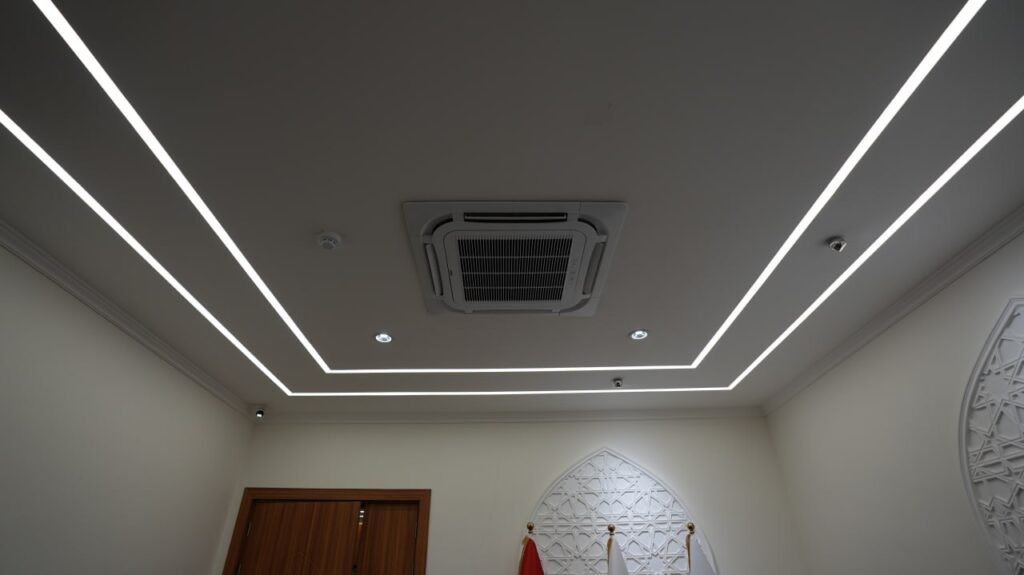
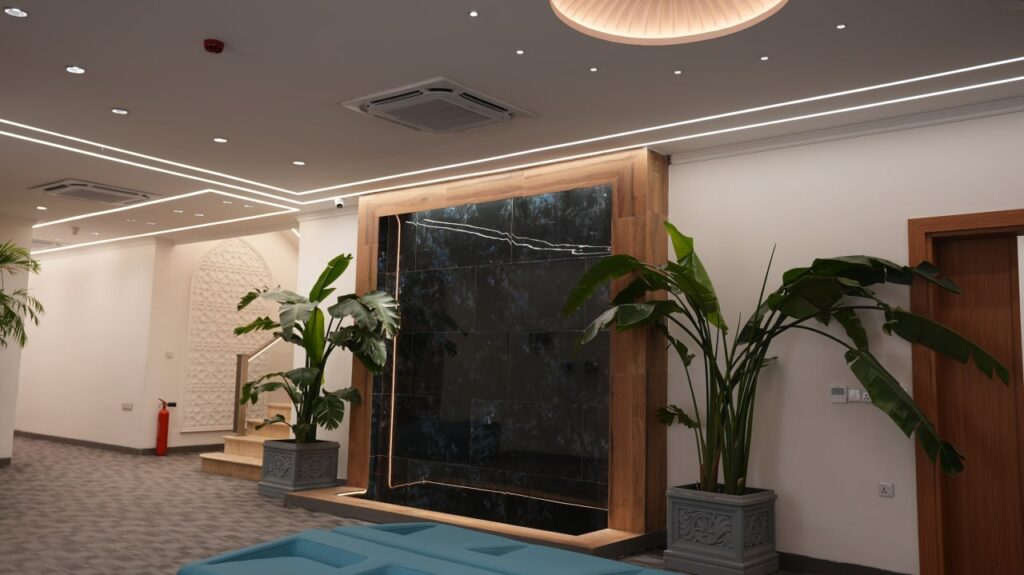
- Retrofit 80 percent of existing buildings with improved insulation, LED lighting, and efficient HVAC systems.
- Install renewable-energy systems to supply at least 25 percent of total electricity demand by 2030.
- Implement a digital Building Energy Management System (BEMS) for real-time monitoring and optimization.
- Cultivate an energy-conscious campus culture through training, awareness, and student-led research.
4. Implementation Pillars
4.1 Awareness and Education
Energy efficiency begins with awareness. UAM launched the “Think Green — Act Clean” Campaign in 2025, educating students, faculty, and the local community about energy conservation, climate change, and sustainable living.
Key activities include:
- Posters and social-media content promoting daily energy-saving habits.
- Annual Sustainability Week featuring seminars, competitions, and exhibitions.
- Collaboration with secondary schools in Anbar Governorate to extend awareness beyond campus.
4.2 Technical and Industrial Applications
The university encourages applied student research projects addressing real energy-management challenges. Engineering and science students engage in practical assignments such as:
- Designing low-cost solar-powered air-conditioning prototypes.
- Auditing lighting systems in laboratories and classrooms.
- Collaborating with the Ministry of Electricity to evaluate pilot renewable systems.
These projects create a feedback loop: research findings directly inform campus upgrade decisions.
5. Appliance Upgrade Program
5.1 Transition to Energy-Efficient Equipment
A multi-phase appliance replacement program began in 2024 to phase out conventional devices.
By 2025, nearly 90 percent of indoor lighting had already been converted to LED technology. Air-conditioning units are progressively replaced with inverter split systems, and office equipment now adheres to Energy Star or EU A+ ratings.
5.2 Quantitative Summary
| Year | Item | Total Units | Energy-Efficient Units | Efficiency (%) |
|---|---|---|---|---|
| 2023 | LED Lighting | 7,500 | 7,050 | 94 % |
| Air Conditioners | 720 | 650 | 90 % | |
| Ceiling Fans | 900 | 850 | 94 % | |
| Computers / Printers | 800 | 700 | 88 % | |
| Average 2023 Efficiency | 91.5 % | |||
| 2024 | LED Lighting | 9,000 | 8,700 | 97 % |
| Air Conditioners | 850 | 800 | 94 % | |
| Ceiling Fans | 950 | 920 | 96 % | |
| Computers | 900 | 800 | 89 % | |
| Average 2024 Efficiency | 94 % |
The goal for 2025–2030 is full conversion to energy-efficient equipment across all academic, administrative, and residential facilities.
6. Building Envelope and Structural Upgrades
6.1 Insulation and Sealing
All campus buildings undergo comprehensive thermal assessments. Roofs and external walls are retrofitted with high-R-value insulation panels, while doors and windows are sealed to minimize air leakage. These measures have reduced average cooling demand by 12 percent in pilot buildings.
6.2 Window and Skylight Optimization
Energy modeling indicated that increasing natural daylight could reduce lighting loads by 20 percent. Consequently, the university installed double-glazed low-emissivity windows and strategically positioned skylights. This initiative not only decreases electricity consumption but enhances psychological well-being through improved daylight access.
6.3 Green Roof and Shading Systems
The forthcoming Green Roof Project (2026) will add vegetated roofing to major buildings, providing thermal insulation and rainwater collection. In parallel, external shading devices and reflective coatings are applied to façades to mitigate heat gain.
7. Renewable-Energy Integration
7.1 Solar Photovoltaic (PV) Systems
- Phase I (2025): Installation of a 120 kW solar PV system atop the Administration and Engineering Buildings.
- Phase II (2027): Expansion to 450 kW covering parking sheds and student housing.
- Phase III (2030): Target capacity of 1 MW, providing approximately 25 percent of campus demand.
7.2 Solar Thermal
Solar water-heating systems are introduced in dormitories and laboratories to reduce electrical heating loads.
7.3 Hybrid Systems
The university will pilot PV–battery hybrid units to guarantee uninterrupted power supply for essential laboratories, further reducing reliance on diesel generators.
8. Smart Building Systems
University of Al Maarif is digitizing its facilities through a Smart Building Management System (SBMS) integrating automation, safety, and environmental control.
8.1 Automation and Controls
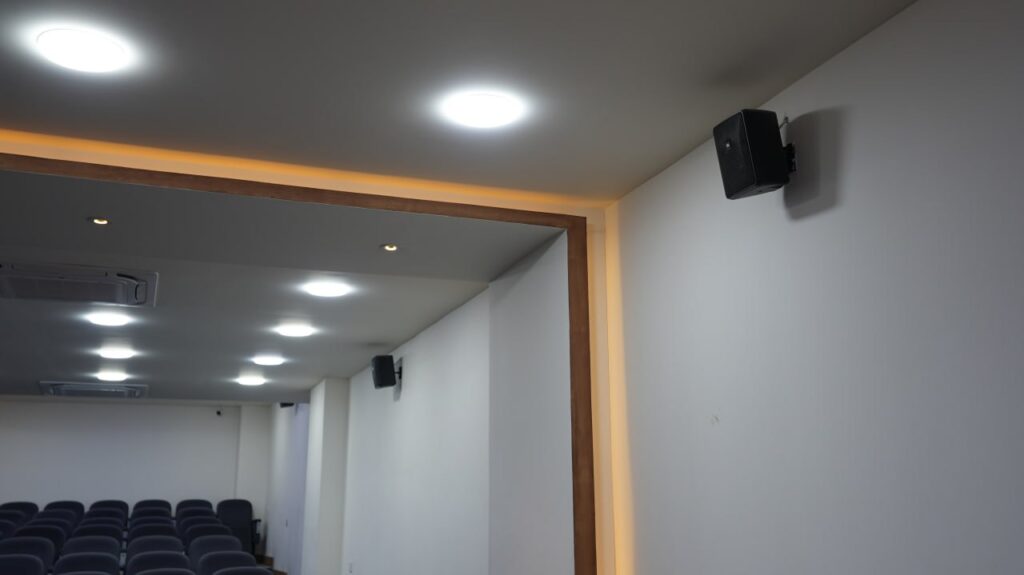
Motion sensors, timers, and daylight detectors automatically regulate lighting. Occupancy-based controls in classrooms and meeting halls reduce unnecessary energy consumption by up to 30 percent.
8.2 Energy Monitoring
All major buildings are equipped with smart meters connected to a central dashboard. Facility managers can monitor real-time usage, benchmark buildings, and generate efficiency alerts.
8.3 Indoor Environment Quality
Continuous air-quality sensors ensure adequate ventilation while minimizing HVAC operation time. Natural ventilation through operable windows complements mechanical systems.
9. Sustainability Features by Building Type
| No. | Building | Energy Automation | Safety & Ventilation | Lighting Efficiency | Renewable Integration | Area (m²) |
|---|---|---|---|---|---|---|
| 1 | Administration Building | ✓ | ✓ | ✓ | ✓ | 2,500 |
| 2 | Engineering Complex | ✓ | ✓ | ✓ | ✓ | 5,000 |
| 3 | Medical Sciences Building | ✓ | ✓ | ✓ | ✓ | 7,000 |
| 4 | Computer Science Building | ✓ | ✓ | ✓ | ✓ | 3,000 |
| 5 | Pharmacy Building | ✓ | ✓ | ✓ | ✓ | 2,500 |
| 6 | Dentistry Building | ✓ | ✓ | ✓ | ✓ | 2,500 |
| 7 | Student Club & Cafeteria | ✓ | ✓ | ✓ | ✓ | 3,000 |
| 8 | Nursing & Allied Health Building | ✓ | ✓ | ✓ | ✓ | 2,500 |
| Total Building Area | 28,000 m² |
Approximately 54 percent (≈ 15,000 m²) of total built area is already equipped with smart-building automation features, with full coverage planned by 2030.
10. Water and Energy Synergies
Recognizing the interdependence between water and energy, UAM integrates water-saving technologies to reduce the energy required for pumping and heating. Planned initiatives include:
- Rainwater harvesting systems for irrigation and cooling-tower use.
- Low-flow fixtures and sensor-based taps across all restrooms.
- Recycling of greywater for landscape maintenance.
These measures support both SDG 6 (Clean Water and Sanitation) and SDG 7.
11. Energy Performance Monitoring
11.1 Energy Audit Results (Baseline 2023)
Average electricity consumption before upgrades was ~1.85 million kWh per year. Post-retrofit projections show a reduction to 1.35 million kWh by 2026, corresponding to a 27 percent drop.
11.2 Carbon Reduction
Each kilowatt-hour saved translates to 0.62 kg CO₂ avoided. By 2030, expected annual emissions reduction exceeds 310 tons CO₂.
11.3 Visualization
Monthly tracking dashboards compare grid and generator usage, similar to MU’s model but customized for Al Maarif’s system architecture. This transparency motivates departments to compete for lower consumption indices.
12. Future Development Projects
- Expansion of Solar Energy Systems: achieving net-zero energy balance for at least one academic block by 2030.
- Green Roof Demonstration Site: integrating vegetation and rainwater capture to lower cooling loads and improve microclimate.
- Smart Parking and EV Charging: installing solar-powered canopies equipped with electric-vehicle charging stations.
- Carbon Accounting System: integrating energy data with sustainability KPIs across all departments.
- Research Collaboration: partnering with regional universities for joint R&D on building retrofitting technologies suitable for Iraq’s climatic zones.
13. Community and Educational Impact
Energy-efficiency upgrades have social and educational dimensions. Through project-based learning, students actively participate in campus assessments, energy modeling, and environmental impact calculations.
The initiative also strengthens relationships with:
- Local government — to share lessons for municipal building retrofits.
- Private sector — for technology demonstrations.
- NGOs and international agencies — for technical training and grants.
UAM aims to inspire surrounding communities in Ramadi and beyond to replicate successful green-building interventions.
14. Economic Benefits
Cost Savings
After completion of the first retrofit phase, the university anticipates saving approximately USD 150,000 annually in electricity expenses.
Return on Investment (ROI)
Average payback period for LED and HVAC upgrades is 3–5 years, making these interventions both environmentally and financially prudent.
Employment Opportunities
Building upgrades generate temporary construction jobs and long-term technical roles in maintenance, data analysis, and sustainability management.
15. Governance and Compliance
The Sustainability and Energy Committee oversees policy implementation, chaired by the Vice President for Administrative Affairs.
Responsibilities include:
- Ensuring compliance with the Iraqi Energy Efficiency Code (2022).
- Approving annual Energy Performance Reports.
- Coordinating with the Ministry of Higher Education for reporting under the National Green Universities Framework.
16. Challenges and Mitigation
| Challenge | Mitigation Strategy |
|---|---|
| Limited budget for large-scale retrofits | Phased implementation and external partnerships (ESCOs, donors). |
| High ambient temperatures → increased cooling load | Improved insulation and shading; adoption of high-efficiency inverter systems. |
| Behavioral inertia among users | Incentive-based campaigns and digital dashboards showing savings. |
| Technical maintenance capacity | Continuous staff training and service contracts with suppliers. |
17. Monitoring and Evaluation Framework
Indicators:
- Energy Use Intensity (kWh/m²/year).
- Renewable energy share (%).
- Number of buildings retrofitted per year.
- Annual CO₂ emissions avoided (tons).
- Awareness event participation (%) of students/staff.
Reporting:
- Quarterly internal reports to the Sustainability Committee.
- Annual Sustainability Report — publicly available.
- Independent verification every two years by external auditors.
18. Comparative Progress (2023 – 2025)
| Metric | 2023 (Baseline) | 2024 (After Phase I) | 2025 (Projection) | % Change |
|---|---|---|---|---|
| Energy use (kWh/year) | 1,850,000 | 1,500,000 | 1,350,000 | -27 % |
| LED Coverage (%) | 75 % | 90 % | 100 % | +25 % |
| Smart-Meter Buildings | 2 | 6 | 8 | +300 % |
| Renewable Share (%) | 3 % | 10 % | 15 % | +400 % |
| CO₂ Emission (t / year) | 1,150 | 950 | 840 | -27 % |
19. Integration with Academic Research
The Building Upgrade Program is a cornerstone for experiential learning. Faculty in Civil, Electrical, and Environmental Engineering incorporate real campus data into coursework and final-year projects. Research themes include:
- Simulation of building energy performance under different insulation scenarios.
- Optimization of solar PV tilt angles in desert climates.
- Comparative analysis of inverter vs. fixed-speed air-conditioning units.
The findings feed into future policy revisions, ensuring evidence-based decision-making.
20. Stakeholder Engagement
A multi-stakeholder approach ensures transparency and inclusiveness.
Internal Stakeholders: students, academic departments, facility managers, procurement unit.
External Stakeholders: local municipal authorities, energy consultants, equipment vendors, and the Iraqi Electricity Directorate.
Regular stakeholder meetings encourage joint problem-solving and the replication of best practices in other public institutions.
21. Alignment with SDGs
| SDG | Contribution |
|---|---|
| SDG 7 – Affordable and Clean Energy | Reduced energy use, renewable integration, affordable clean power. |
| SDG 11 – Sustainable Cities & Communities | Green infrastructure and resilient design principles. |
| SDG 12 – Responsible Consumption & Production | Efficient appliance use and waste minimization. |
| SDG 13 – Climate Action | Carbon-emission mitigation and adaptation measures. |
| SDG 4 – Quality Education | Integration of sustainability knowledge into curricula. |
22. Long-Term Roadmap (2025–2035)
| Phase | Focus | Key Outcomes |
|---|---|---|
| Phase 1 (2025–2027) | Retrofit lighting, HVAC, and insulation in main academic blocks; install 120 kW solar PV | 15% energy reduction |
| Phase 2 (2028–2030) | Complete smart metering and expand renewable systems to 1 MW | 25% renewable share |
| Phase 3 (2031–2035) | Green certification for all new buildings; introduce net-zero energy prototype | 50% reduction in grid dependence |
23. Conclusion
Through systematic building upgrades, renewable-energy adoption, and stakeholder engagement, the University of Al Maarif is creating a sustainable learning environment consistent with international standards and Iraq’s development goals.
The transformation is not solely about technology; it reflects a cultural shift toward responsibility, innovation, and resilience. As buildings evolve into intelligent, energy-efficient ecosystems, the university strengthens its role as a pioneer in sustainable education, serving as a model for other institutions in Iraq and the wider Middle East.
By 2030, University of Al Maarif envisions itself as a Green Campus, where every building embodies efficiency, every student understands sustainability, and every watt saved contributes to a brighter, cleaner, and more sustainable future.
 |
|---|
|
The One and the Only Institute, University of Al-Maarif Nominated for the Contribution to Environmental Leadership Award for 2025 The One and the Only Institute, University of Al-Maarif Nominated for the Contribution to Environmental Leadership Award for 2025 In a significant milestone added to the academic and environmental record, University of Al-Maarif, has been nominated for the Outstanding Contribution to Environmental Leadership Award for 2025 as the first and only private university in Iraq to receive this nomination among hundreds of Arab universities. This award is one of the categories of the Arab World Awards organized by Times Higher Education (THE), a British-based organization that recognizes universities with outstanding impact in sustainability, environment, and social responsibility. This nomination crowns the university’s efforts in launching pioneering environmental initiatives, most notably the “Go Green” initiative, which aims to promote environmental awareness and sustainable practices within the university and the local community in the city of Ramadi. This recognition reaffirms University of Al-Maarif’s position as an academic institution with an advanced environmental vision and its commitment to leading a genuine transformation toward sustainability, under the direct supervision of the university’s leadership and with the support of its academic and administrative community. LINK: |
 |
|---|
|
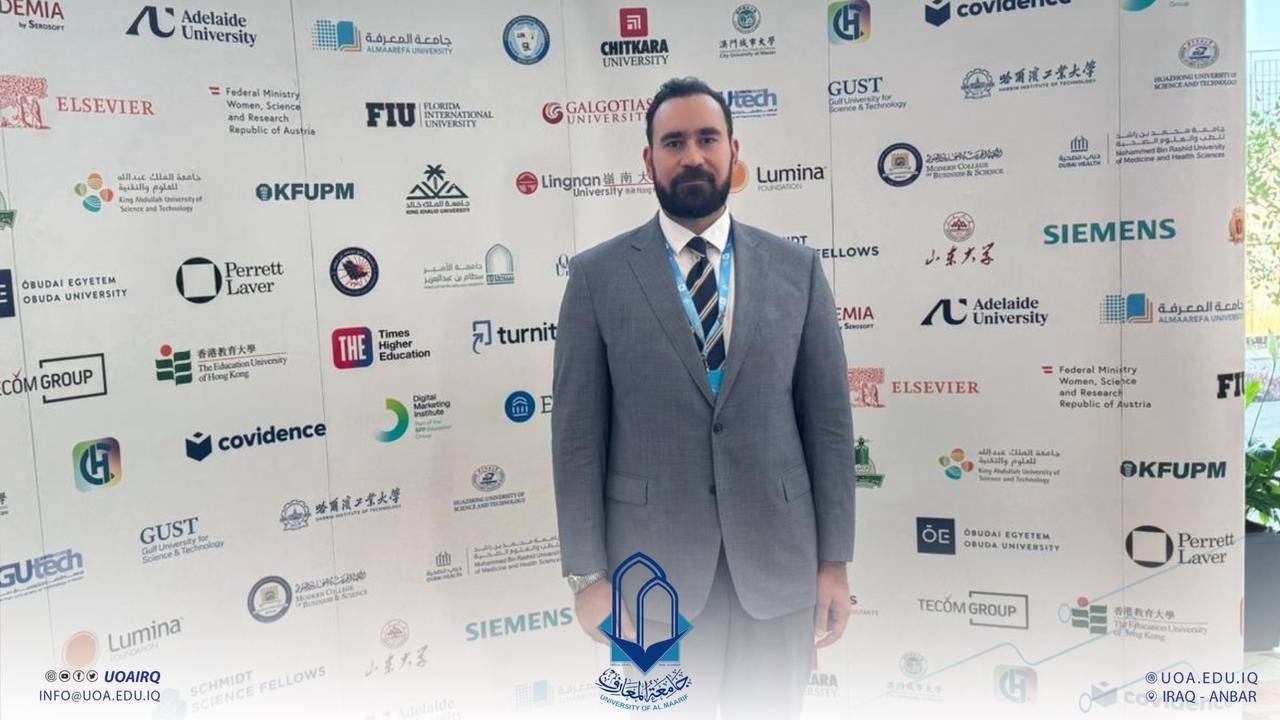
President of University of Al Maarif Participates in (The World Academic Summit 2025). |
 |
|---|
|
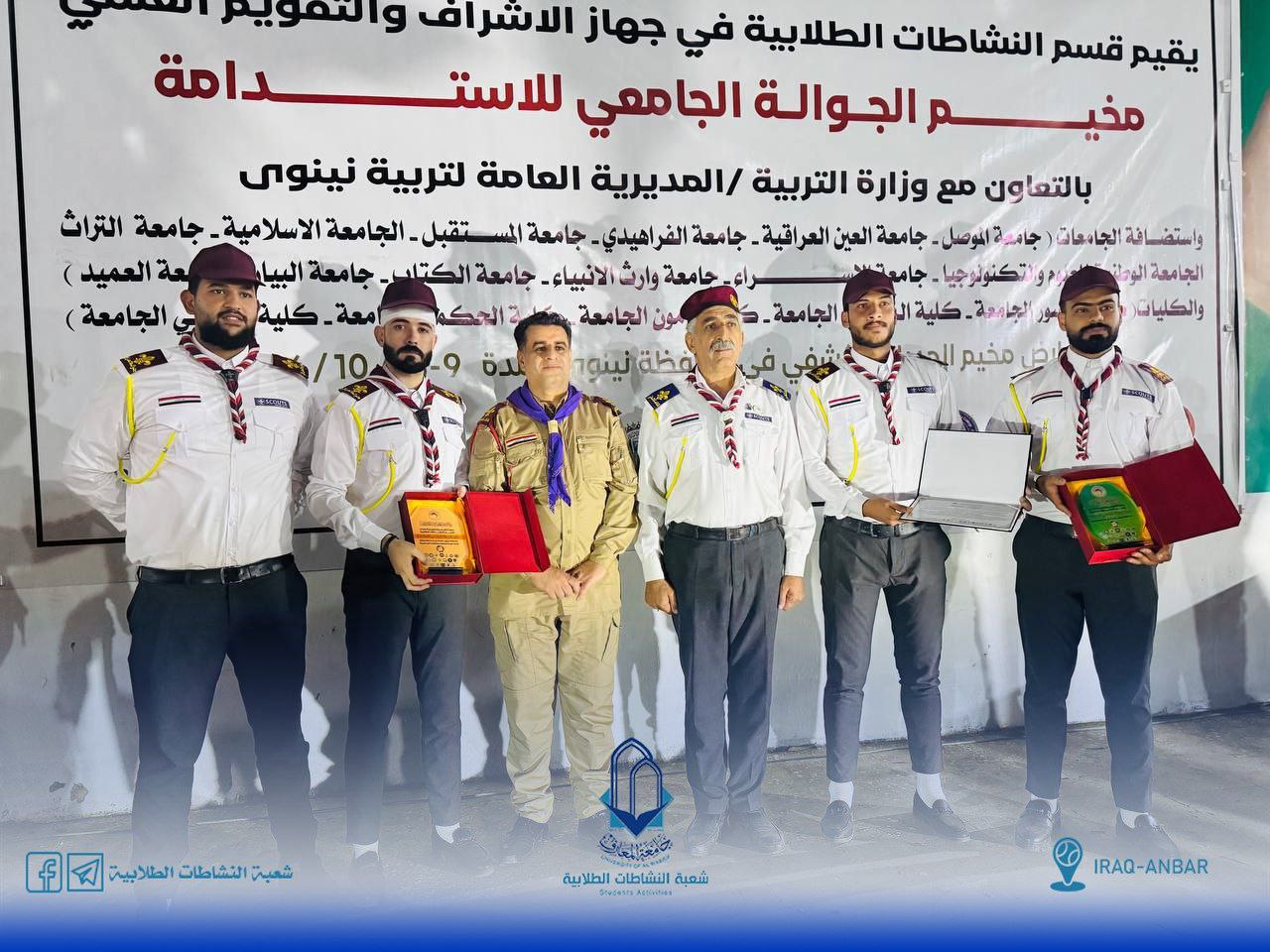
Team of Al-Maarif Scouts for Rovers Achieved First Place in Iraq The team of University of Al-Maarif (Maarif Scouts for Rovers) achieved first place in the University Camp for Environmental Sustainability for Students, which was held in Nineveh Governorate – Mosul, with the participation of fifty public and private universities. This activity came under the auspices of the Ministry of Higher Education and Scientific Research – Student Activities Department – Scientific Supervision and Evaluation Authority in the Ministry, and with the support and guidance of the Rectorate of the University. This achievement came as a result of the team’s excellence in pioneering work and its high organization, following the vision of the university that supports sports activities in the governorate in particular and in Iraq in general. |