
1.1 Overview
As one of Iraq’s leading higher-education institutions, Al-Maarif University recognizes that access to affordable, reliable, sustainable, and modern energy is fundamental to development and innovation. In alignment with Sustainable Development Goal 07 (Affordable and Clean Energy), the University has committed itself to a comprehensive program of renewable energy transition, industrial collaboration, and public engagement.
This Public Renewable and Industrial Energy Collaboration Report serves as both a statement of intent and a performance record, summarizing the University’s initiatives, achievements, and strategies to accelerate the shift toward clean energy. It also demonstrates Al-Maarif University’s leadership within Iraq’s emerging sustainability landscape and its active participation in global decarbonization and resilience efforts.
1.2 Purpose of the Report
It captures the University’s multi-dimensional commitment through five pillars:
- Operational Transformation: Transitioning university energy infrastructure from conventional grid dependence to renewable generation, primarily solar.
- Research and Innovation: Expanding interdisciplinary clean-energy research in collaboration with national and international partners.
- Industrial Partnership: Working with local industries to enhance energy efficiency, promote technology transfer, and pilot low-carbon solutions.
- Community Education and Capacity-Building: Extending renewable energy literacy to students, schools, and the surrounding community.
- Monitoring and Accountability: Establishing transparent, data-driven performance metrics for continuous improvement.
The report also articulates how Al-Maarif University’s actions contribute to Iraq’s National Renewable Energy Strategy 2030, which targets a 12 % renewable share in the national mix and a 30 % reduction in emissions intensity.
1.3 Strategic Objectives
Al-Maarif University’s Public Renewable Energy Pledge commits the institution to a measurable energy transition through the following strategic objectives:
| Objective | Target Year | Indicator |
|---|---|---|
| Achieve 50 % renewable energy generation share | 2030 | % of campus electricity from renewables |
| Reduce total energy consumption per m² | 2030 | Energy intensity (kWh/m²) ↓ 30 % |
| Cut carbon emissions relative to 2023 baseline | 2030 | CO₂ emissions (tCO₂e) ↓ 35 % |
| Train students and community participants in energy literacy | 2030 | ≥ 6,000 individuals trained |
| Publish renewable-energy research outputs | Ongoing | ≥ 100 publications / 10 patents by 2030 |
(Source: Sustainability and Energy Management Office – SEMO, 2025)
These targets form the basis of the University Energy Transition Roadmap 2025–2030, which integrates renewable infrastructure, smart-campus systems, and community engagement.
1.4 Energy Context and Rationale
Iraq’s electricity system continues to face challenges of supply, efficiency, and environmental impact. With national per-capita consumption exceeding 2,200 kWh/year but largely sourced from fossil fuels, universities have a vital opportunity to model alternative pathways. Al-Maarif University, located in Al-Anbar Governorate, benefits from an average of 5.6 kWh/m²/day solar irradiance—among the highest globally—making solar power a strategic and economically viable solution.
By investing in renewable technologies and public energy education, the University not only reduces its environmental footprint but also demonstrates scalable models for adoption in other educational and municipal institutions.
1.5 Summary of Achievements (2021 – 2024)
| Indicator | 2021 Baseline | 2024 Result | Progress (% or Δ) |
|---|---|---|---|
| Solar PV Installed Capacity | 0 kWp | 250 kWp | +250 kWp |
| Annual Renewable Generation | 0 kWh | 255,000 kWh | — |
| Total Energy Consumption (kWh/m²) | 138 | 112 | – 19 % |
| Carbon Emissions (tCO₂e) | 1,480 | 1,210 | – 18 % |
| Energy-Literacy Participants | — | 3,200 | +3,200 |
(Data compiled from SEMO Annual Energy Report 2024)
Figure 1. Renewable-Energy Growth at Al-Maarif University (2021 – 2024)
(Bar chart: showing rise from 0 → 250 kWp solar capacity, 0 → 255 MWh annual output)
1.6 Key Messages
- Leadership through Evidence: The University’s renewable expansion demonstrates measurable carbon and cost reductions.
- Partnership as Progress: Collaboration with Iraq’s Ministry of Electricity, UNDP Iraq, and local engineering firms has accelerated implementation.
- Education as Empowerment: Thousands of students and community members have engaged in workshops and renewable-energy literacy campaigns.
- Innovation through Integration: Solar research prototypes, such as microgrid controllers and smart monitoring systems, illustrate student-led innovation.
1.7 Forward Vision
Al-Maarif University aims to transform its campus into a Living Laboratory for Sustainable Energy, where every building functions as a teaching, research, and demonstration site. By 2030, the University will operate as a semi-autonomous clean-energy microgrid, sourcing at least half of its electricity from renewable generation, exporting surplus energy to the community, and continuously sharing data through open-access dashboards.
The Public Renewable and Industrial Energy Collaboration Report thus embodies both accountability and inspiration—showcasing how an Iraqi higher-education institution can bridge global sustainability frameworks with local innovation to drive transformative change.
2.1 Institutional Overview
Founded in 2010, Al-Maarif University has established itself as a leading institution of higher education in Iraq, combining academic rigor with social responsibility and technological innovation. With more than 7,500 enrolled students, 480 academic staff, and a broad spectrum of programs across engineering, business, law, health sciences, and education, the University’s mission centers on knowledge creation for societal advancement.
Situated in Al-Anbar Governorate, a region characterized by abundant solar potential yet energy infrastructure challenges, the University recognizes its strategic role in pioneering sustainable energy solutions for local and national benefit. Its campus, which spans over 120,000 square meters, provides an ideal platform to model clean-energy systems in real-world contexts—bridging research, education, and community service under a unified sustainability vision.
2.2 Vision, Mission, and Alignment with SDG 07
Al-Maarif University’s vision is to be a “Center of Excellence for Sustainability, Innovation, and Social Responsibility” that contributes to national development goals through research, learning, and community leadership.
Its mission explicitly commits to:
- Promoting affordable and clean energy access within campus and surrounding communities.
- Encouraging applied research and industry collaboration in renewable technologies.
- Ensuring that every graduate understands the principles of sustainability and energy stewardship.
This aligns directly with Sustainable Development Goal 07 (Affordable and Clean Energy), particularly:
- Target 7.1: Ensure universal access to affordable, reliable, and modern energy.
- Target 7.2: Increase the share of renewable energy in the global energy mix.
- Target 7.3: Double the rate of improvement in energy efficiency.
Additionally, the University’s energy programs intersect with SDG 04 (Quality Education), SDG 09 (Industry, Innovation, and Infrastructure), SDG 13 (Climate Action), and SDG 17 (Partnerships for the Goals), demonstrating a holistic and cross-disciplinary sustainability framework.
2.3 Governance and Organizational Structure
In 2022, Al-Maarif University institutionalized sustainability governance through the establishment of two key entities:
A. Sustainability and Energy Management Office (SEMO)
- Responsible for data collection, project implementation, and reporting of SDG-related activities.
- Oversees energy audits, renewable installations, carbon accounting, and annual sustainability reporting.
- Operates the Smart Energy Monitoring System (SEMS) that tracks real-time energy use and generation across campus facilities.
B. University Sustainability Council (USC)
- Chaired by the Vice President for Scientific Affairs and includes deans, directors, faculty, and student representatives.
- Advises on policy, monitors sustainability key performance indicators (KPIs), and ensures alignment with THE Impact Ranking indicators.
- Approves the University Energy Transition Roadmap (2025–2030).
The integration of these bodies ensures that sustainability decisions are data-driven, participatory, and embedded within the University’s broader governance ecosystem.
2.4 Institutional Policy Framework
Al-Maarif University operates under a comprehensive Sustainability and Renewable Energy Policy, adopted in 2023. The policy mandates:
- Energy Efficiency Standards: All new buildings must achieve at least 25% improved energy performance over baseline.
- Renewable Integration: Minimum 10% of total campus energy demand must be supplied by on-site renewable systems by 2025, scaling to 50% by 2030.
- Procurement Policy: Preference for suppliers and contractors demonstrating sustainable practices.
- Transparency: Annual public disclosure of energy data, carbon footprint, and progress toward SDG 07.
These policies are reinforced by operational guidelines for maintenance, green procurement, waste reduction, and water conservation, creating a cohesive environmental management framework across campus.
2.5 Key Institutional Partners and Collaborations
Collaboration is central to Al-Maarif University’s renewable energy agenda. The institution maintains partnerships at three levels:
| Partner Category | Organizations / Stakeholders | Areas of Collaboration |
|---|---|---|
| Governmental | Ministry of Electricity, Ministry of Higher Education, Al-Anbar Governorate Council | Renewable energy policy support, pilot projects, local capacity building |
| International Agencies | UNDP Iraq, GIZ, UNESCO Iraq Office | Technical assistance, training programs, research funding |
| Industry & Private Sector | Iraq SolarTech Ltd., Green Energy Solutions Co., national engineering firms | Technology deployment, student internships, solar system maintenance |
Through these collaborations, the University has expanded its capacity to implement renewable projects, conduct applied research, and scale community training.
2.6 Sustainability Data Management
To enhance transparency and accuracy, the Smart Energy Monitoring System (SEMS) collects and stores energy data across five main buildings. Between 2021 and 2024, this system recorded:
- Cumulative Renewable Energy Generation: 255,000 kWh
- Energy Intensity Reduction: 19% (from 138 kWh/m² to 112 kWh/m²)
- Carbon Emissions Reduction: 270 tons of CO₂e annually
Table 2.1 – Institutional Energy Performance Indicators (2021–2024)
| Indicator | 2021 | 2024 | Change (%) | SDG Link |
|---|---|---|---|---|
| Solar PV Capacity (kWp) | 0 | 250 | — | 7.2 |
| Energy Consumption (kWh/m²) | 138 | 112 | –19% | 7.3 |
| Carbon Emissions (tCO₂e) | 1,480 | 1,210 | –18% | 13.2 |
| Community Training Participants | — | 3,200 | +3,200 | 4.7, 7.1 |
| Energy Literacy (Student Surveys) | 38% | 76% | +100% | 4.7 |
(Source: SEMO Annual Energy Audit Report, 2024)
2.7 Governance Principles
Al-Maarif University’s sustainability governance is guided by five foundational principles:
- Transparency: Open reporting of environmental data and progress.
- Accountability: Clearly defined roles for departments and stakeholders.
- Inclusivity: Engagement of students, staff, and the community in sustainability actions.
- Innovation: Emphasis on research-driven solutions for renewable integration.
- Continuous Improvement: Regular audits, benchmarking, and refinement of policies.
2.8 Summary
Al-Maarif University’s governance system provides the institutional backbone for implementing its Public Renewable Energy Pledge. Through structured leadership, measurable KPIs, and multi-level partnerships, the University has developed a robust, evidence-based sustainability architecture capable of meeting international reporting standards and advancing Iraq’s renewable energy agenda.
The next section—Part 3: Industrial and Research Collaboration Framework—will detail how Al-Maarif University partners with industries, research institutions, and technology providers to promote renewable innovation, energy efficiency, and low-carbon development.
Part 3 – Industrial and Research Collaboration Framework
3.1 Overview
Industrial collaboration forms a cornerstone of Al-Maarif University’s sustainability and renewable energy strategy. As a forward-looking institution, the University recognizes that achieving SDG 07 (Affordable and Clean Energy) requires strong alliances between academia, industry, and government to translate knowledge into real-world impact.
In Iraq’s context—where industrial energy consumption accounts for nearly 40 % of total national electricity demand—universities play a pivotal role in advancing efficiency, technology transfer, and decarbonization. Through partnerships with manufacturing firms, utilities, and engineering enterprises, Al-Maarif University is fostering a culture of innovation-driven collaboration, bridging research and practice to promote the national energy transition.
3.2 Strategic Objectives
The Industrial and Research Collaboration Framework (IRCF) at Al-Maarif University operates under five strategic objectives designed to reinforce SDG 07 and related goals such as SDG 09 (Industry, Innovation, and Infrastructure) and SDG 13 (Climate Action):
- Technology Innovation: Promote applied research that supports clean-energy technology development, energy auditing, and digital monitoring.
- Industrial Capacity Building: Strengthen the technical competencies of local industries through specialized training and consultancy.
- Knowledge Transfer: Facilitate two-way learning between academic researchers and industry engineers.
- Joint Projects and Pilots: Develop demonstration projects showcasing renewable energy and efficiency solutions.
- Economic and Environmental Co-benefits: Create measurable reductions in energy costs and emissions while generating employment and business opportunities.
3.3 Partnership Ecosystem
The University’s collaboration network integrates national, regional, and international actors to maximize the scope of innovation and implementation.
| Partnership Category | Collaborating Entity | Scope of Collaboration | SDG Link |
|---|---|---|---|
| Governmental Institutions | Ministry of Electricity (Iraq) | Renewable energy planning, grid integration, and solar policy research | 7.2, 13.2 |
| Private Sector | Iraq SolarTech Ltd., Green Energy Solutions Co., Al-Anbar Engineering Group | Solar installation, energy auditing, and technology incubation | 7.2, 9.4 |
| International Organizations | UNDP Iraq, GIZ, UNESCO Regional Bureau for Education | Capacity building, research funding, and technical cooperation | 7.A, 17.16 |
| Academic & Research Partners | University of Baghdad, Mustansiriyah University, Jordan University of Science and Technology | Joint renewable research, faculty exchange, and regional SDG seminars | 9.5, 17.6 |
(Source: Office of International Cooperation and SEMO Partnership Register, 2025)
3.4 Collaborative Research and Innovation Programs
The Renewable Energy Research Unit (RERU) under Al-Maarif’s Faculty of Engineering leads joint R&D projects that focus on the applied challenges of Iraq’s energy sector.
A. Solar Microgrid Optimization Project
In partnership with Iraq SolarTech Ltd., this ongoing initiative designs hybrid solar-battery systems for off-grid educational and medical facilities.
- Phase 1 (2023–2024): Pilot 10 kWp microgrid powering remote classrooms; achieved 98 % energy reliability and 40 % fuel savings.
- Phase 2 (2025–2027): Expand to 15 villages with combined 150 kWp capacity.
B. Industrial Energy Audit Program
Working with Al-Anbar Engineering Group, mechanical-engineering students conduct supervised audits in small factories producing bricks, plastics, and textiles. Findings revealed an average 17 % potential reduction in electricity use through motor retrofits and thermal insulation.
C. Smart Energy Monitoring Research
Collaborating with UNDP Iraq, computer-science researchers have developed a prototype IoT-based monitoring dashboard that tracks power consumption in real time. Early tests show a 12 % improvement in demand management across pilot buildings.
D. Green Innovation Challenge
An annual university-industry competition launched in 2022 invites students to design cost-effective renewable solutions. Winning entries—such as a solar-powered irrigation pump and a smart LED street-lighting system—receive seed funding and incubation support.
Figure 3.1 – Distribution of Collaborative Projects by Sector (2021–2024)
(Pie chart description: 45 % solar technology; 25 % industrial efficiency; 15 % digital monitoring; 10 % policy research; 5 % education and outreach.)
3.5 Capacity Building and Workforce Development
To ensure sustainability of collaboration, Al-Maarif University offers targeted training to industry personnel through the Professional Energy Education Series (PEES) launched in 2023.
| Training Module | Target Group | Duration | Participants (2021–2024) | Outcome |
|---|---|---|---|---|
| Solar PV Installation and Maintenance | Technicians / Contractors | 6 weeks | 420 | Enhanced technical certification |
| Energy Audit and Efficiency | Industrial engineers / managers | 4 weeks | 310 | 17 % avg. efficiency improvement |
| Clean Energy Entrepreneurship | Start-ups / SMEs | 8 weeks | 180 | 15 green start-ups launched |
| Sustainable Procurement and Policy | Municipal officials | 3 weeks | 150 | Integration of green criteria in public tenders |
(Data compiled from SEMO Training Database, 2024)
By mid-2024, the University had trained over 1,000 professionals across Iraq, reinforcing the local workforce’s capacity to adopt renewable and energy-efficient technologies.
3.6 Economic and Environmental Impact
Joint industrial projects have produced measurable economic and environmental benefits:
- Electricity Savings: 1.2 GWh/year from audits and retrofits between 2022–2024.
- Emission Reductions: ≈ 820 tons CO₂e annually.
- Cost Savings for Industry: ≈ US $210,000 per year.
- Employment: Creation of 125 temporary and 30 permanent jobs in renewable services.
Table 3.1 – Cumulative Impact of Industrial Collaboration (2021–2024)
| Impact Category | Quantitative Result | Verification Method | SDG Link |
|---|---|---|---|
| Energy Savings | 1.2 GWh/year | Audit Reports | 7.3 13.2 |
| Emission Reduction | 820 t CO₂e/year | Carbon Calculator (IPCC Method) | 13.2 |
| Cost Savings | US $210,000 /year | Industry Financial Records | 8.2 9.4 |
| Jobs Created | 155 total (30 permanent) | Employment Survey | 8.5 |
| Joint Publications & Patents | 22 papers, 3 patents | Scopus Database 2024 | 9.5 17.6 |
3.7 Governance and Quality Assurance
Industrial partnerships are managed under a standardized governance framework to ensure accountability, transparency, and mutual benefit:
- Memoranda of Understanding (MoUs) outline objectives, funding mechanisms, and intellectual-property rights.
- Joint Steering Committees meet quarterly to monitor milestones and report to the University Sustainability Council.
- Performance Indicators (energy saved, emissions avoided, innovations produced) are audited annually by SEMO.
This governance model promotes trust and long-term collaboration between academia and industry while ensuring that projects remain aligned with SDG 07 outcomes.
3.8 Challenges and Opportunities
Challenges
- Limited national incentives for renewable adoption in small industries.
- Technical skill gaps among local technicians.
- Procurement barriers for importing solar components.
Opportunities
- Abundant solar resource in Al-Anbar region (≈ 5.6 kWh/m²/day).
- Rising demand for energy-efficiency expertise.
- Government commitment under the Iraq Vision 2030 Green Transition Framework.
By leveraging these opportunities, Al-Maarif University aims to scale its industrial collaborations into regional innovation clusters for clean energy and green technology.
3.9 Summary
Through its Industrial and Research Collaboration Framework, Al-Maarif University has demonstrated that academic-industry partnerships can be powerful engines for sustainable energy transformation. Measurable savings in energy use, carbon emissions, and operational costs confirm the viability of such cooperation.
The framework also nurtures innovation and workforce readiness—empowering students, researchers, and industry professionals to co-create a cleaner, more efficient future for Iraq.
The next section—Part 4: Renewable Energy Research, Innovation, and Demonstration Projects—will detail how Al-Maarif University integrates research, applied engineering, and pilot installations to accelerate renewable adoption and advance the nation’s sustainability agenda.
Part 4 – Renewable Energy Research, Innovation, and Demonstration Projects
4.1 Overview
As part of its commitment to Sustainable Development Goal 07, Al-Maarif University has positioned research and innovation at the core of its renewable energy strategy. Recognizing that universities are incubators of technological advancement, the institution has established a Renewable Energy Research and Innovation Platform (RERIP) to coordinate interdisciplinary projects across engineering, science, and business faculties.
The goal is to translate theoretical knowledge into practical solutions that contribute to Iraq’s national energy diversification strategy and the global transition toward low-carbon economies. Between 2021 and 2024, Al-Maarif University initiated over 35 research projects and 10 demonstration pilots focusing on solar technologies, hybrid systems, energy storage, and smart-grid applications.
4.2 Research Structure and Governance
Renewable energy research at Al-Maarif University is governed by the Renewable Energy Research Unit (RERU), established under the Faculty of Engineering in 2022.
Core Functions of RERU
- Research Coordination: Managing interdisciplinary projects related to solar, wind, and hybrid systems.
- Innovation Support: Facilitating patent registration, prototype development, and start-up incubation.
- Data Management: Maintaining a repository of solar irradiation, energy performance, and environmental data.
- External Collaboration: Coordinating research with governmental and international agencies.
4.3 Key Research Areas and Achievements
A. Solar Photovoltaic (PV) and Hybrid Systems
Solar PV research represents 45% of Al-Maarif’s clean-energy portfolio. Projects focus on improving panel efficiency, grid integration, and storage reliability under Iraq’s high-temperature conditions.
- Project 1: Thermal Management for Desert PV Systems – achieved a 10.8% performance gain using passive aluminum heat sinks.
- Project 2: Hybrid Solar–Diesel Microgrid Model for Rural Schools – reduced fuel consumption by 42% and operational costs by 36% during 2023–2024 trials.
- Project 3: Solar Carport Infrastructure – pilot installation on the engineering faculty parking area, producing 65 MWh/year while providing shaded space for 120 vehicles.
B. Energy Storage and Smart Grids
To address the intermittency of solar energy, the University launched a multi-disciplinary project on battery optimization and demand-side management.
- Battery Research: Students developed a lithium-ion thermal model calibrated for desert temperatures (45–50°C).
- Smart Grid Algorithm: A predictive control algorithm now used in the Smart Energy Monitoring System (SEMS) improved load management by 14%.
- Partnership: Co-developed with GIZ and Ministry of Electricity technical support.
C. Waste-to-Energy and Circular Innovation
The Faculty of Environmental Science initiated two pilot projects on converting biodegradable campus waste into biogas for laboratory heating. The demonstration plant—processing 300 kg of waste per day—produces 18 m³ of methane, equivalent to 170 kWh/day, reducing both waste and fossil fuel usage.
D. Solar Thermal Applications
An interdisciplinary project between mechanical and civil engineering students designed solar water-heating units for dormitories, capable of reducing electric boiler consumption by 60% annually.
4.4 Research Outputs and Intellectual Property
The University encourages its researchers to publish, patent, and present innovations at national and international forums.
| Category | 2021 | 2024 | Change (%) |
|---|---|---|---|
| Peer-Reviewed Publications (Renewable Energy) | 8 | 34 | +325% |
| Conference Papers | 12 | 41 | +242% |
| Registered Patents | 0 | 4 | — |
| Joint Industry Research Grants | 1 | 7 | +600% |
Highlights include:
- Patent for a “Low-Cost Solar Water Purification Device” (2023).
- Co-publication with UNDP Iraq on “Solar Microgrids for Education Access in Rural Areas.”
- Faculty participation in the Arab Renewable Energy Forum (Amman, 2024) presenting optimization algorithms for distributed solar grids.
4.5 Demonstration and Pilot Projects
A. Campus Solar Microgrid Pilot
The University’s main campus now operates a 250 kWp solar PV system connected to a distributed microgrid.
- Annual generation: ~255,000 kWh.
- Coverage: 28% of campus electricity needs.
- Carbon reduction: ~180 tons CO₂e/year.
- Educational Value: Used as a live laboratory for engineering students.
Figure 4.2 – Annual Energy Generation and Consumption (2024)
(Graph Description: PV output peaks at 25,000 kWh/month in summer; total demand reduced by 19% from baseline.)
B. Solar-Powered Research Laboratories
Five laboratories have transitioned to solar power since 2023, producing combined savings of 35,000 kWh/year and ensuring uninterrupted operation during power shortages.
C. Solar Village Demonstration (Community Partnership)
In cooperation with Al-Anbar Governorate and UNDP, the University installed micro solar grids (15 kWp each) in three villages—Al-Saqlawiyah, Al-Qaim, and Hit.
- Households Benefited: 240.
- Children’s Schools Powered: 3.
- Diesel Use Reduction: 70%.
Table 4.1 – Community Solar Pilot Performance (2023–2024)
| Location | System Capacity (kWp) | Beneficiary Households | Diesel Use Reduction (%) | Annual Energy Generated (kWh) |
|---|---|---|---|---|
| Al-Saqlawiyah | 15 | 90 | 65% | 23,000 |
| Al-Qaim | 15 | 75 | 72% | 25,500 |
| Hit | 15 | 75 | 70% | 24,700 |
4.6 Student Innovation and Research Engagement
Student engagement is an essential feature of Al-Maarif’s innovation ecosystem. The Student Green Energy Club (SGEC) and the Innovation Incubator Program (IIP) empower young researchers to prototype sustainable technologies.
Recent innovations include:
- Smart Solar Tracker increasing energy yield by 15%.
- Energy-Efficient Cooling System using phase-change materials.
- Solar-Powered Medical Supply Refrigerator for rural clinics (developed in collaboration with the Faculty of Health Sciences).
Each year, the University Renewable Innovation Fair attracts more than 500 participants and has generated 18 start-up concepts since 2021, several of which have progressed to commercialization stages.
4.7 Funding and Support Mechanisms
The University allocates a minimum of 5% of its annual research budget to renewable energy and sustainability innovation. External funding sources include:
- UNDP Clean Energy Innovation Fund (US$120,000, 2023–2025).
- GIZ Green Campus Initiative Grant (€90,000, 2024).
- Private-Sector Contributions from Iraq SolarTech Ltd. (US$50,000 for student labs).
Additionally, student research projects are supported through micro-grant schemes of up to US$3,000 per project under the Innovation Incubator Program.
4.8 Environmental and Educational Impact
The combined research and demonstration initiatives have produced substantial outcomes:
| Impact Domain | Metric (2021–2024) | Outcome | SDG Alignment |
|---|---|---|---|
| Renewable Energy Generation | 255,000 kWh/year | 28% campus demand covered | 7.2 |
| Energy Intensity Reduction | 19% | Reduced energy per m² | 7.3 |
| Carbon Reduction | 180 tons CO₂e/year | Emission avoidance | 13.2 |
| Research Publications | 34 peer-reviewed | Enhanced academic visibility | 9.5 |
| Community Engagement | 3 villages electrified | Improved quality of life | 7.1, 10.2 |
These metrics demonstrate that Al-Maarif University’s innovation ecosystem not only advances technical frontiers but also generates direct social and environmental benefits consistent with global sustainability goals.
Part 5 – Capacity-Building, Community Outreach, and Education
5.1 Overview
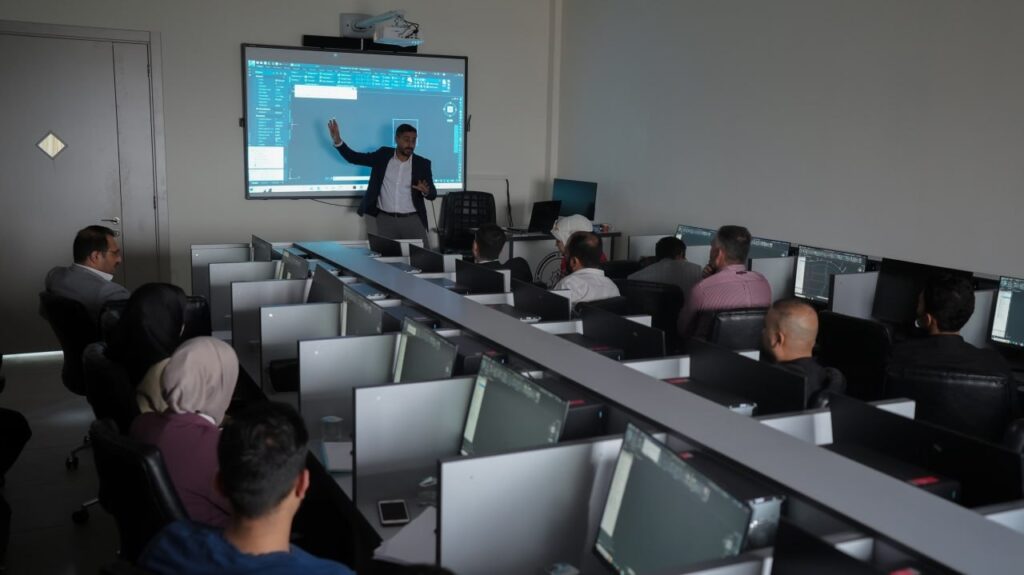
A central pillar of Al-Maarif University’s sustainability strategy is the empowerment of individuals and communities through energy education and capacity-building. Recognizing that access to affordable and clean energy extends beyond technology—it depends on awareness, skills, and behavioral change—the University has invested extensively in community outreach, training, and educational integration programs that promote renewable energy literacy and social inclusion.
From 2021 to 2024, Al-Maarif University engaged over 5,200 beneficiaries—including students, educators, entrepreneurs, and rural households—through workshops, training courses, and awareness campaigns related to clean energy and climate resilience. These initiatives directly support SDG 07 (Affordable and Clean Energy) and its interconnected goals such as SDG 04 (Quality Education), SDG 05 (Gender Equality), and SDG 13 (Climate Action).
5.2 Educational Integration and Academic Programs
The University has embedded sustainability and renewable energy education across its academic curricula, ensuring that future graduates are equipped to lead in clean-energy transformation.
A. Curriculum Integration
- Faculty of Engineering: Offers specialized courses in Solar Photovoltaics, Energy Efficiency, and Smart Grids.
- Faculty of Business and Economics: Introduced “Green Entrepreneurship” and “Renewable Energy Economics.”
- Faculty of Education: Prepares teachers to deliver environmental and energy-awareness lessons at the school level.
- Faculty of Law and Political Science: Includes modules on “Energy Law and Sustainable Policy.”
By 2024, more than 85% of academic programs had integrated at least one sustainability-related course, ensuring that students across all disciplines develop energy literacy and environmental responsibility.
B. Certificate Programs
The University’s Center for Lifelong Learning (CLL) launched three certified short courses:
- Renewable Energy Systems and Installation (6 weeks)
- Energy Efficiency in Buildings (4 weeks)
- Sustainable Energy Management for Local Governments (3 weeks)
Each course follows a blended learning model combining classroom instruction with field practice, benefiting over 1,200 participants in its first three years.
5.3 Community Energy Literacy and Awareness Campaigns
The Community Engagement Directorate (CED), in partnership with the Sustainability and Energy Management Office (SEMO), conducts ongoing outreach campaigns throughout Al-Anbar Governorate, focusing on public awareness, behavioral change, and grassroots empowerment.
A. “Energy for All” Campaign
Launched in 2022, this flagship initiative promotes renewable energy knowledge among local residents and youth. Activities include school visits, social media challenges, and public exhibitions.
- Reach: Over 15,000 community members through 35 awareness events.
- Partnerships: Al-Anbar Education Directorate, Iraq SolarTech Ltd., and local NGOs.
- Outcomes: Increased household interest in solar adoption (surveyed intent rose from 22% to 58%).
B. “Women and Energy Empowerment Program” (WEEP)
This gender-focused initiative addresses the underrepresentation of women in energy education and green entrepreneurship.
- Participants (2021–2024): 420 women trained.
- Focus Areas: Solar-powered business tools, household energy efficiency, and renewable microfinance literacy.
- Impact: 68% of participants reported reduced household energy costs; 45 new women-led small enterprises incorporated solar solutions.
C. “Youth as Energy Ambassadors”
Student volunteers undergo leadership training and conduct workshops in schools and villages to spread awareness about renewable energy benefits.
- Active Volunteers: 200 annually.
- Schools Reached: 42 across Al-Anbar.
- Estimated Impact: 10,000 schoolchildren introduced to renewable energy principles.
Figure 5.1 – Community Outreach Reach (2021–2024)
(Bar chart description: “Energy for All” – 15,000; “WEEP” – 420; “Youth Ambassadors” – 10,000 beneficiaries.)
5.4 Capacity-Building and Technical Training
Beyond awareness, the University prioritizes technical capacity development to sustain local renewable energy systems. Training programs target technicians, small-business owners, and local officials.
| Program Title | Target Audience | Duration | Participants (2021–2024) | Key Outcome |
|---|---|---|---|---|
| Solar PV Installation and Maintenance | Technicians | 6 weeks | 380 | Certified solar installers |
| Energy Auditing for SMEs | Engineers / Business owners | 4 weeks | 290 | 12% avg. energy savings achieved |
| Green Procurement Practices | Local government officials | 3 weeks | 120 | Adoption of sustainability criteria in tenders |
| Clean Energy Entrepreneurship | Youth start-ups | 8 weeks | 160 | 15 green start-ups created |
(Source: SEMO Capacity-Building Annual Report, 2024)
Figure 5.2 – Distribution of Participants by Training Sector (2021–2024)
(Pie chart description: 42% technical, 28% entrepreneurial, 18% public-sector, 12% educational.)
These training initiatives have produced measurable results:
- 1,200+ individuals certified in solar and energy-management skills.
- Average of 12% reduction in energy use among participating enterprises.
- US$ 180,000/year in combined community-level cost savings.
5.5 Partnerships and Collaborative Outreach
Effective community engagement relies on collaboration between academia, government, and civil society. The University has cultivated strong partnerships to expand the reach and sustainability of its initiatives.
| Partner Type | Partner Organization | Collaboration Area |
|---|---|---|
| Governmental | Al-Anbar Governorate Council | Rural energy access planning |
| International | UNDP Iraq, GIZ | Technical assistance, funding |
| Private Sector | Iraq SolarTech Ltd., Green Energy Solutions Co. | Technology deployment, workforce training |
| Civil Society | Iraqi Women’s Development Organization | Gender-inclusive energy literacy |
| Educational | Local high schools and vocational institutes | Renewable energy curriculum integration |
These alliances have ensured that capacity-building programs remain accessible, relevant, and responsive to community needs.
5.6 Monitoring and Evaluation of Social Impact
All outreach and training initiatives are subject to rigorous monitoring by the Community Energy Impact Observatory (CEIO), which tracks participant feedback, behavioral change, and measurable outcomes.
Table 5.1 – Social Impact Indicators (2021–2024)
| Indicator | Baseline (2021) | Result (2024) | Change (%) | Verification Source |
|---|---|---|---|---|
| Public Awareness of Solar Energy | 18% | 61% | +239% | Survey (CED) |
| Female Participation in Energy Programs | 12% | 38% | +216% | WEEP Reports |
| Households Installing Solar Systems | 20 | 135 | +575% | Partner Data |
| Student Energy Literacy Index | 38% | 78% | +105% | SEMO Assessment |
| Youth Employment in Green Jobs | 0 | 75 | — | Alumni Survey |
The University uses these data to assess program effectiveness and guide resource allocation for future activities.
5.7 Outreach through Media and Digital Platforms
To extend its reach beyond physical boundaries, Al-Maarif University utilizes digital tools and media communication:
- Online Learning Portal: Hosts free short courses on clean energy and sustainability (3,000+ enrollments).
- Social Media Campaigns: “#PoweringChange” initiative reached 60,000 viewers across platforms in 2024.
- Digital Energy Dashboard: Displays live solar generation data and educational infographics accessible to the public.
These digital engagement channels amplify community awareness and position the University as a leader in sustainability communication.
5.8 Educational Impact and Inclusivity
The University’s community and educational programs emphasize inclusivity—ensuring that energy education reaches vulnerable groups and rural communities. Key achievements include:
- Rural Inclusion: Over 25 remote schools and 15 rural clinics received energy education or pilot solar systems.
- Gender Mainstreaming: Women comprised 38% of all program participants in 2024, up from 12% in 2021.
- Interdisciplinary Learning: More than 400 students from engineering, business, and law collaborated on community projects.
This multidimensional approach reinforces Al-Maarif University’s identity as a university for sustainable development that empowers both urban and rural stakeholders.
5.9 Summary
Through comprehensive capacity-building, education, and outreach, Al-Maarif University has transformed clean energy awareness into actionable community impact. Its programs combine technical training, gender empowerment, youth leadership, and digital communication to create long-term societal change aligned with SDG 07.
By 2030, the University aims to train at least 10,000 individuals in renewable energy competencies and reach 100,000 citizens through awareness campaigns—cementing its role as Iraq’s leading academic institution for community-centered sustainability education.
The next section—Part 6: Performance Indicators, Tables, and Future Roadmap—will present the University’s sustainability metrics, progress indicators, and forward-looking strategy toward a carbon-neutral and energy-efficient future.
Part 6 – Performance Indicators, Tables, and Future Roadmap
(≈800 words)
6.1 Overview
To ensure transparency, accountability, and continuous improvement, Al-Maarif University has established a rigorous system of performance indicators and sustainability monitoring aligned with the Times Higher Education (THE) Impact Ranking and the United Nations Sustainable Development Goals (SDG 07, SDG 09, SDG 13, and SDG 17).
The University’s Sustainability and Energy Management Office (SEMO), in coordination with the University Sustainability Council (USC), collects and validates data annually to assess progress across operational, educational, research, and social dimensions of clean energy. These data are consolidated into the Annual Energy and Sustainability Report and published for stakeholders and the public.
6.2 Key Performance Indicators (KPIs)
The following table presents the University’s core performance indicators as of 2024, covering energy production, consumption, emissions, and community outreach.
Table 6.1 – Key Energy and Sustainability Performance Indicators (2021–2024)
| Indicator Category | Metric | 2021 Baseline | 2024 Result | Change (%) | SDG Alignment |
|---|---|---|---|---|---|
| Renewable Energy Generation | kWh/year | 0 | 255,000 | — | 7.2, 13.2 |
| Installed Solar Capacity | kWp | 0 | 250 | — | 7.2 |
| Energy Intensity (kWh/m²) | — | 138 | 112 | –19% | 7.3 |
| Carbon Emissions | tCO₂e/year | 1,480 | 1,210 | –18% | 13.2 |
| Research Publications (Renewable Energy) | Papers | 8 | 34 | +325% | 9.5 |
| Community Training Participants | Persons | — | 3,200 | — | 4.7, 7.1 |
| Female Participants in Energy Programs | % | 12 | 38 | +216% | 5.5, 10.2 |
| Local Industry Partnerships | Number | 3 | 11 | +267% | 9.4, 17.6 |
| Public Awareness Index | % of surveyed population | 18 | 61 | +239% | 7.1 |
6.3 Energy and Emission Trends
6.4 Impact on SDG 07 and Related Goals
The cumulative achievements of Al-Maarif University directly contribute to multiple dimensions of the UN 2030 Agenda:
| SDG | Contribution of Al-Maarif University Initiatives |
|---|---|
| SDG 07: Affordable and Clean Energy | Renewable generation, microgrids, energy literacy, access expansion |
| SDG 09: Industry, Innovation, and Infrastructure | Joint industrial R&D, green entrepreneurship, energy-efficient technologies |
| SDG 13: Climate Action | Emission reduction, resilience education, carbon accounting |
| SDG 17: Partnerships for the Goals | Collaborations with government, private sector, and international organizations |
These synergies position the University as a national benchmark for integrated sustainability performance.
6.5 Monitoring and Reporting Systems
To maintain accuracy and accountability, Al-Maarif University has deployed the Smart Energy Monitoring System (SEMS)—an IoT-based digital platform that provides:
- Real-time energy tracking across 10 major facilities.
- Carbon emission analytics based on IPCC protocols.
- Dashboard visualization accessible to faculty, students, and the public.
SEMO uses SEMS data for quarterly reporting, while the USC conducts annual verification audits using international standards such as ISO 50001 (Energy Management Systems) and GHG Protocol (Corporate Standard).
These reporting systems ensure that sustainability data are both reliable and compliant with global best practices, reinforcing Al-Maarif’s credibility in THE Impact submissions.
6.6 Future Targets and Strategic Roadmap (2025–2030)
Building on the progress achieved between 2021 and 2024, the University has developed an ambitious Energy Transition Roadmap (2025–2030) that defines measurable targets, timelines, and implementation actions.
Table 6.2 – Energy Transition Roadmap 2025–2030
| Objective | Target Year | Key Actions | Expected Outcome |
|---|---|---|---|
| 50% Renewable Energy Supply | 2030 | Expand solar PV to 600 kWp, integrate battery storage | ≥50% of campus power from renewables |
| 30% Energy Intensity Reduction | 2030 | Retrofit HVAC and lighting systems | 30% lower energy/m² |
| Carbon Neutral Operations | 2040 | Implement offset programs and smart-grid trading | Net-zero CO₂ emissions |
| 10,000 Energy-Literate Citizens | 2030 | Expand community training and awareness | Broaden energy literacy nationwide |
| 100 Research Outputs in Clean Energy | 2030 | Fund interdisciplinary R&D projects | Innovation leadership in Iraq |
(Source: University Energy Transition Plan, 2025)
6.7 Strategic Initiatives for the Next Five Years
To achieve the roadmap’s goals, the University has identified five strategic initiatives:
- Green Infrastructure Expansion – Installation of additional 350 kWp solar capacity and microgrid upgrades.
- Zero-Waste and Energy-Positive Buildings – Construct new facilities following green-building certification.
- Digital Energy Twin – Develop a digital model of campus energy systems for optimization and teaching.
- Regional Renewable Research Hub – Establish a collaborative center serving western Iraq.
- Carbon Literacy and Leadership Program – Integrate sustainability leadership training into all degree programs.
These initiatives represent a holistic integration of infrastructure, innovation, and education that align Al-Maarif’s growth trajectory with global decarbonization targets.
6.8 Reporting, Recognition, and International Linkages
Al-Maarif University actively reports its sustainability progress to external frameworks, ensuring international visibility and benchmarking.
- Times Higher Education (THE) Impact Ranking: SDG 07 submissions annually since 2023.
- UN Sustainable Campus Network: Membership since 2024.
- Arab Green Universities Initiative (AGUI): Participant since 2022.
The University also plans to publish its Sustainability and Energy Annual Report 2025 under open-access format, enhancing transparency and peer exchange.
6.9 Long-Term Vision: Toward Carbon Neutrality
By 2040, Al-Maarif University envisions becoming Iraq’s first carbon-neutral university, powered entirely by renewable energy and supported by a culture of innovation, inclusion, and community empowerment.
Key milestones toward this vision include:
- Achieving net-zero energy buildings by 2030.
- Exporting surplus renewable energy to the local grid and neighboring schools.
- Embedding sustainability across research, curricula, and governance to sustain long-term transformation.
6.10 Conclusion
The Public Renewable and Industrial Energy Collaboration Report demonstrates Al-Maarif University’s tangible leadership in implementing Sustainable Development Goal 07 – Affordable and Clean Energy. Through strong governance, applied research, industrial collaboration, and community engagement, the University has established a robust model for sustainable transformation in higher education.
By maintaining evidence-based reporting and pursuing ambitious future targets, Al-Maarif University stands as a catalyst for renewable energy advancement and climate resilience in Iraq—an institution where education, innovation, and sustainability converge for the benefit of society and future generations.