
Energy-Efficient Buildings Policy
University of Al Maarif
Sustainability and SDG 7: Affordable and Clean Energy
Date: November 2025
1. Executive Summary
The University of Al Maarif is committed to integrating sustainability and energy efficiency across all aspects of its campus infrastructure, operations, and culture. This Energy-Efficient Buildings Policy defines the principles, objectives, and strategies through which the University seeks to reduce energy consumption, lower greenhouse gas emissions, and foster a culture of responsible energy use consistent with Sustainable Development Goal 7 — Affordable and Clean Energy.
The policy emphasizes a holistic approach to sustainable campus management, ensuring that building design, construction, renovation, and daily operation comply with international green standards. It supports Iraq’s transition toward a low-carbon economy while improving the well-being and productivity of students, faculty, and staff.
This report details the current context, goals, implementation framework, and roadmap for energy efficiency at University of Al Maarif. It highlights infrastructure modernization, renewable energy integration, capacity building, and monitoring systems that will collectively contribute to achieving long-term sustainability and energy independence for the campus.
2. Introduction and Policy Context
Energy consumption in higher education institutions is one of the largest contributors to operating costs and carbon emissions. As Iraq continues its efforts to rebuild and modernize its educational infrastructure, universities have an opportunity to act as exemplars of energy-efficient design and sustainable management.
University of Al Maarif recognizes its moral and institutional responsibility to reduce its environmental footprint and to ensure that all future campus expansions are environmentally sustainable. The Energy-Efficient Buildings Policy has been formulated within the framework of the University’s Sustainability Strategy (2025–2030) and is guided by the United Nations Sustainable Development Goals (SDGs), with a particular focus on:
SDG 7: Affordable and Clean Energy
SDG 9: Industry, Innovation, and Infrastructure
SDG 11: Sustainable Cities and Communities
SDG 13: Climate Action
This policy aligns with national strategies on renewable energy and efficiency, including Iraq’s commitment to diversify its energy mix and adopt greener technologies. It also responds to global trends in higher education sustainability, such as the UI GreenMetric World University Ranking, the THE Impact Rankings, and regional frameworks for carbon-neutral campuses.
3. Policy Vision, Mission, and Objectives
Vision
To establish University of Al Maarif as a leading model of energy-efficient campus design and operation in Iraq and the Middle East, demonstrating measurable progress toward carbon neutrality by 2035.
Mission
To integrate energy efficiency and renewable energy solutions into every stage of campus planning, development, and operation; to build institutional capacity; and to foster sustainable behavior across the university community.
Objectives
Reduce total campus energy consumption by 25% by 2030 relative to a 2025 baseline.
Increase the share of renewable energy in total consumption to 20% by 2030.
Ensure that all new buildings meet energy-efficiency and green design standards equivalent to LEED Silver or higher.
Retrofit existing buildings to improve insulation, lighting, HVAC, and control systems.
Integrate sustainability education and energy-efficiency awareness into academic and co-curricular programs.
Establish monitoring, reporting, and verification mechanisms for continuous improvement.
4. Current Energy Profile and Challenges
A preliminary audit conducted in 2024 revealed that energy consumption at University of Al Maarif is dominated by three categories:
Cooling and ventilation systems, accounting for approximately 45% of energy use.
Lighting systems, accounting for around 30%.
IT and laboratory equipment, representing 15–20% of the total.
The main challenges identified include:
Inefficient air-conditioning systems with outdated controls.
Limited building insulation and poor window sealing.
Conventional fluorescent lighting rather than LED technology.
Lack of real-time energy monitoring and data analytics.
Limited awareness among users regarding energy-saving behavior.
The policy addresses each of these issues through a phased, cost-effective approach balancing infrastructure investment with behavioral change programs.
5. Energy-Efficiency Principles and Design Standards
All buildings and facilities at University of Al Maarif must adhere to the following guiding principles:
Passive Design:
Optimize natural daylight and ventilation through building orientation, shading, and material selection.
Reduce heat gain using reflective surfaces and green roofs where feasible.
Energy-Efficient Building Envelope:
Employ high-performance insulation materials and double-glazed windows.
Minimize thermal bridging and ensure proper sealing.
Lighting Efficiency:
Replace all conventional lighting with LED fixtures.
Install motion sensors and daylight-harvesting systems.
Efficient HVAC Systems:
Use variable refrigerant flow (VRF) and inverter-type systems.
Implement zoning and programmable thermostats for smart control.
Renewable Energy Integration:
Deploy rooftop solar photovoltaic (PV) systems to supply clean electricity.
Explore solar thermal systems for hot-water generation in dormitories and laboratories.
Water–Energy Nexus:
Install water-saving fixtures to reduce energy for pumping and heating water.
Sustainable Materials:
Prioritize local and recycled materials with low embodied energy.
Smart Controls and Automation:
Implement Building Management Systems (BMS) to monitor and optimize energy consumption.
Lifecycle Costing:
Evaluate investments based on total cost of ownership rather than upfront expense.
6. Implementation Framework
6.1. Institutional Responsibility
President’s Office: overall leadership, resource allocation, and reporting.
Sustainability Committee: policy oversight, coordination, and annual review.
Directorate of Facilities Management: technical execution and maintenance.
College of Engineering: applied research, innovation, and student projects.
Office of Procurement: ensures that energy-efficiency criteria are embedded in tendering processes.
6.2. Phased Implementation
Phase I (2025–2026): Baseline and Quick Wins
Conduct detailed energy audits.
Replace lighting with LEDs in 100% of classrooms and corridors.
Pilot solar PV system on one academic building.
Launch awareness campaign “Energy Smart Campus.”
Phase II (2027–2029): Infrastructure Modernization
Retrofit HVAC and insulation in key buildings.
Expand solar capacity to 20–25% of total campus demand.
Introduce Building Management System.
Integrate energy-efficiency modules in curricula.
Phase III (2030 onwards): Consolidation and Innovation
Achieve 25% energy reduction and 20% renewable-share targets.
Expand green certification to all facilities.
Explore advanced technologies such as battery storage, AI-based optimization, and net-zero design for new projects.
7. Energy Management and Monitoring
Effective energy management is the backbone of this policy. The university will establish a Campus Energy Management System (CEMS) to collect, store, and analyze data from all major buildings.
Key Features
Smart meters for electricity, water, and gas.
Monthly and annual energy reports.
Dashboards accessible to facility managers and academic researchers.
Predictive analytics to identify abnormal consumption.
Performance Indicators
Energy Use Intensity (EUI): kWh/m² per year.
Carbon Intensity: CO₂ kg per m².
Renewable Energy Share: % of total consumption.
Annual Cost Savings: USD or IQD equivalent.
Student and Staff Engagement Rate: participation in energy-saving campaigns.
8. Renewable Energy Integration
University of Al Maarif will progressively increase renewable-energy generation to meet campus demand and to contribute excess electricity to the local grid where feasible.
8.1. Solar Photovoltaic Systems
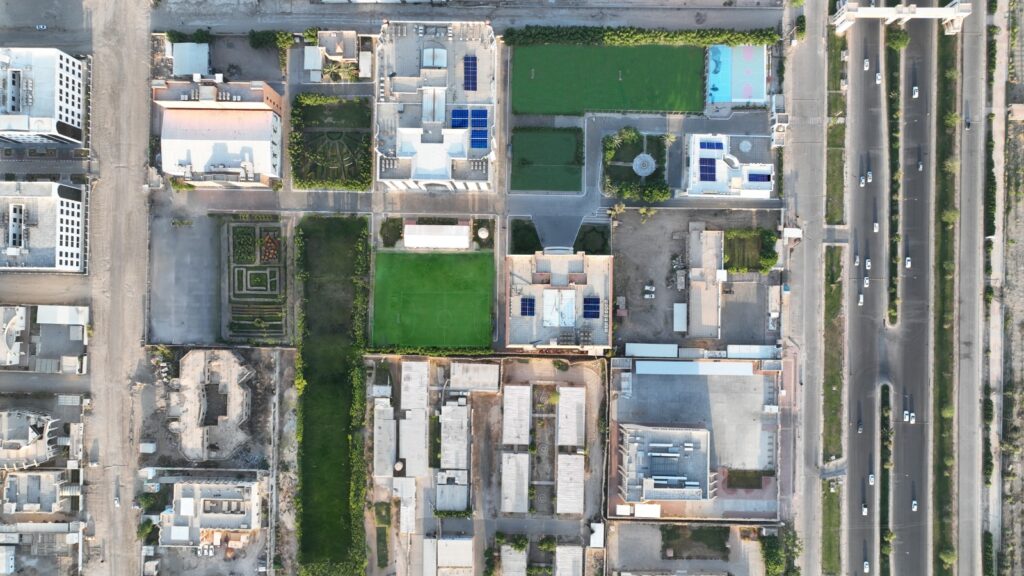
Phase I: 100 kW pilot installation on the main administration building.
Phase II: expand to 400 kW across parking sheds and rooftops.
Phase III: target 1 MW capacity by 2030, covering ~20% of total load.
8.2. Solar Thermal Systems
Install collectors for water heating in dormitories, cafeterias, and labs.
Reduce LPG and electricity consumption for hot water by 40%.
8.3. Wind and Hybrid Systems (Feasibility)
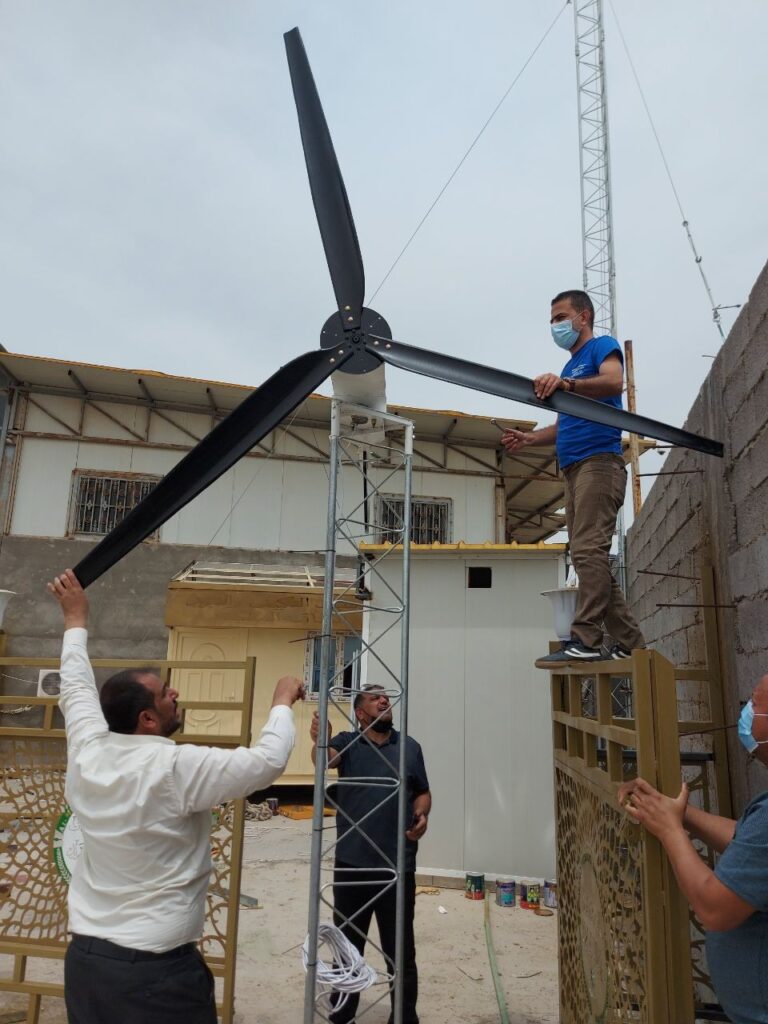
Conduct feasibility studies for small wind turbines on campus edges.
Explore hybrid PV–battery solutions for uninterrupted power to critical labs.
8.4. Renewable Energy Education
Integrate student projects in Engineering and Science programs.
Develop simulation and training modules on energy systems.
9. Awareness, Education, and Behavioral Change
Achieving energy efficiency requires both technological and behavioral transformation. University of Al Maarif will promote sustainability culture through:
Energy Awareness Campaigns: posters, social media, and competitions.
Student Ambassador Program: train volunteers to promote energy conservation practices.
Workshops and Training: for faculty and administrative staff on efficient use of equipment.
Curriculum Integration: sustainability modules in Architecture, Engineering, and Management programs.
Recognition Schemes: awards for departments achieving largest energy savings.
10. Governance, Compliance, and Reporting
The Sustainability Committee shall issue annual Energy-Efficiency Progress Reports documenting performance against KPIs, best practices, and lessons learned. The university commits to transparency by publishing results on its website and through GreenMetric submissions.
Policy Compliance
All new construction and major renovations must undergo an Energy Efficiency Review prior to approval.
Procurement of appliances, lighting, and HVAC equipment must comply with international energy-efficiency ratings (e.g., Energy Star or EU A+).
Annual training for procurement staff will ensure standards are maintained.
Auditing
Independent energy audits will be conducted every two years by certified energy auditors or engineering consultants to verify savings and recommend improvements.
11. Estimated Budget and Financing Mechanisms
Capital Expenditure (2025–2030):
| Category | Estimated Cost (USD) | Funding Source |
|---|---|---|
| LED Lighting Retrofit | 80,000 | University Capital Budget |
| HVAC Modernization and Insulation | 250,000 | Energy Efficiency Fund / Green Loans |
| Solar PV Installation (1 MW) | 750,000 | Public–Private Partnership (PPP) / Donor Support |
| Building Management System | 60,000 | Operational Budget |
| Awareness & Training Programs | 15,000 | Internal Sustainability Fund |
| Total Estimated Budget (2025–2030) | ≈ USD 1.15 million | — |
Operating Expenditure Savings:
Estimated annual energy-cost reduction of 15–20% by 2030, translating to USD 120,000 in annual savings after full implementation.
12. Environmental and Social Impact
The policy contributes to both environmental and social sustainability objectives:
Reduced GHG Emissions: ~1,500 tons CO₂ avoided annually by 2030.
Improved Indoor Environmental Quality: healthier learning and working conditions.
Enhanced Community Awareness: students serve as ambassadors for energy conservation in their communities.
Economic Resilience: reduced utility costs free resources for research and student support.
13. Monitoring, Evaluation, and Reporting Framework
Key Performance Indicators (KPIs):
Annual energy consumption (kWh/m²).
Renewable energy share (% of total consumption).
Energy cost savings (% and USD).
Carbon emissions avoided (tons CO₂).
Number of buildings retrofitted or certified as green.
Participation rate in training and awareness programs.
Reporting Cycle
Quarterly internal monitoring reports.
Annual Sustainability Report published on the university website and submitted to GreenMetric.
Five-year policy review and revision based on performance data.
14. Roadmap 2025 – 2030 (High-Level Milestones)
| Year | Key Milestones |
|---|---|
| 2025 | Establish Sustainability Committee and conduct full energy audit; replace 50% lighting with LEDs. |
| 2026 | Complete LED conversion; launch 100 kW solar pilot; initiate awareness campaigns. |
| 2027 | Retrofit 3 major buildings for HVAC and insulation efficiency; integrate BMS. |
| 2028 | Expand solar PV to 400 kW; publish first Energy Performance Report. |
| 2029 | Launch student-led research projects on energy analytics and storage. |
| 2030 | Achieve 25% energy reduction and 20% renewable share; review and update policy. |
15. Partnerships and Collaboration
University of Al Maarif seeks collaboration with:
Ministry of Higher Education and Scientific Research (Iraq) for policy alignment.
Iraqi Ministry of Electricity for renewable integration and grid connection.
British Council and international donors for capacity building.
Private sector partners for solar PV installation and energy service contracts (ESCOs).
Peer universities in Iraq and abroad for knowledge exchange and joint research on sustainable campus operations.
16. Risk Management and Mitigation
Potential Risks & Mitigation Measures:
Financial constraints: Adopt phased investment and seek external funding.
Technical capacity gaps: Provide staff training and engage consultants.
Behavioral resistance: Conduct continuous awareness campaigns and incentivize energy savings.
Equipment maintenance issues: Implement preventive maintenance schedules and service contracts.
17. Integration with Research and Teaching
Energy efficiency is not only an operational matter but also a learning and research opportunity. The policy encourages:
Undergraduate and graduate research projects on energy optimization.
Interdisciplinary collaboration between engineering, architecture, and business students.
Publication of case studies and data in academic journals.
Integration of real-time energy data into classroom learning.
18. Policy Review and Continuous Improvement
This policy will remain a living document, subject to annual review by the Sustainability Committee. Feedback from students, staff, and external auditors will inform periodic revisions. New technologies and international best practices will be adopted to enhance efficiency and innovation.
19. Conclusion
The Energy-Efficient Buildings Policy of University of Al Maarif sets a clear path toward sustainable campus development and responsible energy management. It embodies the university’s dedication to the United Nations Sustainable Development Goals, particularly SDG 7, and reinforces its commitment to academic excellence, environmental stewardship, and community..
 |
|---|
|
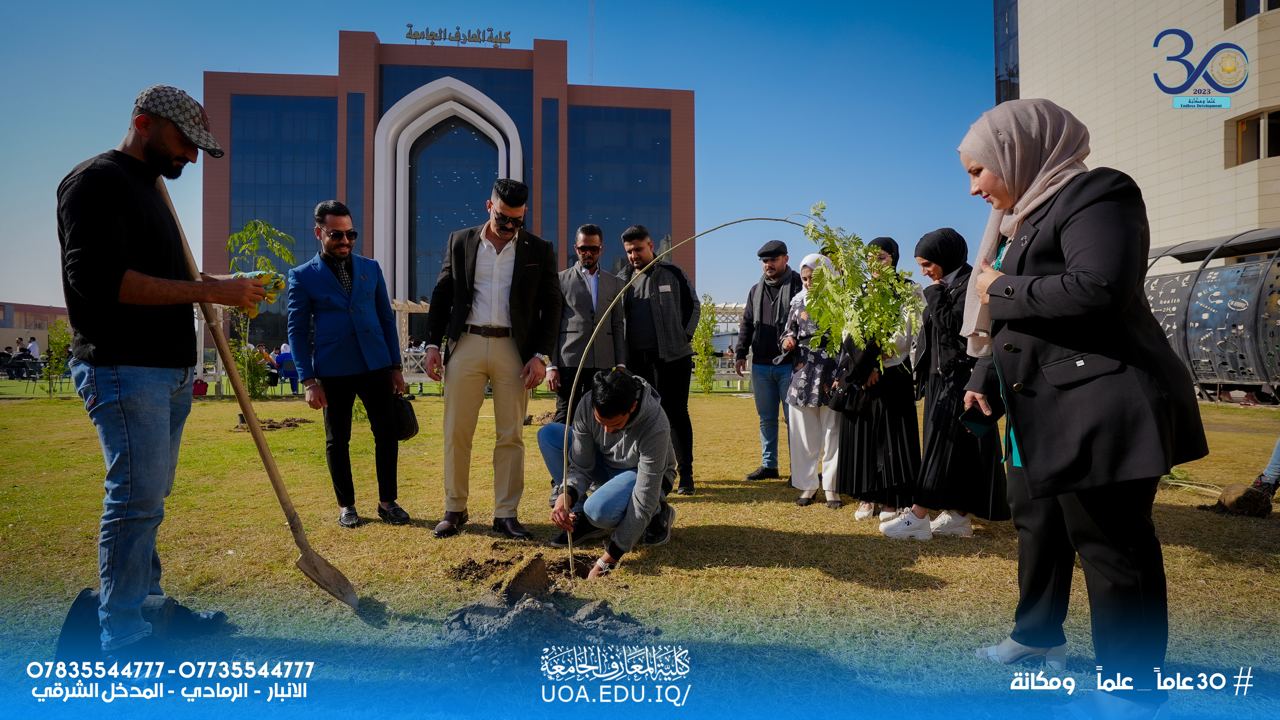
UOA Participated in National Energy Support and Emission Reduction Initiative The Unit of Women’s Empowerment at Al-Maarif University College conducted an in-college afforestation campaign in the implementation of the directives of the Ministry of Higher Education and Scientific Research of Iraq. |
 |
|---|
|
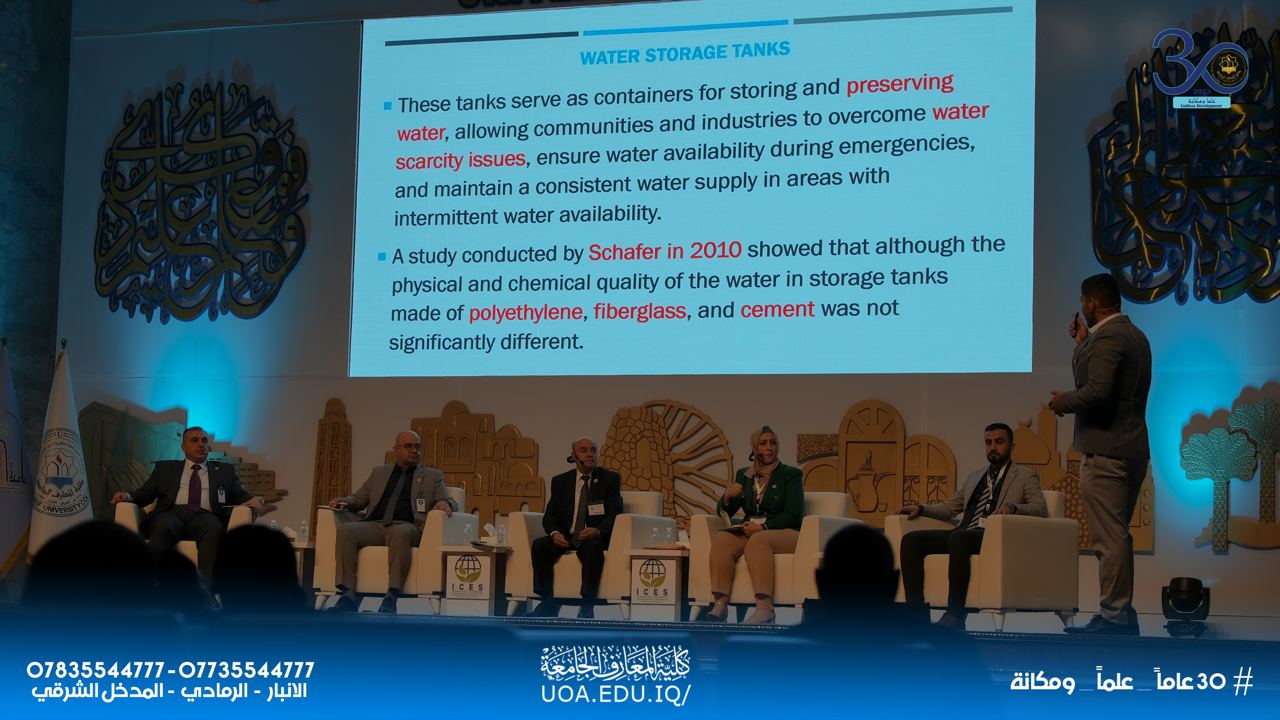
UOA Sponsored and Participated in the International Scientific Conference for Environment and Sustainability at University of Anbar On Wednesday, 29th November 2025, Al-Maarif University sponsored and participated in the International Scientific for Environment and Sustainability, which was held by the Colleges of Science, and Applied Sciences, in cooperation with Al-Maarif University College at University of Anbar. The conference aimed to present the concept of a sustainable environment in Iraqi universities, government departments, and institutions, as well as to discuss views on the future strategy for moving towards a clean environment. Several specialists from inside and outside Iraq participated in the conference. A presentation of Al-Maarif University College’s Strategy for 2025 was presented, and the Smart City Vision 2030 was also presented at the conference. Read More: Link |
 |
|---|
|
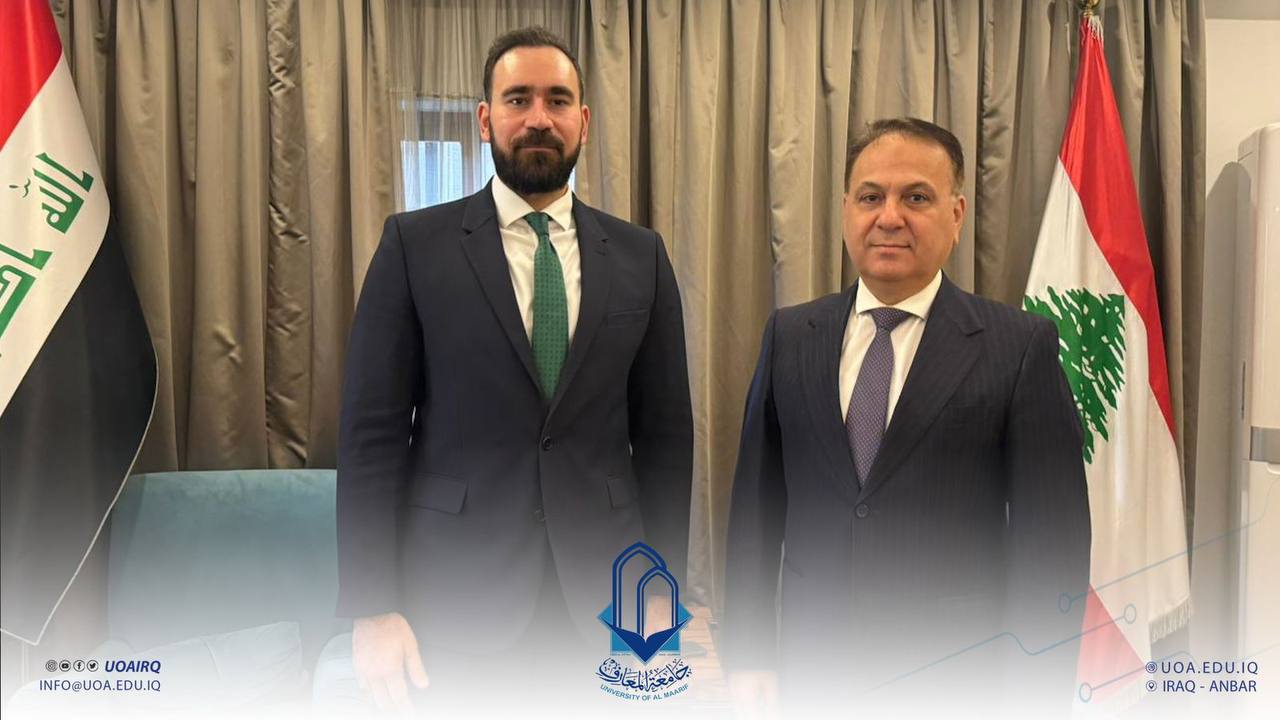
University of Al-Maarif Enhances Cooperation and Shares Knowledge with Lebanese Universities in the Field of Renewable Energy The Rector Scientific Assistant, Dr. Mahmood Abd Al-Razaq Abd Al-Rahman at University of Al-Maarif met the Lebanese Ambassador to the Republic of Iraq, Mr. Ali Al-Habhab to discuss the cooperation mechanisms among University of Al-Maarif and Lebanese universities. The discussion focused on methods of sharing knowledge among universities in this crucial area, aiming to enhance the academic and scientific capacities of both parties and develop collaboration in beneficial academic and scientific areas for both countries. The significance of renewable energy and its potential to contribute to the advancement of sustainable development were also discussed.
Read More: Link |