Published Progress – SDG4 (17.3.4)
Public reporting on university progress and performance related to SDG4 (Quality Education).
SDG 4: Quality Education
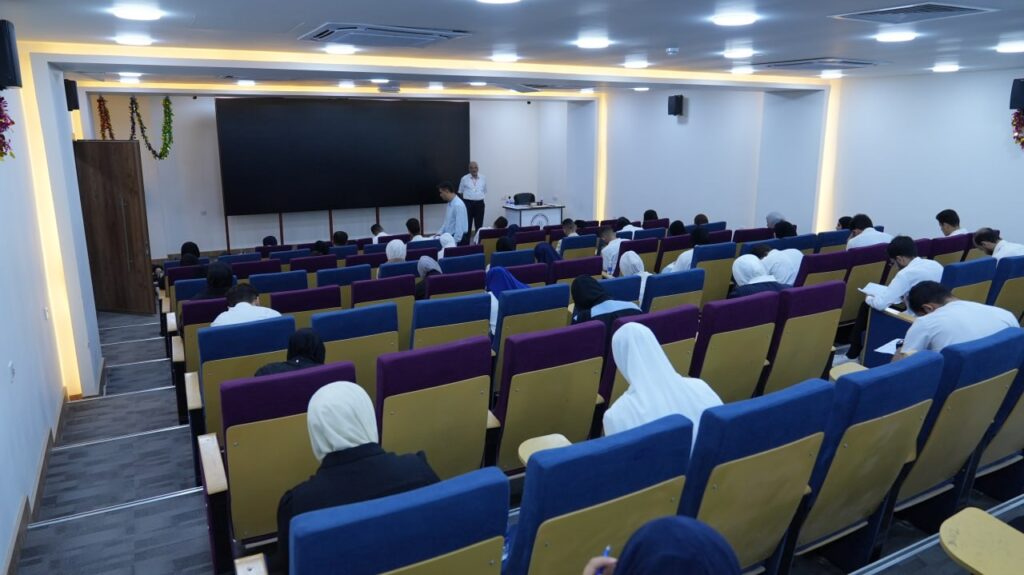
University of Al Maarif’s Commitment to Inclusive, Equitable, and Sustainable Education in Iraq
Introduction: Quality Education and National Development
Sustainable Development Goal 4 (SDG 4) seeks to “ensure inclusive and equitable quality education and promote lifelong learning opportunities for all.”
For Iraq, a nation striving to rebuild its social and economic infrastructure after decades of conflict, the pursuit of quality education is both a national priority and a pathway to sustainable peace and prosperity.
The University of Al Maarif (UoA), located in Al-Anbar Governorate, embodies this commitment through its academic excellence, inclusive policies, and community engagement. Guided by Iraq’s Vision 2030 and the Ministry of Higher Education and Scientific Research’s National Education Strategy, UoA integrates the principles of accessibility, equity, innovation, and lifelong learning into every aspect of its operation.
UoA’s mission—to educate, empower, and engage—aligns directly with the framework of SDG 4. Through continuous improvement of curricula, investment in digital transformation, expansion of research capacity, and community partnerships, the University contributes to the advancement of Iraq’s human capital and social development goals.
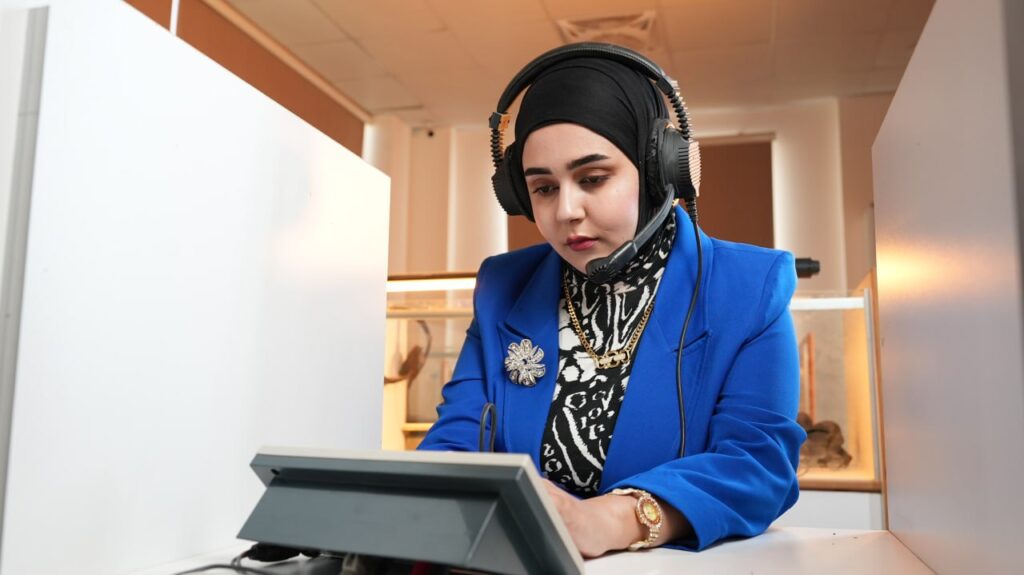
1. Ensuring Universal Access to Quality Education
1.1 Free and Inclusive Learning Opportunities
In alignment with the Iraqi Government’s initiatives for public-sector educational access, UoA provides affordable tuition structures, scholarships, and financial assistance programs to ensure that no capable student is left behind.
The University collaborates with regional directorates of education, civil-society organizations, and private-sector partners to identify and support students from marginalized or low-income backgrounds.
Over the past three academic years, more than 350 students have benefited from partial or full scholarships sponsored by Al-Maarif Endowment Fund and local philanthropic organizations, guaranteeing equitable access regardless of gender, ethnicity, or economic status.
1.2 Bridging Urban-Rural Educational Gaps
Recognizing the disparity between rural and urban learning opportunities, the University extends its educational reach through community extension centers and digital learning hubs in western and southern Iraq.
These centers offer preparatory courses, remedial classes, and distance-learning modules—especially important for students affected by displacement or inadequate infrastructure.
UoA’s initiative, “Education for All Iraqis,” launched in 2022, has provided hybrid-learning access to more than 1,200 students from under-served regions, marking a concrete step toward achieving equitable education access across governorates.
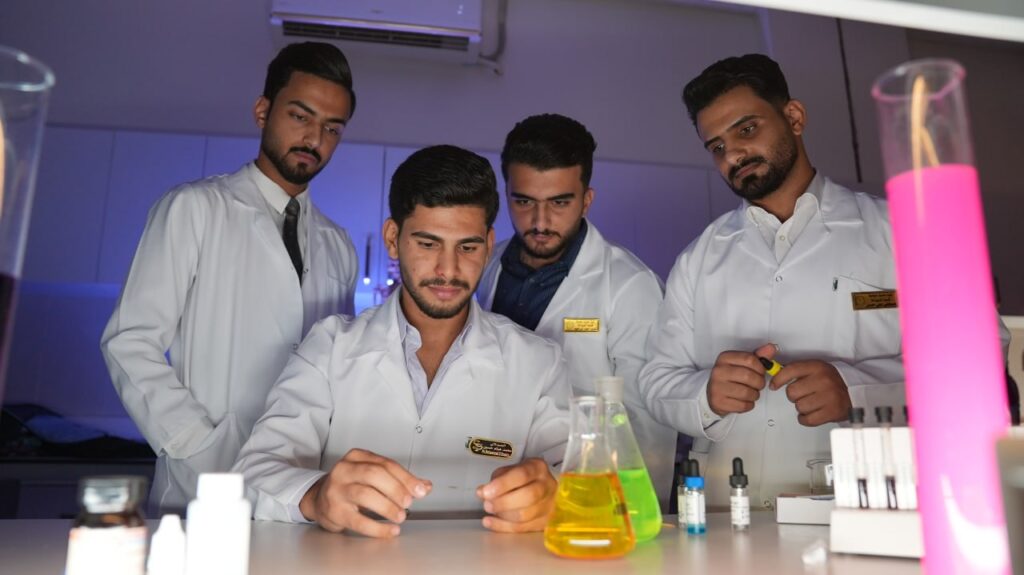
2. Enhancing Higher Education, Vocational Skills, and Lifelong Learning
2.1 Curricular Innovation and Market Alignment
UoA continually revises its academic programs to align with the labor-market demands and sustainable-development priorities of Iraq. The University’s colleges—Medicine, Engineering, Law, Pharmacy, Dentistry, and Education—are designed to prepare students for both local and global competitiveness.
Programs integrate entrepreneurship, sustainability, and digital literacy to equip graduates with 21st-century competencies.
For instance, the Faculty of Engineering recently introduced modules on renewable energy systems and sustainable construction materials, directly supporting SDG 7 and SDG 9.
2.2 Vocational and Continuing-Education Programs
The Center for Lifelong Learning (CLL) at UoA offers short-term certificates, vocational courses, and professional diplomas in health administration, information technology, business innovation, and language proficiency.
These programs are open to students, alumni, and members of the local community—supporting continuous skills development and employability.
Between 2021 and 2024, over 2,800 participants completed certification courses under the Knowledge for Employment Program, improving job readiness and advancing lifelong-learning culture in the region.
3. Faculty Excellence and Professional Development
3.1 Faculty Training and Pedagogical Enhancement
The University emphasizes faculty capacity building as a cornerstone of educational quality. UoA’s Teaching and Learning Development Unit (TLDU) conducts continuous professional-development workshops covering:
- modern pedagogical methodologies,
- digital teaching tools (Moodle, Microsoft Teams Edu, etc.),
- student-centered learning, and
- inclusive classroom practices.
Since 2022, more than 180 faculty members have completed certified training sessions on innovative assessment and technology-enhanced learning, ensuring that teaching remains adaptive, research-informed, and globally relevant.
3.2 Academic Exchange and International Benchmarking
UoA collaborates with regional and international institutions—such as University of Jordan, Ankara University, and University of Baghdad—for academic exchange, joint supervision, and collaborative research.
Faculty are encouraged to publish in indexed journals and to integrate international standards into curricula. These partnerships strengthen pedagogical practices and elevate the University’s academic reputation in line with SDG 17.
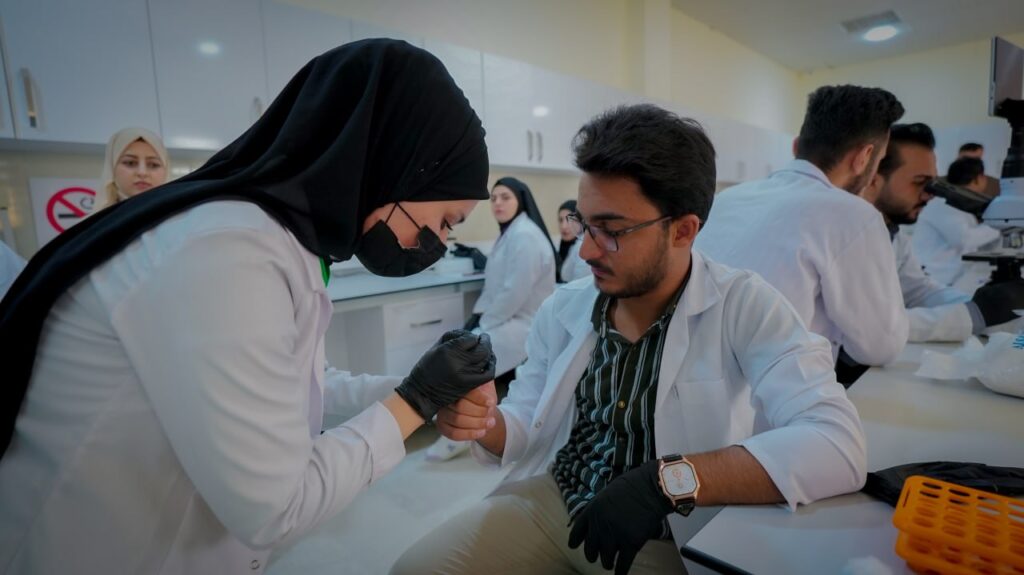
4. Investment in Educational Infrastructure and Digital Transformation
4.1 Smart Campus and Digital Classrooms
To ensure a technology-driven learning environment, the University has invested heavily in smart-campus infrastructure, interactive classrooms, and a robust Learning-Management System (LMS).
The Digital Education Transformation Plan (2023–2026) focuses on:
- E-learning platform enhancement and cloud-based lecture delivery,
- establishment of a Virtual Science Laboratory for remote experiments,
- and integration of AI-assisted academic analytics for performance monitoring.
The LMS currently hosts over 1,000 active courses with digital assignments, enabling blended-learning opportunities across all disciplines.
4.2 Sustainable Campus Infrastructure
In line with SDG 13 and SDG 9, UoA’s campus upgrades incorporate energy-efficient lighting, solar-powered facilities, and green building design.
The Central Library renovation in 2024 included low-carbon materials and expanded e-resources, positioning the campus as both a learning and sustainability model for the region.
5. Inclusion, Accessibility, and Special Education
5.1 Inclusive Education Policy
University of Al Maarif promotes inclusive education through its Equity and Accessibility Policy, ensuring that students with disabilities, socio-economic challenges, or special learning needs receive individualized support.
This includes accessible digital content, sign-language interpretation in lectures, and dedicated counseling services.
5.2 Special Support Services
The Student Support and Counseling Center (SSCC) provides mentoring, academic advising, and mental-health services. Assistive technologies such as screen-readers and adaptive keyboards are available in laboratories to enhance accessibility for students with visual or motor impairments.
By 2024, 68 students with special needs have successfully completed degree programs with tailored support, illustrating UoA’s deep commitment to equality in education.
6. Research, Innovation, and Knowledge Creation
6.1 Research Centers and Thematic Priorities
UoA fosters a strong research culture through its Center for Research and Innovation (CRI), which emphasizes applied projects aligned with national development priorities.
Key thematic areas include:
- educational technology and digital literacy,
- sustainable development and environmental education,
- health sciences and public-health policy,
- business innovation and entrepreneurship.
6.2 Undergraduate Research Culture
Students are actively involved in research through capstone projects, undergraduate journals, and innovation competitions.
In 2023, UoA organized the National Student Research Forum, attracting participants from eight Iraqi universities. The forum promoted academic writing, peer review, and presentation skills—essential elements of quality education and SDG 4.7 (“education for sustainable development”).
7. The University Library: Knowledge Access and Digital Empowerment
7.1 Library Policy and Services
The Al-Maarif University Library operates as an academic hub open to all students, faculty, and researchers. The collection exceeds 25,000 volumes, complemented by comprehensive digital holdings.
Borrowing policies are transparent and user-oriented, promoting equitable access and data confidentiality.
Loan privileges are tiered by user group, with generous renewal options to support intensive research needs. Overdue policies are designed primarily for accountability, not penalization, encouraging responsible resource use.
7.2 Digital Library and E-Resources
In 2022, the University inaugurated its Digital Knowledge Portal, providing 24/7 access to:
- 3 million e-journals and 12,000 e-books via subscriptions to EBSCO, Springer, JSTOR, and Scopus,
- 85 academic databases covering science, medicine, humanities, and law,
- open-access repositories such as DOAJ and UNESDOC.
Students and faculty can access materials on-campus or remotely using institutional credentials.
Training workshops—“Mastering Digital Research” and “Citing Sources Ethically”—are conducted each semester to strengthen information-literacy skills.
Table 1. Library Usage and Digital Engagement (2022–2024)
| Indicator | 2022 | 2023 | 2024 |
|---|---|---|---|
| E-book downloads | 18,500 | 26,700 | 31,200 |
| E-journal articles accessed | 65,000 | 81,000 | 95,400 |
| Physical book loans | 7,200 | 8,600 | 9,400 |
| Information-literacy sessions held | 22 | 27 | 33 |
These statistics illustrate a steady transition toward digital scholarship and self-directed learning.
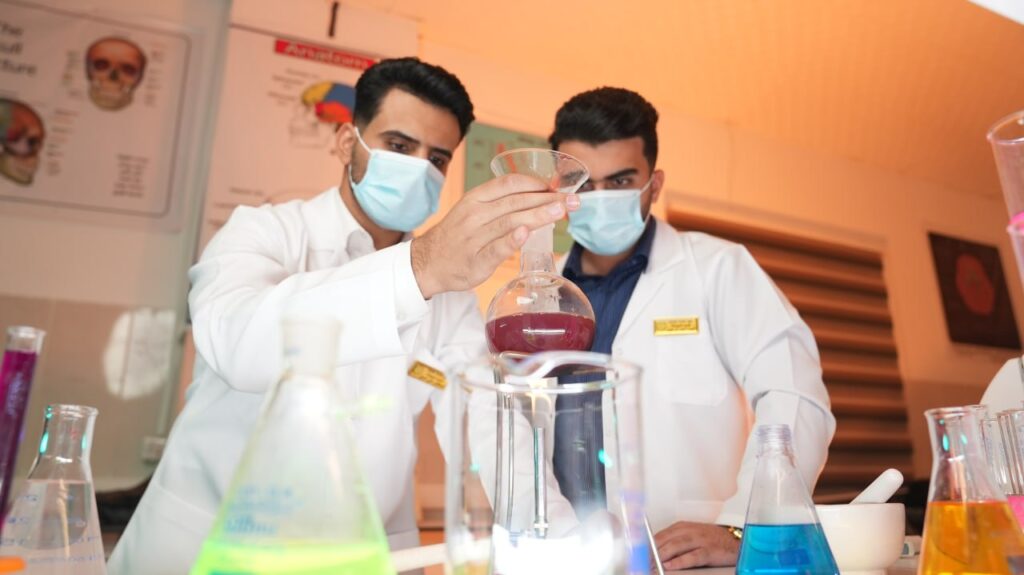
8. Innovation, Entrepreneurship, and Future Skills
8.1 Al-Maarif Innovation and Entrepreneurship Center (AIEC)
The AIEC, established in 2021, fosters creativity, innovation, and entrepreneurial thinking among students and staff.
Its mission parallels Bahrain’s AIC model but is localized to Iraq’s innovation ecosystem, providing:
- incubation programs for student start-ups,
- mentorship from industry experts,
- innovation boot camps and hackathons,
- intellectual-property (IP) awareness training.
In 2023 alone, the AIEC supported 19 student start-up projects, 5 of which received seed funding from private-sector partners. Fields included renewable energy, health technology, and agri-innovation.
8.2 Collaborative Networks
Through memoranda of understanding with Iraqi Chambers of Commerce, UNDP Iraq, and Baghdad Innovation Hub, the University connects its innovators with investors and research partners.
These collaborations stimulate regional knowledge transfer and reinforce SDG 8 (Decent Work and Economic Growth).
9. Equity, Diversity, and Inclusivity in Education
9.1 Diversity and Equal Opportunity Policy
UoA embraces the diversity of its academic community. Students and staff represent over 15 nationalities and diverse socio-cultural backgrounds. The Equity and Diversity Charter, adopted in 2021, ensures fair treatment in admissions, employment, and classroom engagement.
Key principles:
- Zero tolerance for discrimination based on gender, religion, ethnicity, or disability.
- Transparent recruitment and promotion processes based on merit.
- Equal access to professional development and leadership roles.
9.2 Gender Equity and Women Empowerment
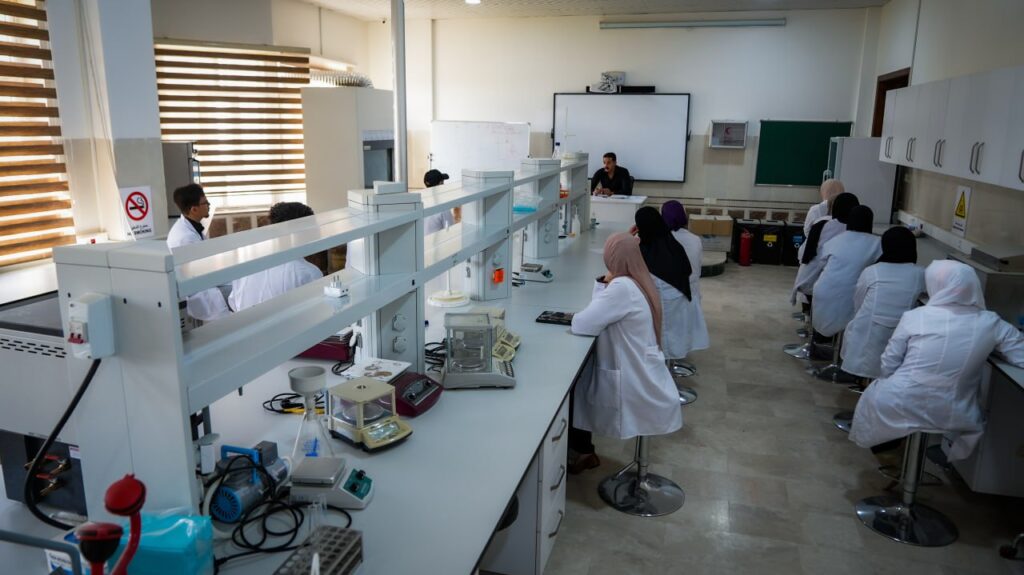
Aligned with SDG 5, the University has established the Equal Opportunity and Gender Empowerment Committee (EOGEC), chaired by the Vice President for Academic Affairs. The Committee monitors female enrollment, leadership representation, and policy implementation.
Currently, 48 percent of students and 35 percent of academic staff are women, reflecting strong gender balance within Iraq’s higher-education sector.
10. Community Engagement and Lifelong Learning
UoA integrates community education into its academic culture. Through the Office of Community Relations and Public Engagement (OCPE), the University hosts seminars, public lectures, and open training programs in areas such as financial literacy, digital skills, health awareness, and environmental sustainability.
The annual “Al-Maarif Knowledge Festival” gathers students, faculty, and citizens to share innovations and research that directly address community needs. In 2024, more than 6,000 participants attended, demonstrating the University’s role as a regional educational catalyst.
11. International Collaboration and Academic Exchange
UoA’s internationalization strategy fosters global citizenship and academic mobility.
Key initiatives include:
- Student Exchange Programs with Turkey, Jordan, and Malaysia.
- Joint degrees and dual certifications in engineering and public health.
- Virtual Exchange Courses with European universities during COVID-19, which continue as part of the blended-learning model.
Such programs expand students’ intercultural competence and prepare them for global careers.
12. Institutional Governance and Quality Assurance
UoA’s Quality Assurance and Accreditation Directorate (QAAD) oversees curriculum design, assessment standards, and faculty evaluation to ensure academic excellence and compliance with national and international standards. The Directorate monitors program outcomes and student feedback for continuous improvement.
Annual academic audits and external reviews reinforce transparency and accountability. By 2024, six UoA programs had achieved national accreditation, and two were under review for international recognition through ABET and ASIC standards.
13. Measuring Progress and Impact
Table 2. SDG 4 Performance Indicators (2021–2024)
| Indicator | 2021 | 2022 | 2023 | 2024 |
|---|---|---|---|---|
| Enrolled students (total) | 6,200 | 6,850 | 7,300 | 7,900 |
| Female students (%) | 42 | 45 | 47 | 48 |
| Scholarship recipients | 210 | 280 | 320 | 350 |
| Faculty development sessions | 12 | 18 | 22 | 25 |
| Vocational training participants | 1,100 | 1,400 | 2,100 | 2,800 |
| Digital library access sessions | 52,000 | 67,000 | 81,000 | 95,400 |
The data reflects progressive improvement in student inclusion, faculty capacity, and digital transformation — key dimensions of SDG 4 implementation.
14. Future Roadmap and Vision
Looking ahead, University of Al Maarif has outlined a five-year Education Sustainability Roadmap (2025–2030):
- Expand Digital Open Learning through MOOC platforms in Arabic and English.
- Establish a Center for Education Innovation and Sustainability (CeIS) to lead pedagogical research.
- Increase female representation in academic leadership to 50 percent by 2028.
- Integrate SDGs into curricula across all disciplines.
- Develop international dual-degree partnerships with at least five global universities.
- Create a National Teacher Training Hub to enhance pedagogical quality in secondary education.
These initiatives will consolidate UoA’s role as a leader in educational excellence and social impact in Iraq.