University of Al-Maarif’s Commitment to Advancing Health, Well-Being, and Sustainable Healthcare Systems in Iraq
Understanding SDG 3
Sustainable Development Goal 3 (SDG 3) aims to ensure healthy lives and promote well-being for all at all ages. In Iraq, where decades of conflict, economic instability, and environmental stress have challenged the public health system, the University of Al-Maarif (UoA) has emerged as a leading academic institution advancing healthcare education, research, and community wellness.
UoA’s initiatives align with both the UN 2030 Agenda for Sustainable Development and Iraq’s National Health Strategy (2021–2030). Through education, innovation, and partnerships, the University seeks to reduce health inequalities, strengthen preventive care, and promote physical and mental well-being across all sectors of society.
1. Advancing Healthcare Education and Workforce Development
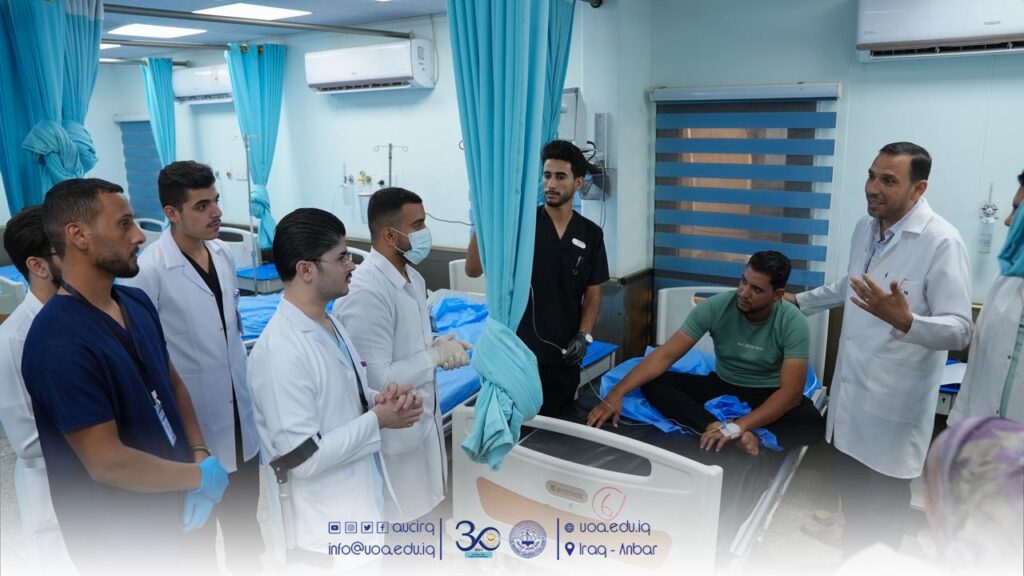
University of Al-Maarif recognizes that a strong and skilled health workforce is essential for achieving SDG 3. The College of Medicine, College of Pharmacy, and College of Nursing serve as central pillars for producing competent healthcare professionals equipped to address Iraq’s evolving health challenges.
Key actions include:
- Offering integrated medical curricula based on global best practices and competency-based learning.
- Training doctors, pharmacists, nurses, and allied health professionals in both clinical excellence and public health.
- Establishing simulation laboratories that enable experiential learning and patient-centered care.
- Incorporating ethics and community medicine into every health program to foster social responsibility.
Since 2021, more than 1,200 graduates have entered Iraq’s healthcare sector from UoA, serving both urban hospitals and rural clinics, directly contributing to improving access to essential services.
2. Research and Innovation for Health
Scientific research remains central to UoA’s health advancement strategy. Through the Center for Health Research and Innovation (CHRI), the University conducts applied and translational studies addressing national health priorities such as:
- Non-communicable diseases (cardiovascular and diabetes).
- Infectious disease control and vaccination outreach.
- Mental health and psychosocial well-being.
- Maternal and child health improvement.
- Environmental health and waterborne disease prevention.
Collaborative studies with the Iraqi Ministry of Health, Red Crescent, and World Health Organization (WHO-Iraq) have informed local health policies, particularly regarding preventive medicine and health education campaigns.
Recent achievements include:
- Publication of 15 peer-reviewed papers on disease prevention and rural healthcare access (2022–2024).
- Establishment of a data repository for epidemiological research and SDG indicator tracking.
- Student-led innovation projects developing low-cost diagnostic tools and mobile health (mHealth) applications.
3. Community Health and Outreach Initiatives
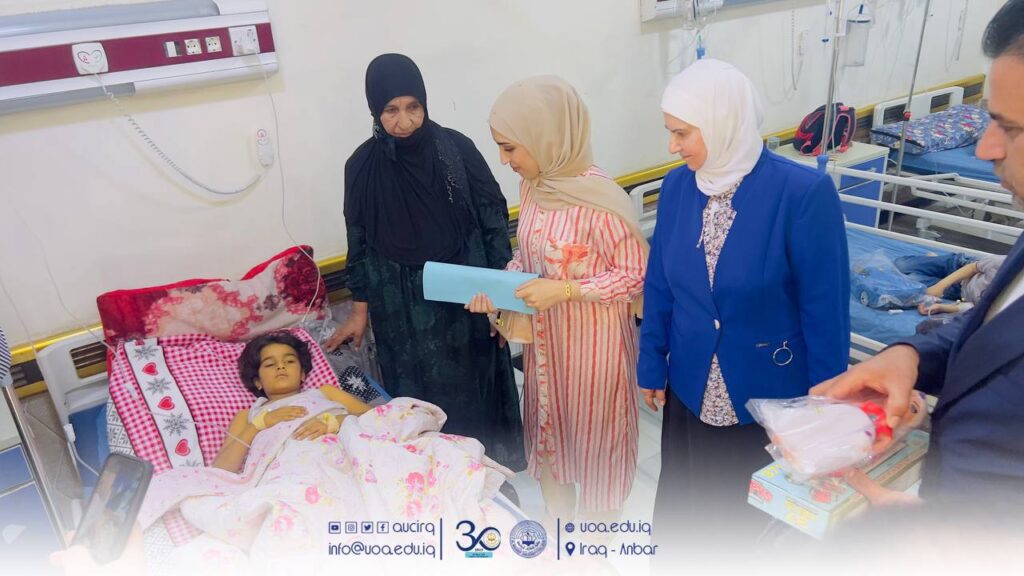
The Community Engagement and Social Responsibility Office (CESRO) at UoA leads extensive public health outreach activities designed to bring healthcare education and services directly to communities in need.
Highlights include:
- Mobile Health Clinics serving remote areas of Al-Anbar, Fallujah, and Baghdad, offering free screenings and vaccinations.
- Health Education Days, in collaboration with NGOs, addressing nutrition, hygiene, and chronic disease prevention.
- Annual “Healthy Campus, Healthy Community” Campaign, promoting physical activity, mental wellness, and first aid awareness.
Each year, more than 25,000 citizens benefit from these initiatives, reflecting the University’s deep social responsibility commitment.
4. Strengthening Healthcare Access and Infrastructure
UoA ensures that healthcare services are inclusive and accessible to all segments of the population. Its programs prepare students to deliver quality care in diverse environments — from modern urban hospitals to rural clinics.
Through partnerships with local health directorates, the University supports:
- Internship placements and practical rotations in underserved areas.
- Student-led primary health workshops in collaboration with community clinics.
- The expansion of telehealth services that connect rural patients with UoA medical specialists for consultation and follow-up care.
This model reduces regional health disparities and fosters a more equitable healthcare delivery system across Iraq.
5. Telemedicine and Health Technology Integration
Recognizing the transformative potential of technology in healthcare, UoA has launched several digital health initiatives:
- Telemedicine Program (2023) – connects patients from rural provinces with physicians at the University Medical Center.
- eHealth Research Hub – studies the integration of digital records and AI diagnostics into healthcare delivery.
- HealthTech Innovation Lab – supports student innovations such as virtual consultation apps, wearable health trackers, and digital rehabilitation systems.
These innovations enhance accessibility, reduce costs, and enable real-time patient monitoring, ensuring that geography no longer restricts quality healthcare.
6. Promoting Mental Health and Emotional Well-Being
UoA adopts a holistic approach to health that includes mental, emotional, and psychological wellness. The Student Counseling and Psychological Support Center (SCPSC) provides confidential counseling, therapy sessions, and mental wellness workshops for students and staff.
Programs include:
- Mental Health Awareness Weeks, focusing on stress management and emotional intelligence.
- Peer Support Circles, facilitating student-led discussions on well-being.
- Group therapy and art therapy programs, encouraging self-expression and healing.
In collaboration with the Iraqi Psychological Association and Ministry of Youth and Sports, UoA trains peer counselors and conducts mental health literacy campaigns in schools and communities.
7. Women’s and Maternal Health Programs
Aligned with SDG 3 and SDG 5 (Gender Equality), the College of Nursing and Health Sciences runs initiatives promoting women’s health and maternal care:
- Maternal Health Monitoring Clinics, offering prenatal check-ups for pregnant students and community mothers free of charge.
- Family Planning Education sessions conducted in partnership with the Ministry of Health.
- Awareness campaigns on gynecological and breast cancer prevention, supported by UoA medical students and Red Crescent volunteers.
These programs strengthen maternal well-being and reproductive health literacy, particularly in underserved areas.
8. Public Health Campaigns and Preventive Education
Public awareness is vital for disease prevention and healthy lifestyles. UoA organizes a series of annual campaigns including:
- National Breast Cancer Awareness Month – mobile clinics and public screenings.
- Pre-Marital Medical Examination Awareness – conducted with hospitals and family health centers.
- Youth Health and Fitness Week – encouraging active lifestyles under the slogan “A Step Toward Wellness.”
- First Aid and Emergency Response Training – equipping school teachers and university students with life-saving skills.
Through these initiatives, UoA engages thousands of students, faculty, and community members each year, building a culture of health consciousness and preventive care.
9. Social Responsibility and Community Service
UoA integrates social responsibility into its mission through the Community Service and Development Center (CSDC). The Center’s goal is to apply knowledge and research to benefit society through sustainable health-oriented programs.
The Center’s strategic objectives include:
- Promoting volunteerism and public health awareness.
- Partnering with NGOs to address humanitarian health needs.
- Supporting national policies aligned with Iraq’s 2030 Vision for Health and Well-Being.
- Cultivating empathy, ethics, and civic responsibility among students.
The University’s model ensures that health promotion extends beyond campus walls, directly impacting local and regional communities.
10. Institutional Partnerships and National Collaboration
UoA’s contribution to SDG 3 is amplified through partnerships with key stakeholders, including:
- Ministry of Health and Environment – data exchange and public health coordination.
- Iraqi Red Crescent Society – field training and community vaccination drives.
- UNICEF and WHO Iraq Offices – joint awareness programs on youth health and nutrition.
- Local NGOs (e.g., Patient Care Association, Al-Rahma Foundation) – joint delivery of mobile clinics and health education.
These alliances ensure that UoA’s activities complement national healthcare strategies and international SDG frameworks.
11. Continuing Professional and Personal Development
To ensure continuous excellence, UoA’s Center for Professional and Personal Development (CPPD) offers workshops and certification programs in:
- Emergency medicine and trauma response.
- Mental health first aid.
- Public health leadership and ethics.
- Medical research and innovation.
Faculty and students alike benefit from capacity-building opportunities that keep them at the forefront of evolving medical practices and sustainability in healthcare.
12. Measuring Impact
UoA tracks progress through a Health and Well-Being Impact Dashboard, which monitors:
| Indicator (2021–2024) | Value |
|---|---|
| Community health beneficiaries | 48,500 |
| Medical students trained annually | 600+ |
| Mental health counseling sessions conducted | 1,200 |
| Mobile clinic visits | 7,800 |
| Vaccination campaigns supported | 15 |
| Health awareness workshops | 80+ |
| Women’s health beneficiaries | 5,400 |
| Research publications in SDG 3 domains | 22 |
These figures reflect the University’s sustained contribution to national and global health goals.
13. Future Vision: Toward a Healthier Iraq
Looking ahead, University of Al-Maarif aims to:
- Establish a National Center for Public Health and Well-Being on campus.
- Launch a Digital Health Observatory in collaboration with WHO Iraq.
- Expand telemedicine networks to rural provinces.
- Introduce green hospitals and sustainable healthcare systems as part of SDG 3 and SDG 13 (Climate Action).
Through these steps, UoA continues to champion the ideal of “Health for All, Everywhere.”
Conclusion
The University of Al-Maarif’s holistic commitment to SDG 3: Good Health and Well-Being illustrates how higher education can transform public health, empower citizens, and strengthen community resilience.
By integrating education, research, social responsibility, and innovation, UoA ensures that health and well-being are not abstract goals but lived realities for the Iraqi people.
Its inclusive programs — from telemedicine and mental health care to maternal wellness and public health education — embody the University’s mission:
“To educate, heal, and inspire for a healthier, more sustainable Iraq.”
Link: https://uoa.edu.iq/news/visit-to-educational-hospital
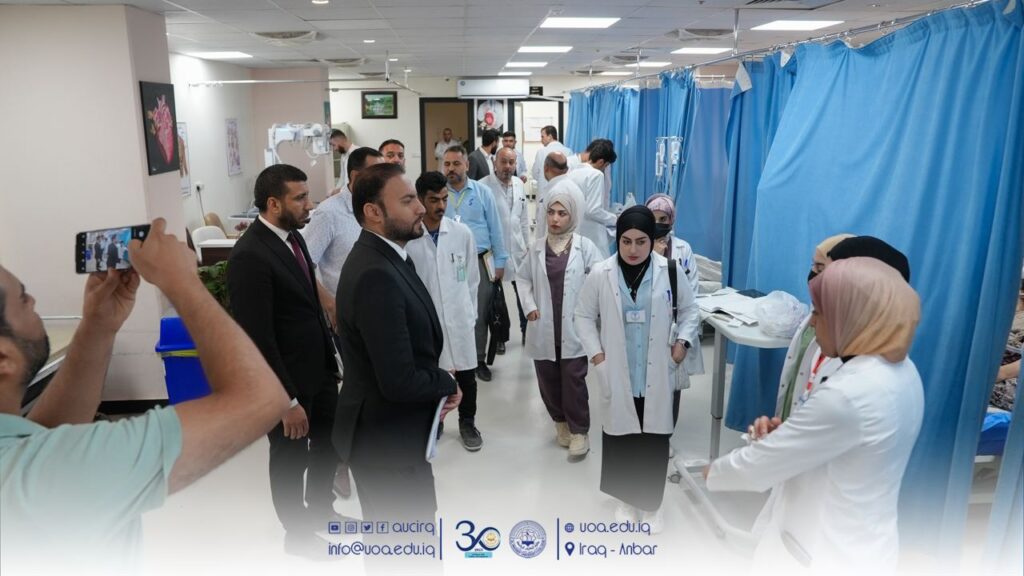
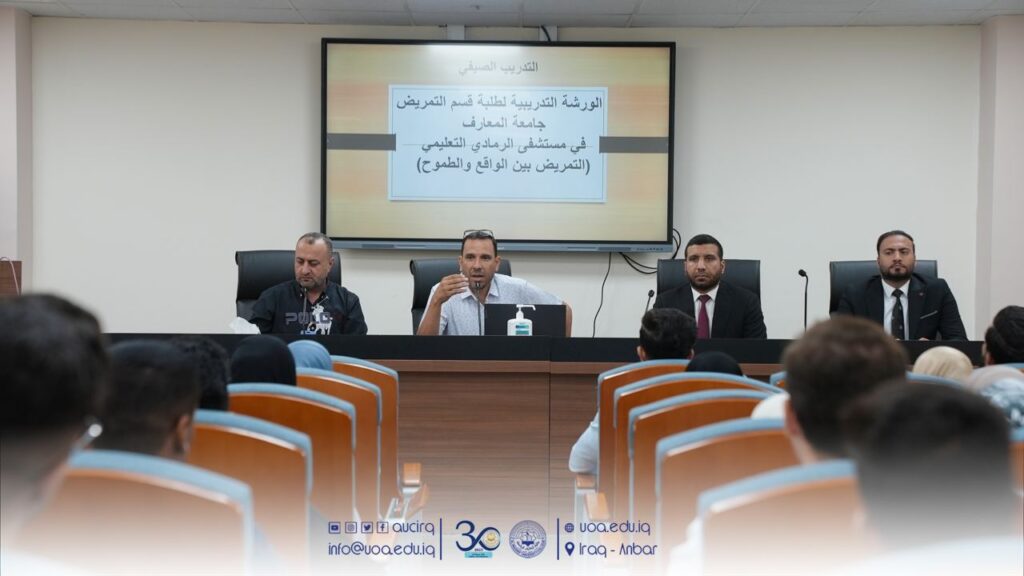
زيارة علمية إلى وحدة إنعاش القلب في مستشفى الرمادي التعليمي